Monoclonal Antibodies
Anti-Human Nectin-4 Monoclonal Antibody () for Flow Cytometry - Q96NY8
Item Number : CM0010368
Price varies based on specs and customizations
- Application
- FC
- Cross Reactivity
- Human
- Protein Weight
- 24kDa/55kDa

Shipping:
Contact us to get shipping details Enjoy On-time Dispatch Guarantee.
Why Choose Us
Easy ordering process, quality products, and dedicated support for your business success.
Core Product Specifications and Parameters
| Parameter | Value |
|---|---|
| Product Name | Rabbit anti-Human Nectin-4 mAb |
| Remarks/Alias | LNIR; PRR4; EDSS1; PVRL4; nectin-4 |
| Species | Human |
| Gene ID (Human) | 81607 |
| Gene ID | 81607 |
| Immunogen | Recombinant fusion protein containing a sequence corresponding to amino acids 32-146 of human Nectin-4 (NP_112178.2) |
| Source | Rabbit |
| Category | Monoclonal Antibodies |
| Application | FC |
| Cross Reactivity | Human |
| SWISS | Q96NY8 |
| Protein Weight | 24kDa/55kDa |
| Shipping | Ice bag |
Biological Background: Nectin-4 Function and Localization
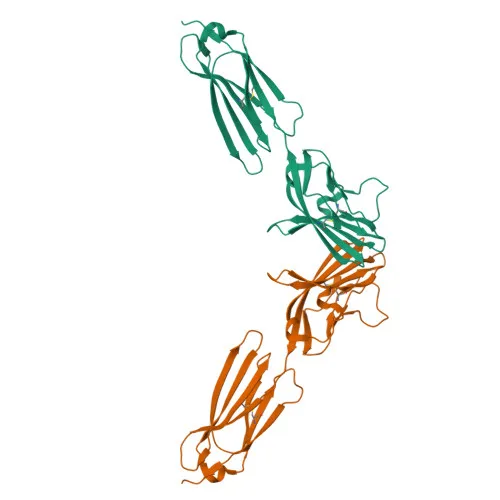
- Nectin-4, also known as PVRL4, LNIR, and PRR4, is a cell adhesion molecule of the nectin family that contains immunoglobulin-like domains, a transmembrane helix, and a signal peptide.
- It mediates trans-homophilic and -heterophilic cell–cell adhesion, specifically interacting with nectin-1; it does not serve as a receptor for alpha-herpesvirus entry.
- In the context of microbial infection, Nectin-4 acts as a host cell receptor for measles virus, facilitating viral entry.
- The protein localizes primarily to the cell membrane and adherens junctions, but a secreted isoform also exists, consistent with alternative splicing.
- Nectin-4 is predominantly expressed in placenta; it is absent in normal breast epithelium but is highly expressed in breast carcinoma, suggesting a role in tumor progression.
- Mutations in the NECTIN4 gene are associated with ectodermal dysplasia, a developmental disorder affecting skin, hair, nails, and teeth.
- The canonical full-length protein has a calculated molecular weight of approximately 55 kDa; additional isoforms or cleavage products may yield bands around 24 kDa.
Experimental Guidance and Technical Tips
- The conjugate is suitable for direct flow cytometry on live cells; consider validating performance on known human Nectin-4-expressing lines such as placental cells or breast carcinoma lines.
- Because the immunogen spans the extracellular domain (aa 32–146), the antibody likely recognizes surface-exposed epitopes; be aware that secreted or shed Nectin-4 may also be detected in supernatant or permeabilized samples.
- For flow cytometry, titrate the antibody to determine optimal staining concentration and include an appropriate isotype control.
- Given alternative splicing, confirm which isoform(s) are relevant in your experimental system; the antibody may detect multiple forms.
- This clone cannot be used to block alpha-herpesvirus entry, but it may be employed in measles virus infection studies to monitor receptor expression or viral attachment.
CamelBio: Your One-Stop Sourcing Bridge
As a dedicated B2B partner for the IVD industry, CamelBio streamlines raw-material procurement with a focus on Nectin-4 and related targets in cell adhesion, viral entry, and oncology. We offer validated antibody pairs, optimized monoclonal/polyclonal antibodies, bulk ancillary reagents, and expert sourcing for rare-target raw materials—empowering diagnostic manufacturers to advance from concept to clinic with confidence.
Product Datasheet
Anti-Human Nectin-4 Monoclonal Antibody () for Flow Cytometry - Q96NY8
REQUEST A QUOTE
Our professional team will reply to you within one business day. Please feel free to contact us!