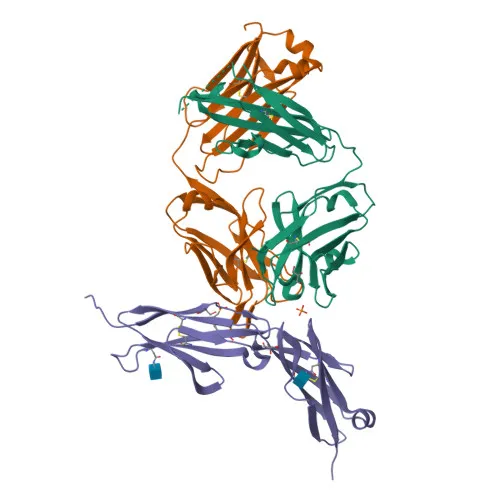
Monoclonal Antibodies
Anti-Human CD146 Monoclonal Antibody () for Flow Cytometry - P43121
Item Number : CM0009829
Price varies based on specs and customizations
- Application
- FC
- Cross Reactivity
- Human
- Protein Weight
- 72kDa

Shipping:
Contact us to get shipping details Enjoy On-time Dispatch Guarantee.
Why Choose Us
Easy ordering process, quality products, and dedicated support for your business success.
Core Product Specifications and Parameters
| Parameter | Value |
|---|---|
| Product Name | Rabbit anti-Human CD146 mAb |
| Remarks/Alias | CD146; MUC18; HEMCAM; METCAM; MelCAM |
| Species | Human |
| Gene ID | 4162 |
| Immunogen | Recombinant protein |
| Source | Rabbit |
| Category | Monoclonal Antibodies |
| Application | FC |
| Cross Reactivity | Human |
| SWISS | P43121 |
| Protein Weight | 72kDa |
| Shipping | Ice bag |
Biological Background: CD146 Function and Localization
- CD146, also known as MUC18, MCAM, HEMCAM, METCAM, or MelCAM, is a cell surface glycoprotein belonging to the immunoglobulin superfamily and encoded by the MCAM gene.
- It functions as a calcium-independent cell adhesion molecule, playing a critical role in maintaining the cohesion of the endothelial monolayer at intercellular junctions in vascular tissue.
- CD146 expression in melanoma cells is associated with enhanced interaction with vascular elements, potentially facilitating hematogenous tumor spread and metastasis.
- It also acts as a surface receptor that triggers intracellular signaling, including tyrosine phosphorylation of FYN and PTK2/FAK1, and a transient increase in intracellular calcium concentration.
- During embryonic development, CD146 appears on the surface of neural crest cells, suggesting an adhesion role in cell migration.
- In normal adult tissues, CD146 expression is largely restricted to vascular smooth muscle and endothelial cells; its upregulation strongly correlates with tumor progression and metastasis in malignant melanoma.
- Post‑translational modifications include glycosylation and phosphorylation; the protein contains a signal sequence, a transmembrane helix, and multiple immunoglobulin‑like domains with disulfide bonds.
Experimental Guidance and Technical Tips
- The immunogen covers amino acids 24–559, corresponding to the extracellular domain of CD146, making this antibody suitable for detecting surface‑expressed CD146 in non‑permeabilized cells by flow cytometry.
- Optimal staining conditions (antibody concentration, incubation time, and temperature) should be titrated by the end user in the relevant cell system (e.g., human endothelial or melanoma cell lines).
- Protect the conjugate from light during staining and storage to preserve the fluorophore.
- Include appropriate isotype controls and live/dead discrimination to ensure specific detection.
- The antibody may also be applicable in other immunoassays that detect native extracellular epitopes, but these applications require independent validation.
CamelBio: Your One-Stop Sourcing Bridge
As a dedicated IVD raw‑material partner, CamelBio streamlines procurement for diagnostic developers and researchers working on CD146‑related oncology or vascular biology projects. We supply validated antibody pairs, optimized monoclonal/polyclonal antibodies, and bulk ancillary reagents to support your assay development. Let CamelBio’s sourcing expertise be your bridge from concept to clinic.
REQUEST A QUOTE
Our professional team will reply to you within one business day. Please feel free to contact us!