Monoclonal Antibodies
Anti-Human CD116 Monoclonal Antibody for Flow Cytometry - P15509
Item Number : CM0007733
Price varies based on specs and customizations
- Application
- FC
- Cross Reactivity
- Human
- Source
- Rabbit

Shipping:
Contact us to get shipping details Enjoy On-time Dispatch Guarantee.
Why Choose Us
Easy ordering process, quality products, and dedicated support for your business success.
Core Product Specifications and Parameters
| Parameter | Value |
|---|---|
| Product Name | Rabbit anti-Human CD116 mAb |
| Remarks/Alias | GMR; CD116; CSF2R; SMDP4; CDw116; CSF2RX; CSF2RY; GMCSFR; CSF2RAX; CSF2RAY; alphaGMR; GMR-alpha; GMCSFR-alpha; GM-CSF-R-alpha |
| Species | Human |
| GeneID (Human) | 1438 |
| GeneID | 1438 |
| Immunogen | Recombinant protein|Recombinant fusion protein containing a sequence corresponding to amino acids 23-320 of human CD116 (NP_006131.2) |
| Source | Rabbit |
| Category | Monoclonal Antibodies |
| Application | FC |
| Cross Reactivity | Human |
| SWISS | P15509 |
| Protein Weight | 26kDa/31kDa/38kDa/43kDa/46kDa/49kDa |
| Shipping | Ice bag |
Biological Background: CD116 Function and Localization
- CD116, the granulocyte-macrophage colony-stimulating factor receptor subunit alpha (CSF2RA, also known as CDw116), is a low-affinity receptor for GM-CSF that mediates hematopoietic cell proliferation, differentiation, and activation.
- It is a single-pass type I membrane protein that transduces ligand-induced signals through association with the common beta chain (CSF2RB) to form the high-affinity receptor complex.
- The receptor localizes primarily to the cell membrane, with soluble isoforms generated by alternative splicing and proteolytic shedding; it is also annotated as secreted.
- Multiple protein isoforms arise from alternative splicing and differential glycosylation, contributing to the observed molecular weight range of 26 kDa to 49 kDa.
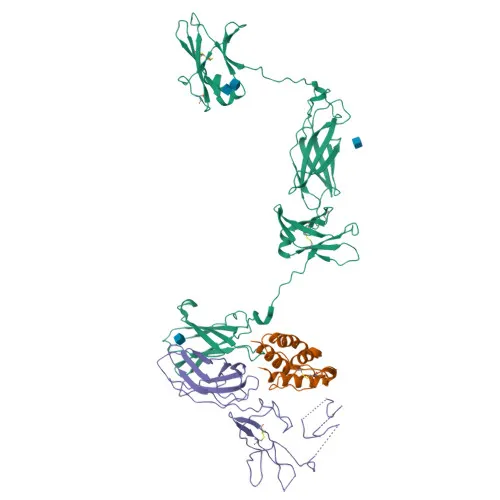
- CD116 contains three extracellular fibronectin type III domains, a conserved WSXWS motif, and disulfide bonds that stabilize its structure, as supported by the 3D-structure keyword.
- Post-translational modifications include N-linked glycosylation and disulfide bond formation, which are critical for proper folding and ligand binding.
- Genetic variants in CSF2RA are associated with disease phenotypes, including pulmonary alveolar proteinosis, as indicated by the disease variant keyword.
Experimental Guidance and Technical Tips
- The immunogen encompassing amino acids 23–320 of the extracellular domain ensures recognition of native CD116 on the cell surface, making the antibody suitable for flow cytometry without permeabilization.
- Titrate the antibody to determine the optimal staining concentration for your specific cell type, as CD116 expression varies among hematopoietic lineages.
- Include appropriate controls: isotype control, fluorescence-minus-one, and cell lines with known CD116 expression (e.g., TF-1 or U937) to validate specificity.
- Consider that glycosylation differences among isoforms may affect epitope accessibility or fluorescence intensity; verify performance in the relevant sample matrix.
- If adapting for other applications, re-validate thoroughly, as the conjugate may influence biochemical binding properties compared to unconjugated antibody.
CamelBio: Your One-Stop Sourcing Bridge
CamelBio provides diagnostic manufacturers, labs, and research institutes with one-stop access to IVD raw materials, technical services, and consulting—covering every stage from concept to clinic. This anti-CD116 antibody supports research into GM-CSF signaling and hematopoiesis, and CamelBio’s expansive portfolio includes validated antibody pairs, optimized monoclonal/polyclonal antibodies, bulk ancillary reagents, and rare target raw-material sourcing to streamline your assay development.
REQUEST A QUOTE
Our professional team will reply to you within one business day. Please feel free to contact us!