Monoclonal Antibodies
Anti-Human AGTR2 Monoclonal Antibody for Flow Cytometry - P50052
Item Number : CM0010704
Price varies based on specs and customizations
- Application
- FC
- Cross Reactivity
- Human
- Protein Weight
- 41kDa

Shipping:
Contact us to get shipping details Enjoy On-time Dispatch Guarantee.
Why Choose Us
Easy ordering process, quality products, and dedicated support for your business success.
Core Product Specifications and Parameters
| Parameter | Value |
|---|---|
| Product Name | Rabbit anti-Human AGTR2 mAb |
| Remarks/Alias | AT2; ATGR2; MRX88; AGTR2 |
| Species | Human |
| GeneID (Human) | 186 |
| GeneID | 186 |
| Immunogen | Recombinant protein|Recombinant fusion protein containing a sequence corresponding to amino acids 1-45 of human AGTR2 (NP_000677.2). |
| Source | Rabbit |
| Category | Monoclonal Antibodies |
| Application | FC |
| Cross Reactivity | Human |
| SWISS | P50052 |
| Protein Weight | 41kDa |
| Shipping | Ice bag |
Biological Background: AGTR2 Function and Localization
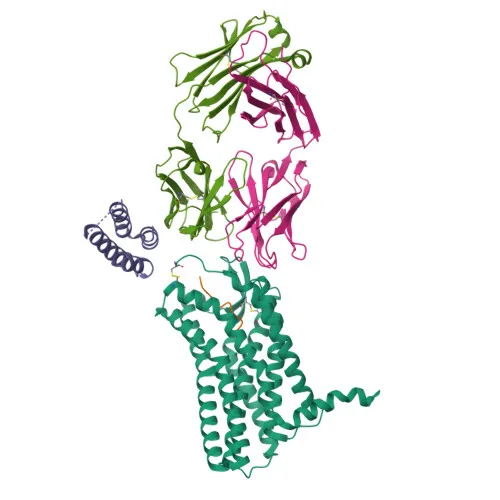
- The AGTR2 gene encodes the type-2 angiotensin II receptor (AT2 receptor), a G protein-coupled receptor that mediates the effects of the vasoconstricting peptide angiotensin II, involved in blood pressure regulation and cardiovascular function. Related references: PMID:28379944, PMID:29967536, PMID:31899086
- Primarily signals through non-canonical G protein- and beta-arrestin independent pathways, leading to modulation of cell proliferation and apoptosis.
- Cooperates with the tumor suppressor MTUS1 to inhibit ERK2 activation and cell proliferation. Related references: PMID:15123706
- Subcellular localization: Predominantly at the cell membrane, with possible internalization upon ligand binding.
- Tissue specificity: In adult, highly expressed in myometrium; lower levels in adrenal gland and fallopian tube; also expressed in cerebellum. Very highly expressed in fetal kidney and intestine.
- Post-translational modifications include disulfide bond formation and N-linked glycosylation, essential for receptor folding and function.
- Belongs to the G protein-coupled receptor superfamily, characterized by seven transmembrane helices and involved in diverse signaling processes.
Experimental Guidance and Technical Tips
- The immunogen covers the N-terminal extracellular region (amino acids 1-45) of human AGTR2; this sequence may be critical for recognizing the native receptor conformation on live cells, making it well-suited for flow cytometry.
- As a directly -conjugated antibody, secondary detection reagents are not required, potentially reducing background and assay time. Titrate the antibody to determine the optimal concentration for each cell type and experimental condition.
- For flow cytometry, include appropriate isotype controls and viability dyes to accurately gate live AGTR2-positive cell populations.
- Validate antibody specificity using AGTR2-overexpressing cell lines or by parallel staining of known positive (e.g., myometrium-derived cells) and negative human samples.
- AGTR2 expression can be modulated by hormonal or pathological states; consider treating cells with angiotensin II or other regulators when functional studies are intended.
CamelBio: Your One-Stop Sourcing Bridge
CamelBio provides diagnostic manufacturers, research institutes, and clinical laboratories with one-stop access to high-quality IVD raw materials, covering the entire development pipeline from concept to clinic. This anti-AGTR2 antibody supports research in cardiovascular diseases, hypertension, and receptor pharmacology. Beyond this product, CamelBio supplies validated antibody pairs, recombinant proteins, bulk ancillary reagents, and offers custom sourcing for rare-target raw materials to accelerate your diagnostic assay development.
REQUEST A QUOTE
Our professional team will reply to you within one business day. Please feel free to contact us!