Monoclonal Antibodies
Anti-HTR3A Monoclonal Antibody for WB, IF, IHC-P, ELISA - P46098
Item Number : CM0007026
Price varies based on specs and customizations
- Application
- WB, IF/ICC, IF-P, IHC-P, ELISA
- Cross Reactivity
- Human, Mouse, Rat
- Protein Weight
- 55kDa

Shipping:
Contact us to get shipping details Enjoy On-time Dispatch Guarantee.
Why Choose Us
Easy ordering process, quality products, and dedicated support for your business success.
Core Product Specifications and Parameters
| Parameter | Value |
|---|---|
| Product Name | HTR3A Rabbit mAb |
| Remarks/Alias | HTR3; 5HT3R; 5-HT-3; 5-HT3A; 5-HT3R; HTR3A |
| Species | Human |
| GeneID (Human) | 3359 |
| GeneID | 3359 |
| Immunogen | Synthetic peptide |
| Source | Rabbit |
| Category | Monoclonal Antibodies |
| Application | WB, IF/ICC, IF-P, IHC-P, ELISA |
| Cross Reactivity | Human, Mouse, Rat |
| SWISS | P46098 |
| Protein Weight | 55kDa |
| Shipping | Ice bag |
Biological Background: HTR3A Function and Localization
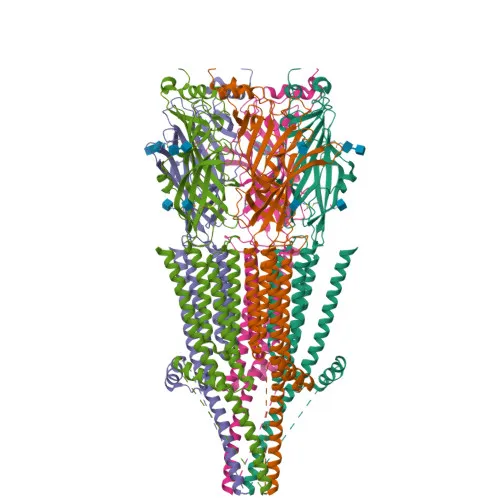
- 5-hydroxytryptamine receptor 3A (HTR3A), also known as 5-HT3A or serotonin receptor 3A, is a ligand-gated ion channel subunit that assembles into functional pentameric receptor complexes activated by serotonin (5-hydroxytryptamine).
- Upon serotonin binding, HTR3A channels open to allow cation influx, generating fast depolarizing responses that mediate excitatory neurotransmission in the central and peripheral nervous systems.
- HTR3A is primarily localized at postsynaptic cell membranes and the cell surface, consistent with its role in receiving synaptic signals.
- The protein is expressed in neuronal tissues including cerebral cortex, amygdala, and hippocampus, as well as in testis and various peripheral organs such as intestine, uterus, and placenta.
- As a member of the Cys-loop ligand-gated ion channel superfamily, HTR3A possesses characteristic structural features including an extracellular domain for ligand binding, four transmembrane helices, and intracellular regulatory sites.
- HTR3A is subject to post-translational modifications including glycosylation and disulfide bond formation, and undergoes alternative splicing, generating isoforms with potentially distinct properties.
Experimental Guidance and Technical Tips
- For Western blot analysis, a band around 55 kDa is expected; consider using reducing conditions and appropriate loading controls.
- In immunofluorescence and immunohistochemistry applications, optimize fixation, permeabilization, and antigen retrieval conditions, and validate with positive control tissues known to express HTR3A.
- Since the antibody was raised against a synthetic peptide, it may preferentially recognize the denatured or linearized form; performance under native conditions should be verified if required.
- Cross-reactivity is predicted for human, mouse, and rat; further validation in the relevant species and sample types is recommended to confirm specificity.
CamelBio: Your One-Stop Sourcing Bridge
CamelBio provides diagnostic manufacturers and research laboratories with streamlined access to high-quality IVD raw materials, including validated anti-HTR3A monoclonal antibodies for neuroscience and ion channel applications. Our portfolio covers optimized antibody pairs, bulk ancillary reagents, and custom sourcing for rare targets, supporting your development from concept to clinic.
REQUEST A QUOTE
Our professional team will reply to you within one business day. Please feel free to contact us!