Polyclonal Antibodies
Anti-HTR1D Rabbit Polyclonal Antibody for WB, ELISA - P28221
Item Number : CM0020528
Price varies based on specs and customizations
- Application
- WB, ELISA
- Cross Reactivity
- Human, Mouse, Rat
- Protein Weight
- 42kDa

Shipping:
Contact us to get shipping details Enjoy On-time Dispatch Guarantee.
Why Choose Us
Easy ordering process, quality products, and dedicated support for your business success.
Core Product Specifications and Parameters
| Parameter | Value |
|---|---|
| Product Name | HTR1D Rabbit pAb |
| Remarks/Alias | HTRL; RDC4; HT1DA; 5-HT1D; HTR1DA; HTR1D |
| Species | Human |
| GeneID (Human) | 3352 |
| GeneID | 3352 |
| Immunogen | Synthetic Peptide: A synthetic peptide corresponding to a sequence within amino acids 150-250 of human HTR1D (NP_000855.1) |
| Source | Rabbit |
| Category | Polyclonal Antibodies |
| Application | WB, ELISA |
| Cross Reactivity | Human, Mouse, Rat |
| SWISS | P28221 |
| Protein Weight | 42kDa |
| Shipping | Ice bag |
Biological Background: HTR1D Function and Localization
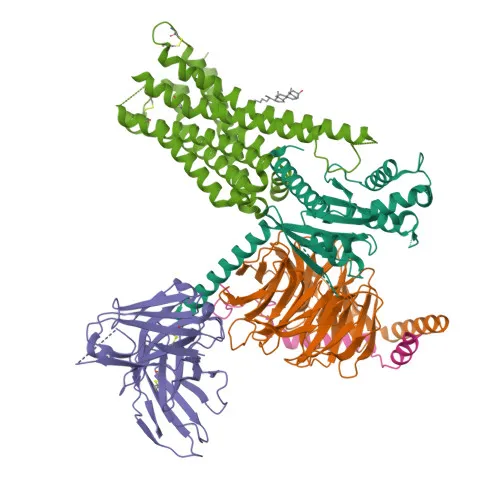
- The 5-hydroxytryptamine receptor 1D (HTR1D), also known as serotonin receptor 1D (5-HT1D) or 5-HT-1D-alpha, is a G protein-coupled receptor that mediates the effects of serotonin and various psychoactive substances. Related references: PMID:10452531, PMID:1565658, PMID:1652050
- It primarily couples to G(i)/G(o) proteins, leading to inhibition of adenylate cyclase and reduced cAMP production, thereby mediating inhibitory neurotransmission. Related references: PMID:33762731
- HTR1D regulates the release of serotonin and may also modulate the release of other neurotransmitters in the brain, influencing neural activity. Related references: PMID:18476671, PMID:20945968
- The receptor may also contribute to vasoconstriction, highlighting its role in both central and peripheral functions. Related references: PMID:18476671, PMID:20945968
- HTR1D is localized to the cell membrane and contains seven transmembrane domains, a disulfide bond, and glycosylation sites, typical of rhodopsin-like GPCRs.
- At the protein level, it is detected in brain regions such as the neocortex and caudate nucleus, consistent with its neurological functions.
Experimental Guidance and Technical Tips
- The immunogen is a synthetic peptide spanning amino acids 150–250, which likely corresponds to an intracellular loop; consider this when designing detection or competition assays.
- For Western blot, a band of approximately 42 kDa is expected; confirm proper protein extraction and membrane transfer conditions.
- In ELISA applications, validate antibody specificity using the immunogen peptide and appropriate negative controls to minimize non-specific binding.
- Cross-reactivity with mouse and rat HTR1D is reported; however, individual experimental validation in the relevant species and sample type is recommended.
CamelBio: Your One-Stop Sourcing Bridge
CamelBio supports diagnostic manufacturers, research laboratories, and institutes with streamlined access to high-quality IVD raw materials and technical expertise—from concept to clinical application. This anti-HTR1D polyclonal antibody is part of our comprehensive neurology and GPCR research portfolio, complementing our offerings of validated antibody pairs, optimized monoclonal and polyclonal antibodies, and bulk ancillary reagents. For specialized or rare-target sourcing needs, our team provides customized procurement solutions to accelerate your assay development.
REQUEST A QUOTE
Our professional team will reply to you within one business day. Please feel free to contact us!