Polyclonal Antibodies
Anti-HTR1B Rabbit Polyclonal Antibody for WB, ELISA - P28222
Item Number : CM0019137
Price varies based on specs and customizations
- Application
- WB, ELISA
- Cross Reactivity
- Human, Mouse, Rat
- Protein Weight
- 44kDa

Shipping:
Contact us to get shipping details Enjoy On-time Dispatch Guarantee.
Why Choose Us
Easy ordering process, quality products, and dedicated support for your business success.
Core Product Specifications and Parameters
| Parameter | Value |
|---|---|
| Product Name | HTR1B Rabbit pAb |
| Remarks/Alias | S12, 5-HT1B, HTR1D2, HTR1DB, 5-HT-1B, 5-HT1DB, 5-HT-1D-beta, HTR1B |
| Species | Human |
| Gene ID (Human) | 3351 |
| Gene ID | 3351 |
| Immunogen | Recombinant fusion protein containing a sequence corresponding to amino acids 1-390 of human HTR1B (P28222). |
| Source | Rabbit |
| Category | Polyclonal Antibodies |
| Application | WB, ELISA |
| Cross Reactivity | Human, Mouse, Rat |
| SWISS | P28222 |
| Protein Weight | 44kDa |
| Shipping | Ice bag |
Biological Background: HTR1B Function and Localization
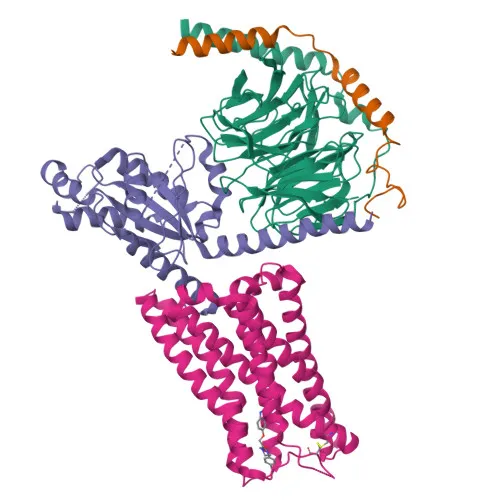
- HTR1B, also known as 5-HT1B, 5-HT1D-beta, and S12, is a G protein-coupled receptor for serotonin (5-hydroxytryptamine) and belongs to the 5-HT1 receptor family.
- The receptor binds serotonin as well as ergot alkaloids, anxiolytics, antidepressants, and psychoactive substances such as LSD, triggering G protein-mediated signaling. Related references: PMID:10452531, PMID:1315531, PMID:1328844, PMID:23519210, PMID:23519215, PMID:29925951
- HTR1B couples to G(i)/G(o) proteins, inhibiting adenylate cyclase and reducing cAMP levels, and also signals through arrestin-mediated pathways. Related references: PMID:29925951, PMID:35610220
- This receptor regulates the release of serotonin, dopamine, and acetylcholine, thereby modulating neural activity, mood, behavior, and pain perception. Related references: PMID:18476671, PMID:20945968
- In the vasculature, HTR1B mediates vasoconstriction of cerebral arteries. Related references: PMID:15853772
- The protein is predominantly localized to the cell membrane and is expressed in brain regions such as cortex, striatum, amygdala, hippocampus, and caudate nucleus, as well as in cerebral artery smooth muscle cells.
- Characteristic features include seven transmembrane domains, disulfide bonds, glycosylation, palmitoylation, and phosphorylation sites important for GPCR function and regulation.
Experimental Guidance and Technical Tips
- The immunogen comprises amino acids 1-390, covering the full-length human HTR1B protein, suggesting the antibody may recognize both native and denatured epitopes.
- For Western blotting, consider using membrane protein extraction protocols and appropriate detergents to maintain receptor conformation.
- Optimize blocking and antibody dilution conditions for ELISA to minimize non-specific binding.
- Validate antibody specificity in relevant sample types, such as brain tissue lysates or cerebral artery smooth muscle cells.
- Cross-reactivity with mouse and rat HTR1B allows investigation in common rodent models, but sequence alignment is recommended to confirm epitope conservation.
CamelBio: Your One-Stop Sourcing Bridge
CamelBio provides a comprehensive range of IVD raw materials, including validated antibodies for neuroscience and GPCR research. This HTR1B polyclonal antibody complements our portfolio of serotonin receptor targets, supporting your diagnostic and assay development needs. Contact us for bulk orders, customized sourcing, and technical assistance to streamline your workflow from concept to clinic.
REQUEST A QUOTE
Our professional team will reply to you within one business day. Please feel free to contact us!