Polyclonal Antibodies
Anti-HRH1 Polyclonal Antibody for WB, ELISA - P35367
Item Number : CM0013014
Price varies based on specs and customizations
- Application
- WB, ELISA
- Cross Reactivity
- Human
- Protein Weight
- 56kDa

Shipping:
Contact us to get shipping details Enjoy On-time Dispatch Guarantee.
Why Choose Us
Easy ordering process, quality products, and dedicated support for your business success.
Core Product Specifications and Parameters
| Parameter | Value |
|---|---|
| Product Name | HRH1 Rabbit pAb |
| Remarks/Alias | H1R; H1-R; HH1R; hisH1; HRH1 |
| Species | Human |
| Gene ID (Human) | 3269 |
| Gene ID | 3269 |
| Immunogen | Recombinant fusion protein containing a sequence corresponding to amino acids 250-340 of human HRH1 (NP_000852.1) |
| Source | Rabbit |
| Category | Polyclonal Antibodies |
| Application | WB, ELISA |
| Cross Reactivity | Human |
| SWISS | P35367 |
| Protein Weight | 56kDa |
| Shipping | Ice bag |
Biological Background: HRH1 Function and Localization
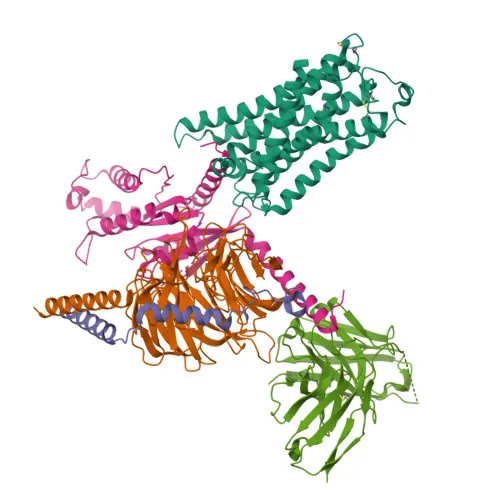
- HRH1 (histamine H1 receptor) is a G protein-coupled receptor (GPCR) encoded by the HRH1 gene, with aliases including H1R and HH1R.
- It functions as a receptor for histamine, a biogenic amine that acts as an immune modulator and neurotransmitter (PubMed:33828102, PubMed:8280179). Related references: PMID:33828102 PMID:8280179
- Through the H1 receptor, histamine mediates contraction of smooth muscles and increases capillary permeability due to contraction of terminal venules.
- In the central nervous system, HRH1 regulates circadian rhythms, emotional and locomotor activities, and cognitive functions.
- The receptor localizes to the cell membrane and contains seven transmembrane helices, a disulfide bond, and undergoes glycosylation and phosphorylation.
- HRH1 is involved in allergy, inflammation, and neurotransmission, making it a key target in asthma, allergic rhinitis, and sleep-wake disorders.
Experimental Guidance and Technical Tips
- The immunogen corresponds to amino acids 250–340 of human HRH1 (NP_000852.1), located in the intracellular region; consider this when selecting detection methods.
- For Western blot, validate the antibody in a relevant cell line or tissue expressing endogenous HRH1; the predicted molecular weight is 56 kDa, but glycosylation may shift the band.
- Use appropriate blocking and dilution conditions; test a range of antibody dilutions (e.g., 1:500–1:2000) to optimize signal-to-noise ratio.
- In ELISA, the antibody may recognize both native and denatured protein; include positive controls (e.g., recombinant HRH1 protein) to confirm specificity.
CamelBio: Your One-Stop Sourcing Bridge
CamelBio provides diagnostic manufacturers, labs, and research institutes with one-stop access to IVD raw materials, technical services, and consulting—covering every stage from concept to clinic. For histamine receptor and allergy research, we offer validated antibody pairs, optimized polyclonal and monoclonal antibodies, bulk ancillary reagents, and expert sourcing for rare targets. Let us accelerate your project with reliable, high-quality raw materials tailored to your needs.
REQUEST A QUOTE
Our professional team will reply to you within one business day. Please feel free to contact us!