Monoclonal Antibodies
Anti-HRAS Monoclonal Antibody for WB, ELISA - P01112
Item Number : CM0002508
Price varies based on specs and customizations
- Application
- WB, ELISA
- Cross Reactivity
- Mouse, Rat
- Protein Weight
- 21kDa

Shipping:
Contact us to get shipping details Enjoy On-time Dispatch Guarantee.
Why Choose Us
Easy ordering process, quality products, and dedicated support for your business success.
Core Product Specifications and Parameters
| Parameter | Value |
|---|---|
| Product Name | HRAS Rabbit mAb |
| Remarks/Alias | CTLO; HAMSV; HRAS1; RASH1; p21ras; C-H-RAS; H-RASIDX; C-BAS/HAS; C-HA-RAS1; HRAS |
| Species | Human |
| GeneID (Human) | 3265 |
| GeneID | 3265 |
| Immunogen | Synthetic Peptide |
| Source | Rabbit |
| Category | Monoclonal Antibodies |
| Application | WB, ELISA |
| Cross Reactivity | Mouse, Rat |
| SWISS | P01112 |
| Protein Weight | 21kDa |
| Shipping | Ice bag |
Biological Background: HRAS Function and Localization
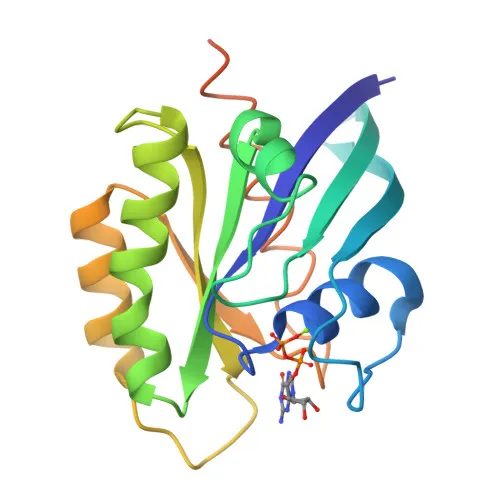
- HRAS (GTPase HRas) is a small GTPase that acts as a signal transducer in the Ras-MAPK signaling pathway, regulating cell proliferation and survival. Related references: PMID:22821884
- Ras proteins bind GDP/GTP and possess intrinsic GTPase activity, cycling between active GTP-bound and inactive GDP-bound states. Related references: PMID:12740440, PMID:14500341, PMID:9020151
- HRAS is recognized by LZTR1, which mediates its ubiquitination via a BCR (BTB-CUL3-RBX1) E3 ubiquitin-protein ligase complex, targeting it for proteasomal degradation. Related references: PMID:40934300
- It localizes to the cell membrane, Golgi apparatus, nucleus, cytoplasm, and perinuclear region, with membrane association mediated by lipidation (farnesylation and palmitoylation).
- HRAS is widely expressed across tissues and is subject to multiple post-translational modifications, including acetylation, methylation, S-nitrosylation, and ubiquitination.
- As a proto-oncogene, activating mutations in HRAS are implicated in various cancers, making it a critical target in oncology research.
- Alternative splicing of HRAS produces multiple isoforms with potential functional differences.
Experimental Guidance and Technical Tips
- Since the immunogen corresponds to a peptide within amino acids 90–189, the antibody may recognize a region conserved in mouse and rat HRAS, consistent with documented cross-reactivity.
- For Western blot, a specific band at approximately 21 kDa is expected. Use lysates from cells or tissues with known HRAS expression (e.g., HeLa, HEK293) as positive controls.
- Validate antibody specificity in your system using siRNA-mediated knockdown or HRAS knockout cell lines.
- In ELISA applications, optimize coating antigen and antibody dilution to achieve optimal signal-to-noise ratio.
- Consider using the antibody in immunoprecipitation or immunofluorescence if validated by the user, given the multiple subcellular localizations of HRAS.
CamelBio: Your One-Stop Sourcing Bridge
CamelBio is a dedicated one-stop sourcing bridge for IVD raw materials, supporting diagnostic manufacturers and research labs from concept to clinic. Our portfolio includes validated antibodies, matched antibody pairs, and bulk ancillary reagents for targets across oncology, signal transduction, and beyond. For this anti-HRAS antibody or other rare target raw materials, we offer tailored supply solutions and technical consulting to streamline your assay development and manufacturing workflows.
REQUEST A QUOTE
Our professional team will reply to you within one business day. Please feel free to contact us!