Polyclonal Antibodies
Anti-HPCAL1 Rabbit Polyclonal Antibody for WB, IP, ELISA - P37235
Item Number : CM0023663
Price varies based on specs and customizations
- Application
- WB, IP, ELISA
- Cross Reactivity
- Human, Mouse, Rat
- Protein Weight
- 22kDa

Shipping:
Contact us to get shipping details Enjoy On-time Dispatch Guarantee.
Why Choose Us
Easy ordering process, quality products, and dedicated support for your business success.
Core Product Specifications and Parameters
| Parameter | Value |
|---|---|
| Product Name | HPCAL1 Rabbit pAb |
| Remarks/Alias | BDR1; HLP2; VILIP-3; HPCAL1 |
| Species | Human |
| Gene ID | 3241 |
| Immunogen | Recombinant fusion protein containing a sequence corresponding to amino acids 1-193 of human HPCAL1 (NP_002140.2). |
| Source | Rabbit |
| Category | Polyclonal Antibodies |
| Application | WB, IP, ELISA |
| Cross Reactivity | Human, Mouse, Rat |
| SWISS | P37235 |
| Protein Weight | 22kDa |
| Shipping | Ice bag |
Biological Background: HPCAL1 Function and Localization
- HPCAL1 (Hippocalcin-like protein 1), also known as BDR-1, HLP2, or Visinin-like protein 3 (VILIP-3), is a calcium-binding protein belonging to the neuronal calcium sensor family.
- The protein contains EF-hand domains that mediate calcium binding, as indicated by its classification under the keywords 'Calcium' and 'Metal-binding'.
- HPCAL1 is predicted to associate with cellular membranes, consistent with its myristoylation site and the keywords 'Lipoprotein' and 'Myristate'.
- It may be involved in the calcium-dependent regulation of rhodopsin phosphorylation, suggesting a potential role in photoreceptor function or phototransduction.
- The protein has a theoretical molecular weight of approximately 22.3 kDa; post-translational modifications such as myristoylation can influence its membrane affinity and localization.
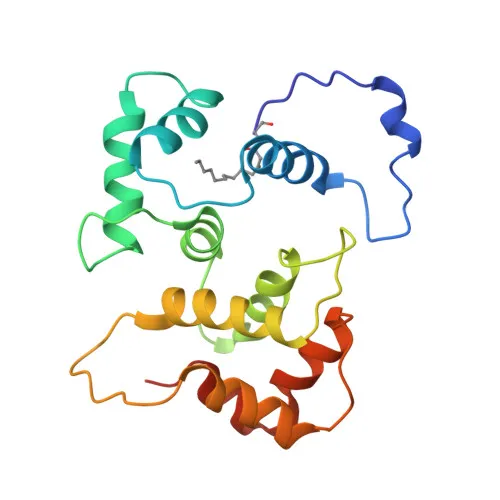
- Structural studies (keyword '3D-structure') have provided insights into the conformational changes induced by calcium binding.
Experimental Guidance and Technical Tips
- The immunogen corresponds to the full-length human HPCAL1 protein; the polyclonal antibody is expected to recognize native and denatured forms, making it suitable for multiple applications.
- For Western blot, a band near 22 kDa is anticipated; consider using a denaturing gel and transfer to nitrocellulose or PVDF membranes.
- In immunoprecipitation, pre-clearing and optimization of antibody-to-lysate ratios are recommended; validate in the relevant human, mouse, or rat tissue or cell line.
- For ELISA, the antibody can be used as a capture or detection reagent; appropriate blocking and washing conditions should be optimized for each assay format.
- Because this is a polyclonal antibody, batch-to-batch consistency should be verified; consider aliquoting and storing at -20°C after reconstitution.
CamelBio: Your One-Stop Sourcing Bridge
CamelBio provides IVD manufacturers and research laboratories with comprehensive access to high-quality raw materials, from validated antibodies to bulk reagents. For calcium signaling and neuroscience targets like HPCAL1, we offer ready-to-use polyclonal antibodies and can assist in sourcing matched antibody pairs, recombinant proteins, and ancillary reagents. Contact us to simplify your supply chain and accelerate development with reliable, cost-effective solutions.
REQUEST A QUOTE
Our professional team will reply to you within one business day. Please feel free to contact us!