Polyclonal Antibodies
Anti-HPCAL1 Polyclonal Antibody for WB, ELISA - P37235
Item Number : CM0018472
Price varies based on specs and customizations
- Application
- WB, ELISA
- Cross Reactivity
- Human, Mouse, Rat
- Protein Weight
- 22kDa

Shipping:
Contact us to get shipping details Enjoy On-time Dispatch Guarantee.
Why Choose Us
Easy ordering process, quality products, and dedicated support for your business success.
Core Product Specifications and Parameters
| Parameter | Value |
|---|---|
| Product Name | HPCAL1 Rabbit pAb |
| Remarks/Alias | BDR1; HLP2; VILIP-3; HPCAL1 |
| Species | Human |
| Gene ID (Human) | 3241 |
| Gene ID | 3241 |
| Immunogen | Recombinant fusion protein containing a sequence corresponding to amino acids 1-193 of human HPCAL1 (NP_002140.2). |
| Source | Rabbit |
| Category | Polyclonal Antibodies |
| Application | WB, ELISA |
| Cross Reactivity | Human, Mouse, Rat |
| SWISS | P37235 |
| Protein Weight | 22kDa |
| Shipping | Ice bag |
Biological Background: Hippocalcin-like Protein 1 Function and Localization
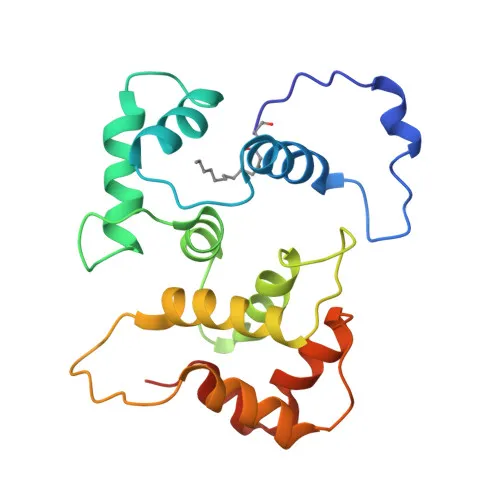
- Hippocalcin-like protein 1 (HPCAL1), also known as BDR-1, HLP2, and visinin-like protein 3 (VILIP-3), belongs to the recoverin family of neuronal calcium sensor proteins.
- It is encoded by the HPCAL1 gene (Gene ID: 3241) in humans and contains EF-hand repeats for calcium binding, characteristic of the recoverin family.
- The protein is suggested to play a role in the calcium-dependent regulation of rhodopsin phosphorylation, indicating involvement in visual signal transduction.
- Subcellular localization is at the membrane, consistent with its myristoylation and calcium-binding properties that facilitate membrane association.
- Keywords highlight it as a calcium-binding protein, lipoprotein, metal-binding, and myristoylated protein, with proteomics identification confirming its presence in human proteome studies.
- The protein's molecular weight is approximately 22.3 kDa, and it functions as a monomeric calcium sensor with potential roles in retinal signaling.
Experimental Guidance and Technical Tips
- For Western blotting, consider using whole-cell lysates or membrane-enriched fractions from retinal tissues, given HPCAL1's potential role in rhodopsin phosphorylation. Validate specificity across human, mouse, and rat samples as listed in cross-reactivity data.
- In ELISA applications, a recombinant HPCAL1 protein standard may be useful for generating calibration curves. The polyclonal nature of this antibody may require careful titration and blocking to minimize nonspecific binding.
- The immunogen covers the full-length protein (amino acids 1-193), which may allow detection of both native and denatured forms; however, confirm linear epitope recognition under reducing conditions for WB.
CamelBio: Your One-Stop Sourcing Bridge
CamelBio serves as a comprehensive IVD raw-material sourcing partner, connecting diagnostic manufacturers and research laboratories with premium antibodies like this HPCAL1 polyclonal antibody for calcium signaling and visual transduction studies. Our portfolio includes validated antibody pairs, optimized monoclonal and polyclonal antibodies, bulk ancillary reagents, and rare-target sourcing capabilities to streamline your assay development — from concept to clinic.
REQUEST A QUOTE
Our professional team will reply to you within one business day. Please feel free to contact us!