Polyclonal Antibodies
Anti-hnRNP Q/SYNCRIP Rabbit Polyclonal Antibody for WB, IHC-P, ELISA - O60506
Item Number : CM0030908
Price varies based on specs and customizations
- Application
- WB, IHC-P, ELISA
- Cross Reactivity
- Human, Mouse, Rat
- Protein Weight
- 70kDa

Shipping:
Contact us to get shipping details Enjoy On-time Dispatch Guarantee.
Why Choose Us
Easy ordering process, quality products, and dedicated support for your business success.
Core Product Specifications and Parameters
| Parameter | Value |
|---|---|
| Product Name | hnRNP Q/SYNCRIP Rabbit pAb |
| Remarks/Alias | PP68; NSAP1; GRYRBP; HNRNPQ; HNRPQ1; GRY-RBP; hnRNP-Q; hnRNP Q/SYNCRIP |
| Species | Human |
| GeneID (Human) | 10492 |
| GeneID | 10492 |
| Immunogen | Recombinant fusion protein containing a sequence corresponding to amino acids 1-200 of human hnRNP Q /hnRNP Q/SYNCRIP (NP_001153146.1). |
| Source | Rabbit |
| Category | Polyclonal Antibodies |
| Application | WB, IHC-P, ELISA |
| Cross Reactivity | Human, Mouse, Rat |
| SWISS | O60506 |
| Protein Weight | 70kDa |
| Shipping | Ice bag |
Biological Background: hnRNP Q/SYNCRIP Function and Localization
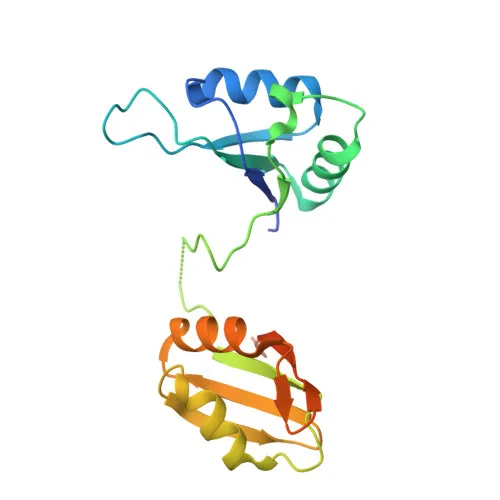
- Heterogeneous nuclear ribonucleoprotein Q (hnRNP Q), encoded by the SYNCRIP gene (also known as HNRPQ, NSAP1), is a multi-functional RNA-binding protein with several isoforms generated by alternative splicing.
- It is implicated in various aspects of mRNA processing, including pre-mRNA splicing, mRNA stabilization, and translation regulation. Notably, it is a component of the CRD-mediated complex that promotes MYC mRNA stability.
- Isoform 1 participates in the APOB mRNA editosome complex and may modulate C-to-U RNA editing through interactions with A1CF, APOBEC1, or RNA itself.
- In the cytoplasm, hnRNP Q is involved in translationally coupled mRNA turnover, such as the deadenylation and decay interplay of FOS mRNA mediated by the major coding-region determinant of instability (mCRD) domain.
- Upon interferon-gamma activation, hnRNP Q assembles into the GAIT (gamma interferon-activated inhibitor of translation) complex, which binds to GAIT elements in the 3'-UTR of inflammatory mRNAs like ceruloplasmin to suppress their translation.
- Subcellular localization includes the cytoplasm, microsomes, endoplasmic reticulum, and nucleoplasm, reflecting its multiple roles in RNA metabolism.
- The protein is ubiquitously expressed across tissues, including heart, brain, pancreas, placenta, spleen, lung, liver, skeletal muscle, kidney, thymus, prostate, uterus, small intestine, colon, peripheral blood, and testis.
- Post-translational modifications such as acetylation, methylation, phosphorylation, and ubiquitin-like conjugation have been identified, which may regulate its function and interaction networks.
Experimental Guidance and Technical Tips
- The polyclonal antibody is raised against a recombinant fusion protein corresponding to the N-terminal region (amino acids 1-200) of human hnRNP Q. This immunogen design may enable recognition of multiple isoforms, as the N-terminus is likely conserved among splice variants.
- For Western blotting (WB), a band at approximately 70 kDa can be expected, consistent with the reported molecular weight; validation in the relevant sample type (e.g., cell lysates) is recommended.
- Immunohistochemistry on paraffin-embedded sections (IHC-P) may require antigen retrieval optimization; consider testing different retrieval buffers to achieve optimal staining.
- ELISA can be performed using standard protocols; ensure the antibody is suitable for the specific assay format by performing a titration curve.
- The antibody demonstrates cross-reactivity with mouse and rat, suggesting conserved epitopes; however, endogenous expression levels may vary across species and tissues, so validate in your experimental system.
- As with all polyclonal antibodies, lot-to-lot consistency should be assessed for critical applications, and appropriate negative controls (e.g., knockout or blocking peptide) are advised to confirm specificity.
CamelBio: Your One-Stop Sourcing Bridge
CamelBio serves as a comprehensive sourcing partner for in vitro diagnostic (IVD) raw materials, offering validated antibody pairs, optimized monoclonal and polyclonal antibodies, and bulk ancillary reagents. For researchers and diagnostic developers focusing on RNA-binding proteins and post-transcriptional regulation, this hnRNP Q/SYNCRIP polyclonal antibody provides a reliable tool for applications such as WB, IHC-P, and ELISA. Beyond individual products, CamelBio supports custom raw-material sourcing and technical consultation to streamline your journey from concept to clinic.
Product Datasheet
Anti-hnRNP Q/SYNCRIP Rabbit Polyclonal Antibody for WB, IHC-P, ELISA - O60506
REQUEST A QUOTE
Our professional team will reply to you within one business day. Please feel free to contact us!