Polyclonal Antibodies
Anti-HNF4A Polyclonal Antibody for WB and ELISA - P41235
Item Number : CM0019741
Price varies based on specs and customizations
- Application
- WB, ELISA
- Cross Reactivity
- Human
- Protein Weight
- 53kDa

Shipping:
Contact us to get shipping details Enjoy On-time Dispatch Guarantee.
Why Choose Us
Easy ordering process, quality products, and dedicated support for your business success.
Core Product Specifications and Parameters
| Parameter | Value |
|---|---|
| Product Name | HNF4A Rabbit pAb |
| Remarks/Alias | TCF; HNF4; MODY; FRTS4; MODY1; NR2A1; TCF14; HNF4a7; HNF4a8; HNF4a9; NR2A21; TCF-14; HNF4alpha; HNF4A |
| Species | Human |
| GeneID (human) | 3172 |
| GeneID | 3172 |
| Immunogen | A synthetic peptide corresponding to a sequence within amino acids 226-325 of human HNF4A (NP_849180.1). |
| Source | Rabbit |
| Category | Polyclonal Antibodies |
| Application | WB, ELISA |
| Cross Reactivity | Human |
| SWISS | P41235 |
| Protein Weight | 53kDa |
| Shipping | Ice bag |
Biological Background: Hepatocyte Nuclear Factor 4-alpha Function and Localization
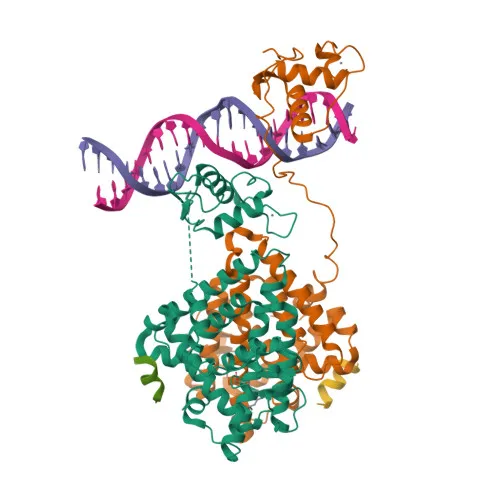
- HNF4A, also known as nuclear receptor subfamily 2 group A member 1 (NR2A1) and transcription factor 14 (TCF14), is a member of the nuclear receptor family that functions as a ligand-activated transcription factor.
- In the liver, HNF4A controls the expression of hepatic genes during endodermal-to-hepatic progenitor cell differentiation by facilitating RNA polymerase II recruitment to target promoters. Related references: PMID:30597922
- It represses the CLOCK-BMAL1 transcriptional complex and is essential for circadian rhythm maintenance and period regulation in liver and colon cells. Related references: PMID:30530698
- HNF4A localizes exclusively to the nucleus, where it binds DNA at specific response elements.
- Post-translational modifications, including acetylation, phosphorylation, and ubiquitination-like conjugation, modulate its transcriptional activity and protein stability.
- Mutations in HNF4A are associated with maturity-onset diabetes of the young type 1 (MODY1) and other metabolic disorders, highlighting its role in glucose homeostasis.
- Alternative promoter usage and splicing generate multiple isoforms (e.g., HNF4a7, HNF4a8, HNF4a9), which may have tissue-specific functions.
- The protein contains conserved zinc-finger domains for DNA binding and a ligand-binding domain characteristic of nuclear receptors.
Experimental Guidance and Technical Tips
- The immunogen is a synthetic peptide corresponding to a sequence within amino acids 226–325 of human HNF4A. Consider verifying isoform reactivity if targeting specific splice variants.
- For Western blotting, the predicted protein weight is 53 kDa. Using nuclear extracts from human liver or colon tissue/cells may improve signal.
- Confirm specificity via knockdown or overexpression experiments, and include appropriate positive and negative controls.
- In ELISA, the immunogen peptide can serve as a positive control; test against full-length recombinant protein to validate binding.
- Polyclonal antibodies can exhibit lot-to-lot variation; re-standardize your protocol when using a new batch.
CamelBio: Your One-Stop Sourcing Bridge
CamelBio provides diagnostic manufacturers and researchers with reliable access to high-quality IVD raw materials, including validated antibodies for transcription factors like HNF4A. From optimized polyclonal and monoclonal antibodies to bulk ancillary reagents, our one-stop platform supports your assay development from concept to commercialization. Reach out to explore customized sourcing solutions for rare targets in liver metabolism and genetic disease research.
REQUEST A QUOTE
Our professional team will reply to you within one business day. Please feel free to contact us!