Monoclonal Antibodies
Anti-HLA-G Rabbit Monoclonal Antibody for WB, IF/ICC, ELISA - P17693
Item Number : CM0007203
Price varies based on specs and customizations
- Application
- WB, IF/ICC, ELISA
- Cross Reactivity
- Human
- Protein Weight
- 38kDa

Shipping:
Contact us to get shipping details Enjoy On-time Dispatch Guarantee.
Why Choose Us
Easy ordering process, quality products, and dedicated support for your business success.
Core Product Specifications and Parameters
| Parameter | Value |
|---|---|
| Product Name | HLA-G Rabbit mAb |
| Remarks/Alias | MHC-G; HLA-G |
| Species | Human |
| GeneID (Human) | 3135 |
| GeneID | 3135 |
| Immunogen | Synthetic peptide|A synthetic peptide corresponding to a sequence within amino acids 50-150 of human HLA-G (NP_002118.1). |
| Source | Rabbit |
| Category | Monoclonal Antibodies |
| Application | WB, IF/ICC, ELISA |
| Cross Reactivity | Human |
| SWISS | P17693 |
| Protein Weight | 38kDa |
| Shipping | Ice bag |
Biological Background: HLA-G Function and Localization
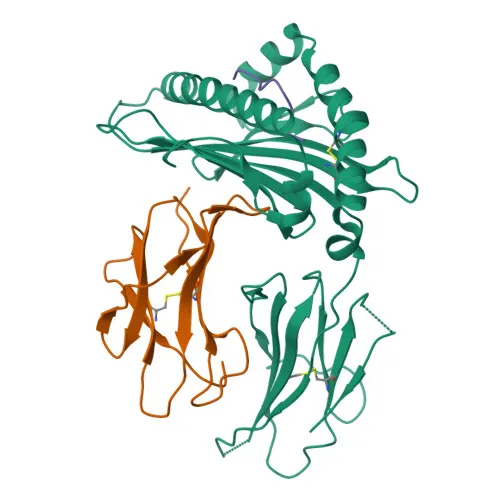
- HLA-G is a non-classical MHC class Ib molecule, with multiple isoforms generated by alternative splicing.
- In complex with beta-2 microglobulin (B2M), binds a limited repertoire of nonamer self-peptides derived from intracellular proteins such as histones and ribosomal proteins. Related references: PMID:7584149, PMID:8805247
- Peptide-bound HLA-G-B2M complex serves as a ligand for inhibitory/activating receptors KIR2DL4, LILRB1, and LILRB2 on uterine immune cells, promoting fetal development and maintaining maternal-fetal tolerance. Related references: PMID:16366734, PMID:19304799, PMID:20448110
- Upon interaction with KIR2DL4 and LILRB1 on decidual NK cells, triggers NK cell senescence-associated secretory phenotype, facilitating vascular remodeling and fetal growth. Related references: PMID:16366734, PMID:19304799, PMID:23184984
- Through LILRB2 receptor engagement, induces differentiation of type 1 regulatory T cells and myeloid-derived suppressor cells, further reinforcing immune tolerance. Related references: PMID:20448110, PMID:27859042
- Reprograms B cells toward an immune suppressive phenotype via LILRB1. Related references: PMID:24453251
- Subcellular localization includes cell membrane, endoplasmic reticulum, early endosome, secretion, and filopodium membrane, consistent with its trafficking and immune checkpoint functions.
- Tissue expression: found in placenta, amniotic membrane, immune cells (monocytes, dendritic cells, Tregs), adult eye, and detectable in amniotic fluid and serum. Related references: PMID:1570318, PMID:20448110, PMID:24453251
Experimental Guidance and Technical Tips
- The immunogen corresponds to a sequence within the alpha-1 domain of HLA-G, a region critical for peptide binding and receptor interactions; consider this when designing antigen-specific detection assays.
- For western blot, a band at approximately 38 kDa is expected; validate in relevant sample systems such as placental lysates or immune cell lines.
- For immunofluorescence/immunocytochemistry, optimize permeabilization to detect both surface and endosomal pools.
- For ELISA, pairing with a suitable capture antibody or coating the peptide antigen may be necessary; test under your specific conditions.
CamelBio: Your One-Stop Sourcing Bridge
CamelBio offers a comprehensive portfolio of IVD raw materials, including this anti-HLA-G rabbit monoclonal antibody for immunodetection applications. As your one-stop sourcing partner, we supply validated antibody pairs, optimized monoclonals, and bulk ancillary reagents for diagnostic development. Our team supports rare target antibody sourcing, helping you move from concept to clinic with confidence.
REQUEST A QUOTE
Our professional team will reply to you within one business day. Please feel free to contact us!