Polyclonal Antibodies
Anti-HK1 Polyclonal Antibody for WB, ELISA - P19367
Item Number : CM0016757
Price varies based on specs and customizations
- Application
- WB, ELISA
- Cross Reactivity
- Human, Mouse, Rat
- Protein Weight
- 102kDa

Shipping:
Contact us to get shipping details Enjoy On-time Dispatch Guarantee.
Why Choose Us
Easy ordering process, quality products, and dedicated support for your business success.
Core Product Specifications and Parameters
| Parameter | Value |
|---|---|
| Product Name | HK1 Rabbit pAb |
| Remarks/Alias | HK; HKD; HKI; HXK1; NMSR; RP79; HMSNR; HK1-ta; HK1-tb; HK1-tc; NEDVIBA; hexokinase; HK1 |
| Species | Human |
| GeneID (human) | 3098 |
| Immunogen | Recombinant fusion protein containing a sequence corresponding to amino acids 20-300 of human HK1 (NP_000179.2) |
| Source | Rabbit |
| Category | Polyclonal Antibodies |
| Application | WB, ELISA |
| Cross Reactivity | Human, Mouse, Rat |
| SWISS | P19367 |
| Protein Weight | 102kDa |
| Shipping | Ice bag |
Biological Background: HK1 Function and Localization
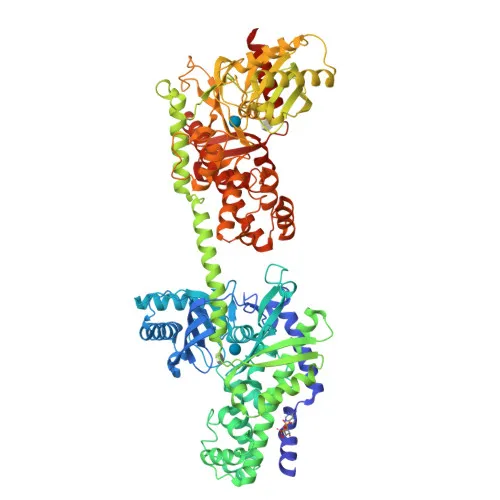
- Hexokinase-1 (HK1), also known as HK I or brain form hexokinase, is a key glycolytic enzyme that catalyzes the ATP-dependent phosphorylation of D-glucose to D-glucose 6-phosphate, the first and rate-limiting step of glycolysis.
Related references: PMID:1637300, PMID:25316723, PMID:27374331 - HK1 exhibits broad substrate specificity, phosphorylating D-glucosamine, D-fructose, D-mannose, and 2-deoxy-D-glucose, but does not act on N-acetyl-D-glucosamine.
- In innate immunity, HK1 functions as a cytosolic pattern recognition receptor for bacterial peptidoglycan; the N-acetyl-D-glucosamine moiety inhibits HK1 activity and triggers its release from mitochondria, leading to NLRP3 inflammasome activation.
Related references: PMID:27374331 - Subcellularly, HK1 is predominantly anchored to the mitochondrial outer membrane and is also found in the cytosol.
- The enzyme is subject to regulatory post-translational modifications, including acetylation and phosphorylation, and contains ATP- and nucleotide-binding domains characteristic of allosteric kinases.
- Tissue-specific isoforms arise from alternative splicing: isoform 2 is erythrocyte-specific, while isoforms 3 and 4 are testis-specific.
- Genetic variations in HK1 are associated with several disorders, such as Charcot-Marie-Tooth disease, hereditary hemolytic anemia, retinitis pigmentosa, and intellectual disability.
Experimental Guidance and Technical Tips
- For Western blot (WB), expect a band near the calculated molecular weight of 102 kDa. Validate detection in relevant human, mouse, or rat tissue/cell lysates expressing HK1.
- The immunogen (amino acids 20–300) targets the N‑terminal region; consider this when designing competition or epitope‑mapping experiments.
- Due to the polyclonal nature, some nonspecific bands may appear; optimize blocking conditions and primary antibody dilution for your specific experimental system.
- For ELISA, this antibody can be explored as a capture or detection reagent; validate against recombinant HK1 protein or known positive samples.
CamelBio: Your One-Stop Sourcing Bridge
CamelBio provides diagnostic manufacturers and research laboratories with a comprehensive pipeline of IVD raw materials, from validated antibody pairs and optimized polyclonal/monoclonal antibodies to bulk ancillary reagents and rare‑target sourcing. This HK1 polyclonal antibody supports projects in glycolysis research, metabolic disorders, and innate immunity. Connect with our team to discuss customized sourcing and technical consultation for your IVD development needs.
REQUEST A QUOTE
Our professional team will reply to you within one business day. Please feel free to contact us!