Polyclonal Antibodies
Anti-Histone H3 Rabbit Polyclonal Antibody for WB, IP, IF-P, IHC-P, ELISA - Q16695 / P68431
Item Number : CM0024391
Price varies based on specs and customizations
- Application
- WB, IP, IF-P, IHC-P, ELISA
- Cross Reactivity
- Human, Mouse, Rat, Other (Wide Range Predicted)
- Protein Weight
- 15 kDa

Shipping:
Contact us to get shipping details Enjoy On-time Dispatch Guarantee.
Why Choose Us
Easy ordering process, quality products, and dedicated support for your business success.
Core Product Specifications and Parameters
| Parameter | Value |
|---|---|
| Product Name | Histone H3 Rabbit pAb |
| Remarks/Alias | H3t; H3.4; H3/g; H3FT; H3C16; HIST3H3; Histone H3 |
| Species | Human |
| GeneID (human) | H3 |
| GeneID | 8290/8350 |
| Immunogen | Synthetic peptide; a synthetic peptide corresponding to a sequence within amino acids 36-136 of human HIST3H3 (NP_003520.1) |
| Source | Rabbit |
| Category | Polyclonal Antibodies |
| Application | WB, IP, IF-P, IHC-P, ELISA |
| Cross Reactivity | Human, Mouse, Rat, Other (Wide Range Predicted) |
| SWISS | Q16695/P68431 |
| Protein Weight | 15 kDa |
| Shipping | Ice bag |
Biological Background: Histone H3.1t (H3.4) Function and Localization
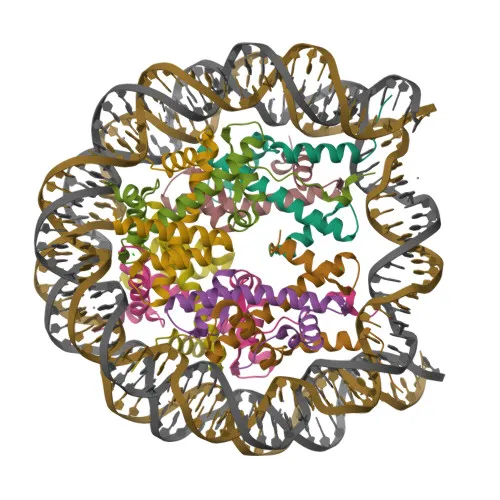
- Core component of nucleosome: Histone H3.1t is a variant histone H3 that functions as a core component of the nucleosome, wrapping and compacting DNA into chromatin. This limits DNA accessibility to cellular machineries and thereby plays a central role in transcription regulation, DNA repair, DNA replication, and chromosomal stability.
- Histone code regulation: DNA accessibility is regulated through a complex set of post-translational modifications on histones, including acetylation, methylation, phosphorylation, citrullination, ADP-ribosylation, hydroxylation, and ubiquitination, collectively referred to as the histone code. These modifications are critical for epigenetic regulation.
- Gene family and expression: Belonging to the histone H3 family, this variant (encoded by the H3-4 gene, also known as HIST3H3) is specifically expressed in testicular cells, suggesting a role in chromatin reorganization during spermatogenesis.
- Subcellular localization: H3.1t localizes to the nucleus and chromosomes, where it forms part of the nucleosome core particle.
- Structural features: The protein contains DNA-binding domains and can be modified by isopeptide bond formation and ubiquitin-like conjugation, influencing nucleosome dynamics and higher-order chromatin structure.
- Keywords: 3D-structure, Acetylation, ADP-ribosylation, Chromosome, Citrullination, DNA-binding, Hydroxylation, Isopeptide bond, Methylation, Nucleosome core, Nucleus, Phosphoprotein, Proteomics identification, Reference proteome, Ubl conjugation.
Experimental Guidance and Technical Tips
- Immunogen design: The antibody was raised against a synthetic peptide corresponding to a central region (aa 36-136) of human Histone H3.1t. This region is highly conserved among H3 variants and across species, which may explain the wide predicted cross-reactivity. Researchers should validate specificity for their target variant in the relevant biological context.
- Western blotting: A specific band at approximately 15 kDa is expected. To enhance detection, use nuclear extracts or acid-extracted histones, as these fractions are enriched for histones. Consider testing both denaturing and native gel conditions.
- Immunoprecipitation and immunofluorescence: For IP, cross-linking or native conditions may influence antibody accessibility due to chromatin compaction. For IF-P, permeabilization steps (e.g., Triton X-100) are typically required to detect nuclear histones. Validate in positive and negative cell lines.
- IHC-P and ELISA: For immunohistochemistry, antigen retrieval methods (heat-induced or enzymatic) can improve epitope exposure. In ELISA, the peptide or recombinant protein should be used to confirm reactivity. Always include appropriate controls.
CamelBio: Your One-Stop Sourcing Bridge
CamelBio offers comprehensive IVD raw-material sourcing solutions, providing validated antibody pairs, optimized polyclonal antibodies, and bulk ancillary reagents for diagnostic manufacturers and researchers. This Histone H3 antibody supports epigenetics and chromatin biology applications, and CamelBio can assist with customized raw-material needs, rare target sourcing, and technical consulting from concept to clinic.
Product Datasheet
Anti-Histone H3 Rabbit Polyclonal Antibody for WB, IP, IF-P, IHC-P, ELISA - Q16695 / P68431
REQUEST A QUOTE
Our professional team will reply to you within one business day. Please feel free to contact us!