Monoclonal Antibodies
Anti-Histamine H3 Receptor (HRH3) Rabbit Monoclonal Antibody for WB, IP, ELISA - Q9Y5N1
Item Number : CM0004030
Price varies based on specs and customizations
- Application
- WB, IP, ELISA
- Cross Reactivity
- Human, Mouse, Rat
- Protein Weight
- 49kDa

Shipping:
Contact us to get shipping details Enjoy On-time Dispatch Guarantee.
Why Choose Us
Easy ordering process, quality products, and dedicated support for your business success.
Core Product Specifications and Parameters
| Parameter | Value |
|---|---|
| Product Name | HRH3 Rabbit mAb |
| Remarks/Alias | HH3R; GPCR97; HRH3 |
| Species | Human |
| GeneID (Human) | 11255 |
| GeneID | 11255 |
| Immunogen | Synthetic Peptide|A synthetic peptide corresponding to a sequence within amino acids 1-100 of human HRH3 (Q9Y5N1). |
| Source | Rabbit |
| Category | Monoclonal Antibodies |
| Application | WB, IP, ELISA |
| Cross Reactivity | Human, Mouse, Rat |
| SWISS | Q9Y5N1 |
| Protein Weight | 49kDa |
| Shipping | Ice bag |
Biological Background: Histamine H3 Receptor Function and Localization
- HRH3 encodes the Histamine H3 receptor, a class of G protein-coupled receptor that mediates histamine signaling in the central and peripheral nervous systems.
- The receptor functions primarily by inhibiting adenylate cyclase, reducing intracellular cAMP levels, and exhibits high constitutive (agonist-independent) activity.
- Multiple protein isoforms are generated by alternative splicing; for example, isoform 3 showed no modulation of adenylate cyclase or calcium mobilization upon agonist stimulation, indicating isoform-specific signaling.
- The receptor is predominantly localized to the cell membrane and is expressed widely in the CNS, with highest levels in the thalamus and caudate nucleus; different isoforms show region-specific expression patterns.
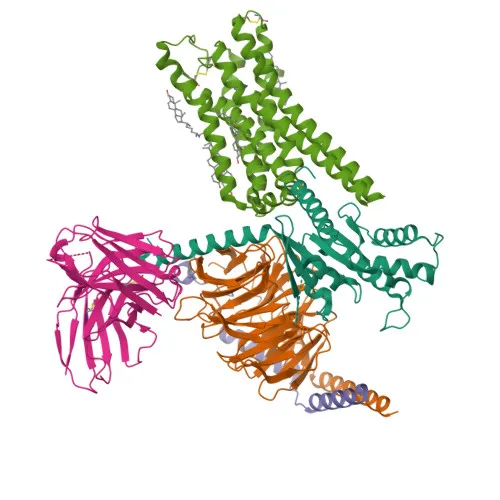
- As a GPCR, it features seven transmembrane domains, disulfide bonds, and contains sites for glycosylation and phosphorylation, consistent with its role in signal transduction.
- The HRH3 receptor is involved in modulating neurotransmitter release and is a target for various neurological conditions, including sleep-wake regulation and cognitive disorders.
Experimental Guidance and Technical Tips
- For Western blot, the predicted molecular weight is approximately 49 kDa; however, glycosylation may cause band shifts—optimize gel percentage and transfer conditions accordingly.
- When performing immunoprecipitation, verify antibody compatibility with the sample system and include an appropriate IgG control.
- For ELISA, determine optimal coating and blocking conditions for your specific assay format (direct or indirect).
- The immunogen lies within the N-terminal extracellular domain (aa 1–100), suggesting suitability for detecting surface receptor under non-denaturing conditions.
- Cross-reactivity with mouse and rat is reported; we recommend sequence alignment verification of the epitope region for non-human samples.
CamelBio: Your One-Stop Sourcing Bridge
CamelBio serves as your dedicated sourcing partner for IVD raw materials, covering every stage from concept to clinic. This anti-HRH3 monoclonal antibody exemplifies our portfolio of validated neuroscience and GPCR reagents, available alongside bulk ancillary materials and rare target sourcing. Our integrated supply chain and technical support streamline your assay development and diagnostic manufacturing.
Product Datasheet
Anti-Histamine H3 Receptor (HRH3) Rabbit Monoclonal Antibody for WB, IP, ELISA - Q9Y5N1
REQUEST A QUOTE
Our professional team will reply to you within one business day. Please feel free to contact us!