Polyclonal Antibodies
Anti-HIF1AN/FIH1 Rabbit Polyclonal Antibody for WB and ELISA - Q9NWT6
Item Number : CM0024166
Price varies based on specs and customizations
- Application
- WB, ELISA
- Cross Reactivity
- Human, Mouse
- Protein Weight
- 41kDa

Shipping:
Contact us to get shipping details Enjoy On-time Dispatch Guarantee.
Why Choose Us
Easy ordering process, quality products, and dedicated support for your business success.
Core Product Specifications and Parameters
| Parameter | Value |
|---|---|
| Product Name | HIF1AN/FIH1 Rabbit pAb |
| Remarks/Alias | FIH1; HIF1AN/FIH1 |
| Species | Human |
| Gene ID (Human) | 55662 |
| Gene ID | 55662 |
| Immunogen | Recombinant fusion protein containing a sequence corresponding to amino acids 1-349 of human HIF1AN/FIH1 (NP_060372.2) |
| Source | Rabbit |
| Category | Polyclonal Antibodies |
| Application | WB, ELISA |
| Cross Reactivity | Human, Mouse |
| SWISS | Q9NWT6 |
| Protein Weight | 41kDa |
| Shipping | Ice bag |
Biological Background: HIF1AN/FIH1 Function and Localization
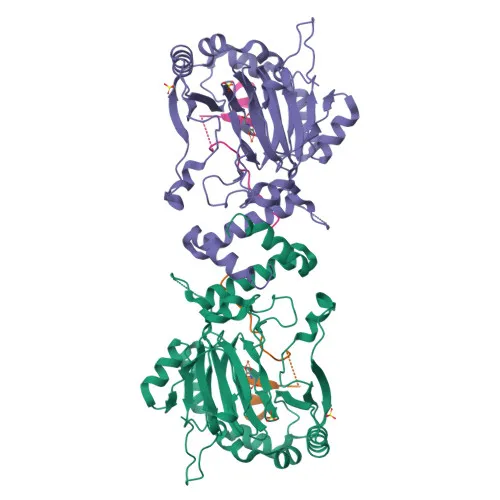
- HIF1AN (hypoxia-inducible factor 1-alpha inhibitor), also called factor inhibiting HIF-1 (FIH-1), is an asparagine hydroxylase that regulates the hypoxia response.
- Under normoxia, it hydroxylates HIF-1α at Asn-803 in the C-terminal transactivation domain, blocking the recruitment of p300/CBP coactivators and thereby repressing hypoxia-inducible gene transcription.
- Acts as a direct oxygen sensor; its hydroxylase activity requires molecular oxygen, iron, and 2-oxoglutarate, linking cellular oxygen tension to HIF-1α stability and activity.
- Beyond HIF-1α, HIF1AN hydroxylates asparagine, aspartate, and histidine residues in ankyrin repeat domains (ARDs) of diverse proteins, including NFKB1, NOTCH1, ASB4, and TNKS2, modulating signaling pathways beyond hypoxia.
- Negatively regulates Notch signaling by hydroxylating NOTCH1, which accelerates myogenic differentiation; conversely, hydroxylation of ASB4 positively promotes vascular differentiation.
- Subcellular distribution includes both the nucleus and cytoplasm, with perinuclear accumulation, reflecting its roles in transcriptional regulation and cytoplasmic protein interactions.
- Classified as a dioxygenase and iron-dependent oxidoreductase; its active site contains a mononuclear iron center essential for catalysis.
Experimental Guidance and Technical Tips
- The immunogen covers virtually the entire HIF1AN protein (residues 1–349), which encompasses the catalytic JmjC domain; this design is expected to generate antibodies recognizing multiple epitopes, aiding detection in denaturing and native assays.
- For Western blot, a band around 40–41 kDa is anticipated; inclusion of a normoxic cell lysate (e.g., HeLa, HEK293) as a positive control and a hypoxia-treated sample to assess HIF-1α hydroxylation-dependent effects may be informative.
- When performing ELISA, consider coating with recombinant HIF1AN or a HIF-1α peptide; a sandwich ELISA paired with a capture antibody specific for a distinct epitope could increase specificity.
- Predicted cross-reactivity with mouse HIF1AN is supported, but performance should be confirmed using the appropriate tissue or cell extracts.
- Optimal antibody dilutions and assay conditions should be empirically determined for each experimental system.
CamelBio: Your One-Stop Sourcing Bridge
- CamelBio provides HIF1AN/FIH1 polyclonal antibodies alongside a full suite of IVD raw materials, including validated antibody pairs, recombinant antigens, and ancillary reagents for hypoxia and oxygen-sensing research. From monoclonal and polyclonal antibodies to bulk-grade buffers, CamelBio streamlines procurement for diagnostic developers. Leverage CamelBio’s global sourcing expertise to obtain rare-target raw materials, accelerating your assay from concept to clinic.
Product Datasheet
Anti-HIF1AN/FIH1 Rabbit Polyclonal Antibody for WB and ELISA - Q9NWT6
REQUEST A QUOTE
Our professional team will reply to you within one business day. Please feel free to contact us!