Polyclonal Antibodies
Anti-HGFAC Polyclonal Antibody for WB and ELISA - Q04756
Item Number : CM0018259
Price varies based on specs and customizations
- Application
- WB, ELISA
- Cross Reactivity
- Human, Mouse, Rat
- Protein Weight
- 71kDa

Shipping:
Contact us to get shipping details Enjoy On-time Dispatch Guarantee.
Why Choose Us
Easy ordering process, quality products, and dedicated support for your business success.
Core Product Specifications and Parameters
| Parameter | Value |
|---|---|
| Product Name | HGFAC Rabbit pAb |
| Remarks/Alias | HGFA; HGFAC |
| Species | Human |
| Gene ID (Human) | 3083 |
| Gene ID | 3083 |
| Immunogen | Recombinant fusion protein containing a sequence corresponding to amino acids 408-655 of human HGFAC (NP_001519.1) |
| Source | Rabbit |
| Category | Polyclonal Antibodies |
| Application | WB, ELISA |
| Cross Reactivity | Human, Mouse, Rat |
| SWISS | Q04756 |
| Protein Weight | 71kDa |
| Shipping | Ice bag |
Biological Background: HGFAC Function and Localization
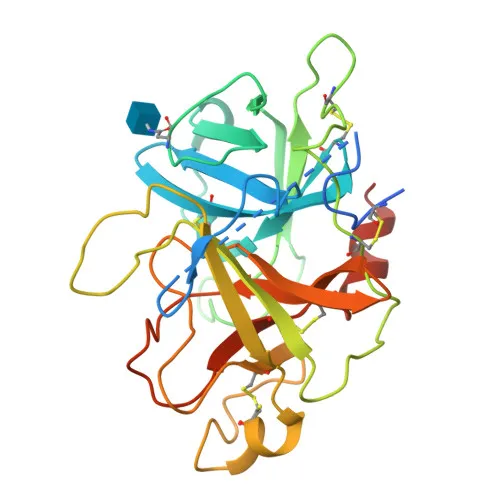
- HGFAC, also known as hepatocyte growth factor activator serine protease, is a secreted enzyme that converts inactive pro-HGF (single-chain HGF) into active HGF (disulfide-linked heterodimer) through proteolytic cleavage, which is essential for initiating HGF/MET receptor signaling.
- This activation triggers downstream cascades involved in cell proliferation, motility, morphogenesis, and angiogenesis, playing a pivotal role in development, tissue regeneration, and cancer progression.
- HGFAC is synthesized as a zymogen and contains several conserved domains: an N-terminal signal peptide, an EGF-like domain, a kringle domain, and a C-terminal serine protease domain, characteristic of the plasminogen-related growth factor family.
- The protein is predominantly expressed in the liver, consistent with its critical function in hepatic regeneration and homeostasis.
- Post-translational modifications include N-linked glycosylation and disulfide bond formation, which are crucial for proper folding, stability, and enzymatic activity.
- Subcellularly, HGFAC is localized to the extracellular space after secretion, where it performs its activator function.
Experimental Guidance and Technical Tips
- The immunogen covers the C-terminal region (aa 408-655), which includes a portion of the serine protease domain; consider this epitope location when designing assays that require detection of processed or unprocessed forms.
- For Western blotting, a band near 71 kDa is expected (representing the full-length zymogen or processed heavy chain); validate band specificity using liver tissue lysates or recombinant HGFAC protein as positive controls.
- In ELISA applications, the antibody may be suitable for capturing or detecting HGFAC in biological fluids such as serum or conditioned media; cross-reactivity with mouse and rat orthologs should be independently confirmed in the relevant sample matrix.
- Given that HGFAC is a secreted protease, collect and handle samples under conditions that preserve protein stability and avoid degradation—consider using protease inhibitor cocktails and keeping samples on ice.
- Activation of HGF signaling often requires both HGFAC and its substrate pro-HGF; functional studies may benefit from co-expression or supplementation with recombinant pro-HGF.
CamelBio: Your One-Stop Sourcing Bridge
CamelBio serves as a comprehensive partner for IVD raw materials, offering diagnostic manufacturers, research laboratories, and academic institutes streamlined access from concept to clinic. This anti-HGFAC polyclonal antibody is part of a broader portfolio supporting hepatology and growth factor signaling research, and we provide additional sourcing options including validated antibody pairs, optimized monoclonal antibodies, bulk ancillary reagents, and rare target raw materials to accelerate your assay development and production.
REQUEST A QUOTE
Our professional team will reply to you within one business day. Please feel free to contact us!