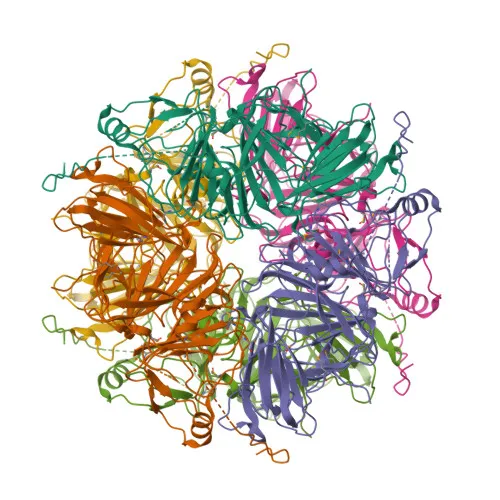
Monoclonal Antibodies
Anti-HGD Rabbit Monoclonal Antibody for WB, ELISA - Q93099
Item Number : CM0003921
Price varies based on specs and customizations
- Application
- WB, ELISA
- Cross Reactivity
- Human
- Protein Weight
- 50kDa

Shipping:
Contact us to get shipping details Enjoy On-time Dispatch Guarantee.
Why Choose Us
Easy ordering process, quality products, and dedicated support for your business success.
Core Product Specifications and Parameters
| Parameter | Value |
|---|---|
| Product Name | HGD Rabbit mAb |
| Remarks/Alias | AKU; HGO; HGD |
| Species | Human |
| GeneID (Human) | 3081 |
| GeneID | 3081 |
| Immunogen | Synthetic Peptide | A synthetic peptide corresponding to a sequence within amino acids 346-445 of human HGD (Q93099). |
| Source | Rabbit |
| Category | Monoclonal Antibodies |
| Application | WB, ELISA |
| Cross Reactivity | Human |
| SWISS | Q93099 |
| Protein Weight | 50kDa |
| Shipping | Ice bag |
Biological Background: HGD Function and Localization
- HGD, also known as Homogentisate 1,2-dioxygenase, homogentisate oxygenase, or homogentisic acid oxidase, is a critical enzyme involved in the catabolism of phenylalanine and tyrosine.
- Catalyzes the conversion of homogentisate to maleylacetoacetate, a key step in the degradation pathway.
- Mutations in HGD are linked to alkaptonuria (AKU), an autosomal recessive metabolic disorder characterized by accumulation of homogentisic acid.
- Exhibits highest expression in the prostate, small intestine, colon, kidney, and liver, as per tissue specificity data.
- Classified as an iron-dependent dioxygenase and oxidoreductase, requiring iron as a metal cofactor.
- Post-translational modifications include acetylation, as identified in proteomics studies.
- Predicted molecular weight is approximately 50 kDa (UniProt: 49964 Da), consistent with the observed protein size.
Experimental Guidance and Technical Tips
- The antibody was raised against a synthetic peptide from amino acids 346-445 of human HGD, ensuring targeted recognition. In western blot, expect a band near 50 kDa; use a positive control such as human liver or prostate lysate, where HGD expression is high.
- For ELISA, consider coating with the immunogen peptide or recombinant HGD protein, and optimize the antibody dilution for your specific assay format.
- As a rabbit monoclonal antibody, it offers high specificity and lot-to-lot consistency. Store at the recommended temperature (shipped on ice bags, typically -20°C for long-term).
- Cross-reactivity has been confirmed for human. If using in other species, verify sequence homology and validate experimentally due to potential epitope differences.
CamelBio: Your One-Stop Sourcing Bridge
At CamelBio, we provide diagnostic manufacturers and research institutions with one-stop access to premium IVD raw materials. This HGD rabbit monoclonal antibody complements our portfolio for metabolic and inherited disease target antigens. From validated antibody pairs to bulk ancillary reagents and rare-target sourcing, CamelBio bridges the gap from initial concept to clinical application.
REQUEST A QUOTE
Our professional team will reply to you within one business day. Please feel free to contact us!