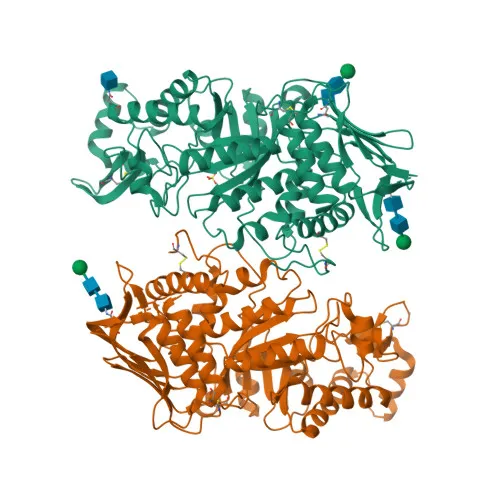
Monoclonal Antibodies
Anti-HEXA (Beta-hexosaminidase subunit alpha) Rabbit Monoclonal Antibody for WB, IF-P, IHC-P, ELISA - P06865
Item Number : CM0006588
Price varies based on specs and customizations
- Application
- WB, IF-P, IHC-P, ELISA
- Cross Reactivity
- Human, Mouse, Rat
- Protein Weight
- 61kDa

Shipping:
Contact us to get shipping details Enjoy On-time Dispatch Guarantee.
Why Choose Us
Easy ordering process, quality products, and dedicated support for your business success.
Core Product Specifications and Parameters
| Parameter | Value |
|---|---|
| Product Name | HEXA Rabbit mAb |
| Remarks/Alias | TSD; HEXA |
| Species | Human |
| GeneID (human) | 3073 |
| GeneID | 3073 |
| Immunogen | Recombinant protein; Recombinant fusion protein containing a sequence corresponding to amino acids 368-529 of human HEXA. (NP_000511.2). |
| Source | Rabbit |
| Category | Monoclonal Antibodies |
| Application | WB, IF-P, IHC-P, ELISA |
| Cross Reactivity | Human, Mouse, Rat |
| SWISS | P06865 |
| Protein Weight | 61kDa |
| Shipping | Ice bag |
Biological Background: HEXA Function and Localization
- HEXA catalyzes the hydrolysis of N-acetyl-D-hexosamine residues from various glycoconjugates, including oligosaccharides, glycolipids, and mucopolysaccharides. Related references: PMID:11707436, PMID:16698036, PMID:8123671
- Beta-hexosaminidase isozymes (A, B, S) exhibit differential activity: isozymes S and A hydrolyze sulfated substrates, whereas isozyme B prefers neutral substrates. Related references: PMID:11707436
- Only isozyme A can degrade GM2 ganglioside in the presence of the GM2 activator protein, a critical reaction for neuronal lipid catabolism. Related references: PMID:8123671, PMID:8672428, PMID:9694901
- HEXA deficiency causes Tay-Sachs disease, an autosomal recessive GM2 gangliosidosis marked by progressive neurodegeneration and early mortality.
- The enzyme localizes to lysosomes, functioning as a glycoprotein hydrolase active as a zymogen precursor processed into the mature form.
- Alternative splicing generates multiple isoforms; the canonical human HEXA protein has a calculated mass of ~60.7 kDa, consistent with the observed 61 kDa band.
Experimental Guidance and Technical Tips
- The immunogen corresponds to the C-terminal domain (aa 368-529) of human HEXA, which may aid in detecting full-length or processed forms; validate in relevant sample systems.
- Suitable for Western blot (WB) detection of endogenous HEXA (predicted ~61 kDa) in human, mouse, and rat lysates; consider using reducing conditions and appropriate controls.
- For immunofluorescence (IF-P) and immunohistochemistry (IHC-P), include appropriate fixation/permeabilization protocols and co-localization with lysosomal markers to confirm specificity.
- ELISA applications can be optimized using the recombinant antibody format for antigen capture or detection; cross-reactivity with rodent species allows translational studies.
- As a monoclonal antibody derived from rabbit, it offers high affinity and low background, but always validate in target tissues or cell lines with known HEXA expression.
CamelBio: Your One-Stop Sourcing Bridge
CamelBio provides diagnostic manufacturers, labs, and research institutes with one-stop access to IVD raw materials, technical services, and consulting—covering every stage from concept to clinic. This anti-HEXA rabbit monoclonal antibody supports research into lysosomal storage disorders such as Tay-Sachs disease and glycosphingolipid metabolism, with validated performance across multiple applications. For your project needs, CamelBio offers a comprehensive portfolio including optimized antibody pairs, bulk ancillary reagents, and custom sourcing for rare targets, ensuring seamless supply continuity from discovery to commercialization.
Product Datasheet
Anti-HEXA (Beta-hexosaminidase subunit alpha) Rabbit Monoclonal Antibody for WB, IF-P, IHC-P, ELISA - P06865
REQUEST A QUOTE
Our professional team will reply to you within one business day. Please feel free to contact us!