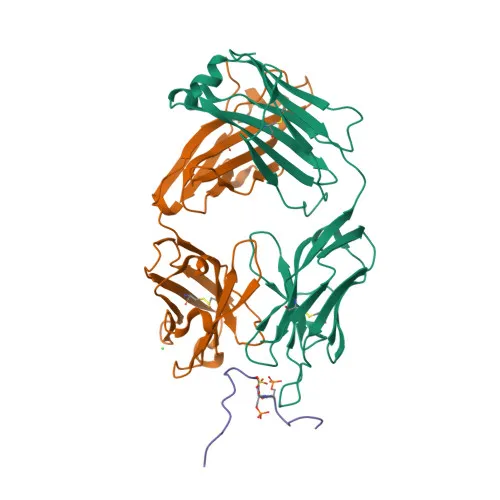
Polyclonal Antibodies
Anti-HEPACAM Rabbit Polyclonal Antibody for WB, ELISA - Q14CZ8
Item Number : CM0016641
Price varies based on specs and customizations
- Application
- WB, ELISA
- Cross Reactivity
- Human, Mouse, Rat
- Protein Weight
- 46kDa

Shipping:
Contact us to get shipping details Enjoy On-time Dispatch Guarantee.
Why Choose Us
Easy ordering process, quality products, and dedicated support for your business success.
Core Product Specifications and Parameters
| Parameter | Value |
|---|---|
| Product Name | HEPACAM Rabbit pAb |
| Remarks/Alias | HEPN1; MLC2A; MLC2B; GlialCAM; HEPACAM |
| Species | Human |
| Gene ID (Human) | 220296 |
| Gene ID | 220296 |
| Immunogen | Recombinant fusion protein containing a sequence corresponding to amino acids 35-245 of human HEPACAM (NP_689935.2). |
| Source | Rabbit |
| Category | Polyclonal Antibodies |
| Application | WB, ELISA |
| Cross Reactivity | Human, Mouse, Rat |
| SWISS | Q14CZ8 |
| Protein Weight | 46kDa |
| Shipping | Ice bag |
Biological Background: HEPACAM Function and Localization
- HEPACAM (hepatic and glial cell adhesion molecule), also known as hepaCAM, HEPN1, MLC2A, MLC2B, and GlialCAM, is a cell adhesion molecule involved in regulating cell motility and cell-matrix interactions.
- It may inhibit cell growth through suppression of cell proliferation (PubMed:15885354, PubMed:15917256). Related references: PMID:15885354 PMID:15917256
- In glial cells, HEPACAM associates with and targets the chloride channel CLCN2 at astrocytic processes and myelinated fiber tracts, where it may regulate transcellular chloride flux involved in neuron excitability (PubMed:22405205). Related references: PMID:22405205
- The protein localizes to the cytoplasm and cell membrane, consistent with its role as a transmembrane adhesion molecule.
- HEPACAM contains an immunoglobulin domain and is a glycosylated transmembrane protein with disulfide bonds.
- It undergoes alternative splicing and phosphorylation, and its expression is linked to growth arrest and cell cycle regulation.
- Mutations in HEPACAM are associated with disease variants, highlighting its importance in normal cellular function.
- The predicted molecular weight is approximately 46 kDa (UniProt: 46026 Da).
Experimental Guidance and Technical Tips
- For Western blot (WB), consider optimizing antibody concentration based on target expression levels. Use lysates from human, mouse, or rat cell lines or tissues known to express HEPACAM, such as liver or brain.
- The immunogen sequence (amino acids 35–245) covers a significant portion of the extracellular domain, suggesting suitability for detecting both full-length and certain splice variants; however, confirm specificity in your system.
- For ELISA, the antibody may be used for capture or detection of recombinant HEPACAM; validate assay conditions with appropriate standards and controls.
- Since HEPACAM is a transmembrane protein, include proper sample preparation (e.g., membrane protein extraction) to enhance detection sensitivity.
CamelBio: Your One-Stop Sourcing Bridge
CamelBio is a trusted provider of IVD raw materials, offering diagnostic manufacturers and research laboratories streamlined access to validated antibodies, such as anti-HEPACAM polyclonal antibody. We support your development with a broad portfolio of antibody pairs, bulk ancillary reagents, and custom sourcing for targets involved in cell adhesion, neurobiology, and cancer research. Partner with us to accelerate your project from concept to clinic.
REQUEST A QUOTE
Our professional team will reply to you within one business day. Please feel free to contact us!