Polyclonal Antibodies
Anti-HCN1 Rabbit Polyclonal Antibody for WB, ELISA - O60741
Item Number : CM0022350
Price varies based on specs and customizations
- Application
- WB, ELISA
- Cross Reactivity
- Human, Mouse, Rat
- Protein Weight
- 99kDa

Shipping:
Contact us to get shipping details Enjoy On-time Dispatch Guarantee.
Why Choose Us
Easy ordering process, quality products, and dedicated support for your business success.
Core Product Specifications and Parameters
| Parameter | Value |
|---|---|
| Product Name | HCN1 Rabbit pAb |
| Remarks/Alias | BCNG1, DEE24, HAC-2, BCNG-1, EIEE24, GEFSP10, HCN1 |
| Species | Human |
| GeneID (Human) | 348980 |
| GeneID | 348980 |
| Immunogen | Synthetic peptide corresponding to a sequence within amino acids 791-890 of human HCN1 (NP_066550.2) |
| Source | Rabbit |
| Category | Polyclonal Antibodies |
| Application | WB, ELISA |
| Cross Reactivity | Human, Mouse, Rat |
| SWISS | O60741 |
| Protein Weight | 99kDa |
| Shipping | Ice bag |
Biological Background: HCN1 Function and Localization
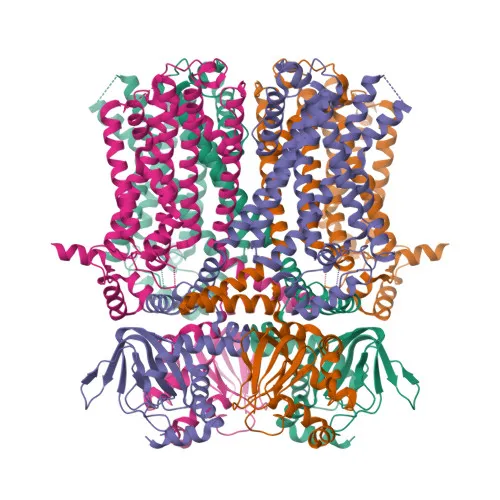
- HCN1 encodes the potassium/sodium hyperpolarization-activated cyclic nucleotide-gated channel 1, also known as brain cyclic nucleotide-gated channel 1 (BCNG-1).
- It functions as a hyperpolarization-activated ion channel permeable to both Na⁺ and K⁺, with lower selectivity for K⁺ over Na⁺ (PubMed:15351778, PubMed:28086084). Related references: PMID:15351778, PMID:28086084
- HCN1 contributes to the native cardiac pacemaker current If and the neuronal Ih current, thereby modulating neuronal excitability (PubMed:29936235, PubMed:30351409). Related references: PMID:29936235, PMID:30351409
- The channel is predominantly localized to the cell membrane.
- Tissue expression is highest in the brain, especially the amygdala and hippocampus, with very low levels in muscle and pancreas.
- The protein contains a cyclic nucleotide-binding domain and is regulated by cAMP, classifying it as a voltage-gated channel.
- HCN1 is associated with disease variants linked to epilepsy.
- It may also participate in cerebellar motor learning and sour taste transduction (By similarity).
Experimental Guidance and Technical Tips
- The immunogen used corresponds to a synthetic peptide from the C-terminal region (amino acids 791–890) of human HCN1, which may be suitable for detecting the total protein in Western blotting.
- For WB, consider using whole-cell or membrane-enriched lysates from brain tissues (e.g., hippocampus) or cell lines expressing HCN1; a band at approximately 99 kDa is expected based on the calculated molecular weight.
- Validate antibody specificity by including appropriate positive/negative controls and, if necessary, peptide blocking experiments.
- Cross-reactivity with mouse and rat suggests potential utility in rodent models; however, verify performance in each species.
- For ELISA, the polyclonal nature may provide broad epitope recognition; titration and optimization are recommended for your specific assay format.
CamelBio: Your One-Stop Sourcing Bridge
As a trusted one-stop source for IVD raw materials, CamelBio provides HCN1 antibodies alongside an extensive portfolio of validated antibody pairs, recombinant proteins, and ancillary reagents. We support diagnostic manufacturers and researchers with reliable supply chains and custom sourcing solutions to accelerate your development from discovery to clinical application.
REQUEST A QUOTE
Our professional team will reply to you within one business day. Please feel free to contact us!