Polyclonal Antibodies
Anti-HACE1 Polyclonal Antibody for WB, IHC-P, ELISA - Q8IYU2
Item Number : CM0027412
Price varies based on specs and customizations
- Application
- WB, IHC-P, ELISA
- Cross Reactivity
- Human, Mouse, Rat
- Protein Weight
- 102kDa

Shipping:
Contact us to get shipping details Enjoy On-time Dispatch Guarantee.
Why Choose Us
Easy ordering process, quality products, and dedicated support for your business success.
Core Product Specifications and Parameters
| Parameter | Value |
|---|---|
| Product Name | HACE1 Rabbit pAb |
| Remarks/Alias | SPPRS; HACE1 |
| Species | Human |
| GeneID (Human) | 57531 |
| GeneID | 57531 |
| Immunogen | Synthetic peptide|A synthetic peptide corresponding to a sequence within amino acids 1-100 of human HACE1 (NP_065822.2). |
| Source | Rabbit |
| Category | Polyclonal Antibodies |
| Application | WB, IHC-P, ELISA |
| Cross Reactivity | Human, Mouse, Rat |
| SWISS | Q8IYU2 |
| Protein Weight | 102kDa |
| Shipping | Ice bag |
Biological Background: HACE1 Function and Localization
-
HACE1 is an E3 ubiquitin-protein ligase that regulates Golgi membrane fusion and small GTPase signaling (PubMed:15254018, PubMed:21988917, PubMed:22036506).
Related references:
PMID:15254018
PMID:21988917
PMID:22036506 -
It acts as a key regulator of Golgi membrane dynamics during the cell cycle; it is recruited to the Golgi by Rab proteins and mediates ubiquitination during mitotic Golgi disassembly, providing a signal for Golgi reassembly after cell division (PubMed:21988917).
Related references:
PMID:21988917 -
HACE1 specifically binds GTP-bound RAC1 and promotes its ubiquitination and degradation, thereby contributing to host defense against pathogens (PubMed:22036506, PubMed:37537642, PubMed:38332367).
Related references:
PMID:22036506
PMID:37537642
PMID:38332367 -
It may also function as a transcription regulator through interaction with RARB (By similarity).
-
Subcellularly, HACE1 localizes to the Golgi apparatus, Golgi stack membrane, cytoplasm, and endoplasmic reticulum.
-
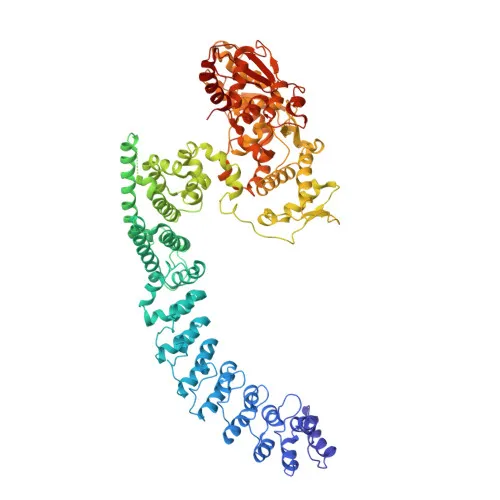
The protein contains ankyrin (ANK) repeats and a HECT domain, characteristic of E3 ubiquitin ligases; alternative splicing yields multiple isoforms.
-
HACE1 is expressed in multiple tissues including heart, brain, and kidney.
-
Mutations in HACE1 are linked to hereditary spastic paraplegia and chromosomal rearrangements observed in several cancers, highlighting its role in neurodegeneration and tumor suppression.
Experimental Guidance and Technical Tips
- The immunogen is a synthetic peptide mapping to the N-terminal region (amino acids 1–100) of human HACE1; consider verifying sequence conservation if using a non-human sample system.
- For Western blot (WB), the predicted molecular weight of HACE1 is approximately 102 kDa; include appropriate molecular weight markers and validate the band identity using known positive controls.
- When performing immunohistochemistry (IHC-P), note the Golgi and cytoplasmic localization of HACE1; appropriate subcellular staining patterns should be confirmed.
- The reported cross-reactivity with mouse and rat suggests epitope conservation; however, always validate in the relevant species and tissue context.
- For ELISA applications, optimize coating antigen and antibody dilution using standard checkerboard titration.
CamelBio: Your One-Stop Sourcing Bridge
CamelBio is your one-stop partner for IVD raw material supply, offering tailored sourcing solutions from concept to clinic. We provide validated antibodies, including optimized polyclonal and monoclonal antibodies targeting HACE1 and other ubiquitylation-related proteins, along with bulk ancillary reagents. Whether you need rare-target antibody development or large-scale production, CamelBio simplifies procurement with technical consultation to accelerate your diagnostic and research workflows.
REQUEST A QUOTE
Our professional team will reply to you within one business day. Please feel free to contact us!