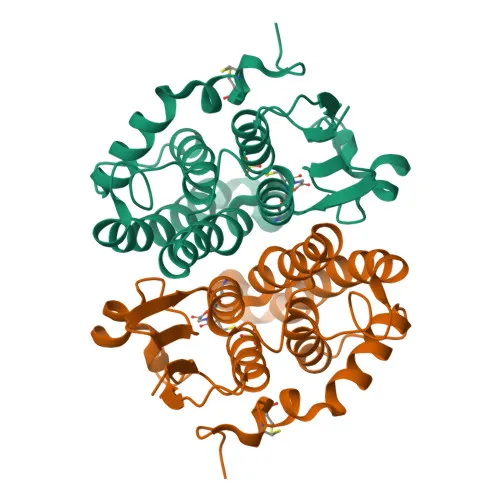
Polyclonal Antibodies
Anti-GSTZ1 Rabbit Polyclonal Antibody for WB, ELISA - O43708
Item Number : CM0029834
Price varies based on specs and customizations
- Application
- WB, ELISA
- Cross Reactivity
- Mouse, Rat
- Protein Weight
- 24kDa

Shipping:
Contact us to get shipping details Enjoy On-time Dispatch Guarantee.
Why Choose Us
Easy ordering process, quality products, and dedicated support for your business success.
Easy Process
Quality Assured
Dedicated Support
Core Product Specifications and Parameters
| Parameter | Value |
|---|---|
| Product Name | GSTZ1 Rabbit pAb |
| Remarks/Alias | MAI, MAAI, MAAID, GSTZ1-1, GSTZ1 |
| Species | Human |
| Gene ID (Human) | 2954 |
| Gene ID | 2954 |
| Immunogen | Recombinant protein: Recombinant fusion protein containing a sequence corresponding to amino acids 1-216 of human GSTZ1 (NP_665877.1). |
| Source | Rabbit |
| Category | Polyclonal Antibodies |
| Application | WB, ELISA |
| Cross Reactivity | Mouse, Rat |
| SWISS | O43708 |
| Protein Weight | 24kDa |
| Shipping | Ice bag |
Biological Background: GSTZ1 Function and Localization
- GSTZ1, also known as maleylacetoacetate isomerase or glutathione S-transferase zeta 1, is a member of the glutathione S-transferase (GST) superfamily, specifically the zeta class.
- It functions as a bifunctional enzyme with both maleylacetoacetate isomerase activity, critical in the phenylalanine/tyrosine catabolic pathway, and glutathione S-transferase activity towards substrates like ethacrynic acid and 7-chloro-4-nitrobenz-2-oxa-1,3-diazole.
- Additionally, it possesses low glutathione peroxidase activity with organic hydroperoxides and can catalyze the glutathione-dependent oxygenation of dichloroacetic acid to glyoxylic acid, a reaction relevant to the metabolism of environmental contaminants.
- GSTZ1 is predominantly localized in the cytoplasm.
- Tissue distribution is broad but highest in liver, kidney, skeletal muscle, and brain; also found in melanocytes, synovium, placenta, breast, and fetal liver and heart.
- According to UniProt, GSTZ1 undergoes post-translational modifications including acetylation and phosphorylation, and has alternative splicing isoforms.
- Keywords: Isomerase, Transferase, Multifunctional enzyme, Phenylalanine catabolism, Tyrosine catabolism, Acetylation, Alternative splicing, Cytoplasm, Disease variant.
Experimental Guidance and Technical Tips
- The immunogen corresponds to nearly full-length GSTZ1 (aa 1-216); sequence conservation across human, mouse, and rat may support cross-reactivity, but validation in the target species is recommended.
- For WB, the predicted molecular weight is 24 kDa; use an appropriate gel percentage and include positive controls such as human liver or cell lysates known to express GSTZ1.
- For ELISA, consider using recombinant GSTZ1 protein as a positive control, and optimize coating conditions and antibody dilutions empirically.
- Since GSTZ1 is a cytoplasmic enzyme, prepare protein extracts accordingly and consider subcellular fractionation to enrich the signal.
CamelBio: Your One-Stop Sourcing Bridge
- As a dedicated IVD raw-material supplier, CamelBio provides validated GSTZ1 antibodies and can support the development of diagnostic assays targeting metabolic and detoxification pathways.
- From polyclonal antibodies to recombinant protein reagents and ancillary materials, we offer a streamlined procurement pipeline for research and diagnostic applications.
- Leverage our expertise to source rare-target antibodies and optimize reagent performance for your specific project needs.
REQUEST A QUOTE
Our professional team will reply to you within one business day. Please feel free to contact us!