Monoclonal Antibodies
Anti-GSTO1 Monoclonal Antibody for WB, ELISA - P78417
Item Number : CM0004579
Price varies based on specs and customizations
- Application
- WB, ELISA
- Cross Reactivity
- Human, Rat
- Protein Weight
- 28 kDa

Shipping:
Contact us to get shipping details Enjoy On-time Dispatch Guarantee.
Why Choose Us
Easy ordering process, quality products, and dedicated support for your business success.
Core Product Specifications and Parameters
| Parameter | Value |
|---|---|
| Product Name | GSTO1 Rabbit mAb |
| Remarks/Alias | P28; SPG-R; GSTO 1-1; GSTTLp28; HEL-S-21; GSTO1 |
| Species | Human |
| GeneID (human) | 9446 |
| GeneID | 9446 |
| Immunogen | Synthetic Peptide|A synthetic peptide corresponding to a sequence within amino acids 1-100 of human GSTO1 (NP_004823.1). |
| Source | Rabbit |
| Category | Monoclonal Antibodies |
| Application | WB, ELISA |
| Cross Reactivity | Human, Rat |
| SWISS | P78417 |
| Protein Weight | 28 kDa |
| Shipping | Ice bag |
Biological Background: GSTO1 Function and Localization
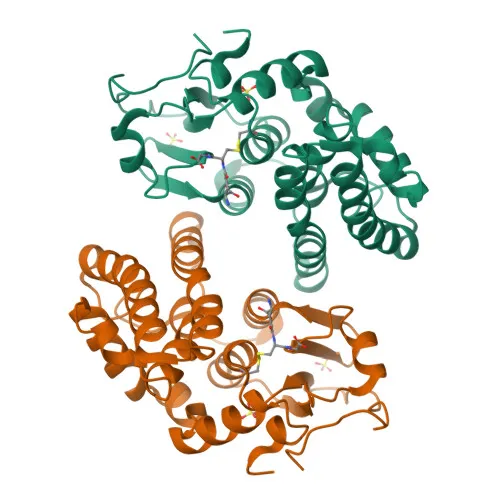
- GSTO1 encodes glutathione S-transferase omega-1, a member of the glutathione S-transferase (GST) family, which is known for its glutathione-dependent activities.
- It also functions as glutathione-dependent dehydroascorbate reductase, S-(phenacyl)glutathione reductase (SPG-R), and monomethylarsonic acid reductase (MMA(V) reductase), highlighting its role in cellular detoxification and antioxidant defense.
- GSTO1 participates in the biotransformation of inorganic arsenic by reducing monomethylarsonic acid (MMA) and dimethylarsonic acid, thereby contributing to arsenic metabolism and detoxification.
- The protein is localized to the cytoplasm and cytosol.
- It is ubiquitously expressed, with highest expression levels in liver, pancreas, skeletal muscle, spleen, thymus, colon, blood leukocyte, and heart; lowest expression in brain, placenta, and lung.
- Keywords include oxidoreductase and transferase activities; alternative splicing yields multiple isoforms; and post-translational modifications such as acetylation and phosphorylation have been identified.
Experimental Guidance and Technical Tips
- The immunogen is a synthetic peptide corresponding to amino acids 1-100 of human GSTO1 (NP_004823.1). This N-terminal region may contain epitopes conserved across species, supporting observed cross-reactivity with human and rat. For experiments with other species, sequence alignment in this region is recommended.
- This antibody is suitable for Western blotting (WB) and ELISA applications. For WB, a band around 28 kDa is expected. It is advisable to optimize loading amounts and primary antibody dilution using positive control lysates from liver or pancreas, which express high levels of GSTO1.
- For ELISA, consider coating with recombinant GSTO1 protein or peptide to establish standard curves, and validate specificity using negative controls or knockout cell lines if available.
- Since GSTO1 is involved in arsenic biotransformation, functional studies may benefit from including arsenic-related treatments to assess enzyme activity modulation.
CamelBio: Your One-Stop Sourcing Bridge
CamelBio provides diagnostic manufacturers, labs, and research institutes with one-stop access to IVD raw materials, technical services, and consulting—covering every stage from concept to clinic. For GSTO1-related research and assay development, we supply validated antibody pairs, optimized monoclonal and polyclonal antibodies, and bulk ancillary reagents. Our streamlined sourcing ensures rapid access to rare target reagents, bridging your development needs efficiently.
REQUEST A QUOTE
Our professional team will reply to you within one business day. Please feel free to contact us!