Polyclonal Antibodies
Anti-GSTA1 Polyclonal Antibody for WB, IF/ICC, ELISA - P08263
Item Number : CM0018868
Price varies based on specs and customizations
- Application
- WB, IF/ICC, ELISA
- Cross Reactivity
- Human, Mouse, Rat
- Protein Weight
- 26kDa

Shipping:
Contact us to get shipping details Enjoy On-time Dispatch Guarantee.
Why Choose Us
Easy ordering process, quality products, and dedicated support for your business success.
Core Product Specifications and Parameters
| Parameter | Value |
|---|---|
| Product Name | GSTA1 Rabbit pAb |
| Remarks/Alias | GST2, GTH1, GSTA1-1, GST-epsilon, GSTA1 |
| Species | Human |
| Gene ID (Human) | 2938 |
| Gene ID | 2938 |
| Immunogen | Recombinant fusion protein containing a sequence corresponding to amino acids 1-222 of human GSTA1 (NP_665683.1). |
| Source | Rabbit |
| Category | Polyclonal Antibodies |
| Application | WB, IF/ICC, ELISA |
| Cross Reactivity | Human, Mouse, Rat |
| SWISS | P08263 |
| Protein Weight | 26kDa |
| Shipping | Ice bag |
Biological Background: GSTA1 Function and Localization
- Glutathione S-transferase A1 (GSTA1), also known as GST2, GTH1, GSTA1-1, and GST-epsilon, is a member of the alpha class of glutathione S-transferases.
- GSTA1 catalyzes the conjugation of reduced glutathione to electrophilic centers on a wide range of exogenous and endogenous hydrophobic substrates, playing a key role in detoxification and cellular defense mechanisms.
- Specifically, it is involved in the formation of glutathione conjugates of prostaglandin A2 (PGA2) and prostaglandin J2 (PGJ2), contributing to the modulation of lipid signaling molecules. Related references: PMID:9084911
- GSTA1 also catalyzes the isomerization of D5-androstene-3,17-dione (AD) into D4-androstene-3,17-dione, suggesting a role in hormone biosynthesis. Related references: PMID:11152686
- Through its glutathione-dependent peroxidase activity, GSTA1 metabolizes oxidized linoleic acid, specifically the fatty acid hydroperoxide (13S)-hydroperoxy-(9Z,11E)-octadecadienoate/13-HPODE. Related references: PMID:16624487
- GSTA1 is predominantly expressed in the liver cytoplasm, consistent with its major role in hepatic detoxification.
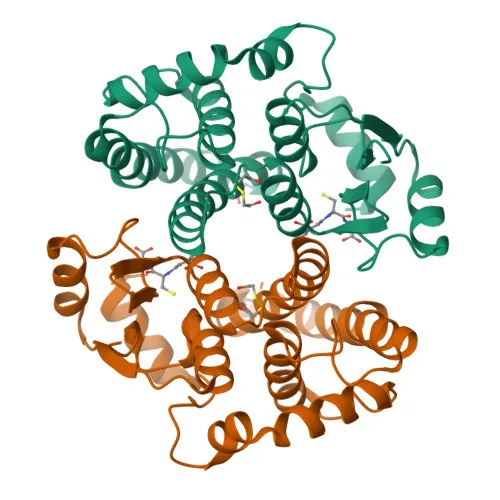
- Post-translational modifications include acetylation, and the protein has been extensively characterized by 3D-structural studies and proteomics identification.
Experimental Guidance and Technical Tips
- The immunogen is a full-length recombinant human GSTA1 protein (aa 1-222), so the polyclonal antibody may recognize multiple epitopes; consider this for interpretation of results.
- For western blotting, the predicted molecular weight is 26 kDa; validate the band pattern using a positive control such as human liver lysate and optimize antibody dilution.
- In immunofluorescence/immunocytochemistry, expect a cytoplasmic signal; include appropriate controls to confirm specificity.
- The antibody cross-reacts with mouse and rat GSTA1, making it suitable for rodent model studies; verify with tissue-specific controls.
- As with any polyclonal antibody, lot-to-lot consistency should be verified for critical quantitative applications.
CamelBio: Your One-Stop Sourcing Bridge
CamelBio is a trusted one-stop supplier of IVD raw materials, supporting diagnostic manufacturers and researchers from concept to clinic. We provide validated antibody pairs, optimized monoclonals and polyclonals, bulk ancillary reagents, and rare target sourcing to accelerate your glutathione metabolism and oxidative stress projects. Contact us for high-quality GSTA1 antibodies and comprehensive technical support.
REQUEST A QUOTE
Our professional team will reply to you within one business day. Please feel free to contact us!