Monoclonal Antibodies
Anti-GST3/GSTP1 Rabbit Monoclonal Antibody for WB, IHC-P, ELISA - P09211
Item Number : CM0003718
Price varies based on specs and customizations
- Application
- WB, IHC-P, ELISA
- Cross Reactivity
- Human, Mouse, Rat
- Protein Weight
- 23kDa

Shipping:
Contact us to get shipping details Enjoy On-time Dispatch Guarantee.
Why Choose Us
Easy ordering process, quality products, and dedicated support for your business success.
Core Product Specifications and Parameters
| Parameter | Value |
|---|---|
| Product Name | GST3/GSTP1 Rabbit mAb |
| Remarks/Alias | PI; DFN7; GST3; GSTP; FAEES3; HEL-S-22; GST3/GSTP1 |
| Species | Human |
| GeneID (Human) | 2950 |
| GeneID | 2950 |
| Immunogen | Recombinant protein |
| Source | Rabbit |
| Category | Monoclonal Antibodies |
| Application | WB, IHC-P, ELISA |
| Cross Reactivity | Human, Mouse, Rat |
| SWISS | P09211 |
| Protein Weight | 23kDa |
| Shipping | Ice bag |
Biological Background: GST3/GSTP1 Function and Localization
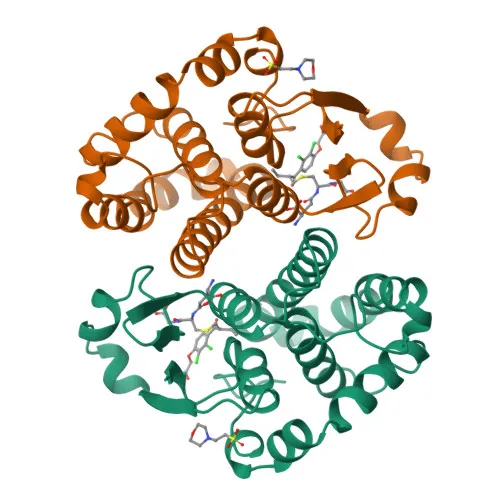
- Glutathione S-transferase P (GSTP1-1, GST class-pi) encoded by the GSTP1 gene; a member of the cytosolic GST family involved in cellular detoxification.
- Catalyzes conjugation of reduced glutathione to a broad spectrum of exogenous and endogenous hydrophobic electrophiles, a key step in detoxification pathways. Related references: PMID:1540159, PMID:1567427, PMID:8433974
- Mediates the formation of glutathione conjugates of prostaglandins A2 and J2, linking GSTP1 to lipid mediator metabolism and inflammatory response. Related references: PMID:9084911
- Participates in the biosynthesis of novel hepoxilin regioisomers, expanding its role in lipid signaling and regulatory pathways. Related references: PMID:21046276
- Acts as a negative regulator of ferroptosis by detoxifying the reactive aldehyde 4-hydroxynonenal (4-HNE), thus protecting cells from lipid peroxidation-driven death. Related references: PMID:38016474
- Negatively regulates cyclin-dependent kinase 5 (CDK5) activity via control of p25/p35 translocation, providing neuroprotection and preventing neurodegeneration. Related references: PMID:21668448
- Localizes to the cytoplasm, mitochondrion, and nucleus, reflecting its multifunctional roles in different cellular compartments.
- Undergoes post-translational modifications including acetylation, phosphorylation, and ubiquitin conjugation; annotated with keywords such as lipid metabolism and transferase activity.
Experimental Guidance and Technical Tips
- The immunogen spans amino acids 100–201 of human GSTP1 (central region), recognized by this rabbit monoclonal antibody. It is predicted to recognize the full‑length endogenous protein in denaturing (WB) and native (IHC‑P) conditions.
- For Western blot, a band around 23 kDa is expected; verify molecular weight markers on the same gel. Consider using protease inhibitors during sample preparation to prevent degradation.
- Suitable for ELISA as a capture or detection reagent; preliminary checkerboard titrations are recommended to establish optimal working dilutions in your assay system.
- Cross‑reactivity with mouse and rat has been confirmed, indicating epitope conservation across species. Validate detection in the target species’ tissue or cell lysate before large‑scale experiments.
CamelBio: Your One-Stop Sourcing Bridge
CamelBio streamlines procurement for diagnostic manufacturers, laboratories, and research institutes by offering a curated portfolio of IVD raw materials. This anti-GSTP1 antibody exemplifies our inventory for detoxification, ferroptosis, and neurodegeneration research, with complementary options such as validated antibody pairs, bulk ancillary reagents, and custom sourcing for rare targets. Whatever your development stage, CamelBio serves as your single‑point bridge from concept to clinic.
REQUEST A QUOTE
Our professional team will reply to you within one business day. Please feel free to contact us!