Polyclonal Antibodies
Anti-GRPR Rabbit Polyclonal Antibody for WB and ELISA - P30550
Item Number : CM0025318
Price varies based on specs and customizations
- Application
- WB, ELISA
- Cross Reactivity
- Human, Mouse, Rat
- Protein Weight
- 43kDa

Shipping:
Contact us to get shipping details Enjoy On-time Dispatch Guarantee.
Why Choose Us
Easy ordering process, quality products, and dedicated support for your business success.
Core Product Specifications and Parameters
| Parameter | Value |
|---|---|
| Product Name | GRPR Rabbit pAb |
| Remarks/Alias | BB2; BB2R; BRS2; GRPR |
| Species | Human |
| Gene ID (Human) | 2925 |
| Gene ID | 2925 |
| Immunogen | Recombinant protein: Recombinant fusion protein containing a sequence corresponding to amino acids 235-384 of human GRPR (NP_005305.1). |
| Source | Rabbit |
| Category | Polyclonal Antibodies |
| Application | WB, ELISA |
| Cross Reactivity | Human, Mouse, Rat |
| SWISS | P30550 |
| Protein Weight | 43kDa |
| Shipping | Ice bag |
Biological Background: GRPR Function and Localization
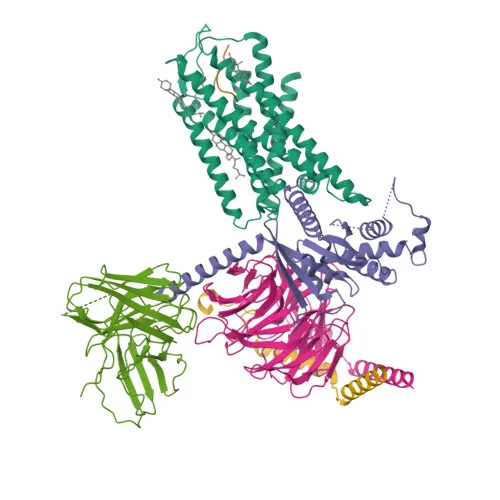
- GRPR is a G protein-coupled receptor (GPCR) that specifically binds gastrin-releasing peptide (GRP), a bombesin-like peptide. Related references: PMID:1655761
- Upon ligand binding, it activates a phosphatidylinositol-calcium second messenger system and downstream Akt phosphorylation.
- GRPR contributes to the regulation of food intake.
- It plays a key role in the perception of pruritic stimuli and transmission of nonhistaminergic itch signals in the spinal cord, promoting scratching behavior.
- In the central nervous system, GRPR is involved in modulating fear memory, either through inhibitory networks in the amygdala or by disinhibiting glutamatergic cells in the auditory cortex.
- GRPR signaling in the pre-Bötzinger complex of the ventrolateral medulla contributes to the induction of sighing during respiratory activity.
- The receptor is localized to the cell membrane and is highly expressed in the pancreas, with additional expression in stomach, adrenal cortex, and brain (cortical cells). Related references: PMID:11245983 PMID:34610277
- Post-translational modifications include glycosylation and palmitoylation; the protein contains disulfide bonds and belongs to the GPCR superfamily.
Experimental Guidance and Technical Tips
- The immunogen corresponds to the C-terminal intracellular region (aa 235-384), which is highly conserved across human, mouse, and rat, supporting the reported cross-reactivity.
- For Western blot, a band around 43 kDa is expected; however, post-translational modifications such as glycosylation may cause slight molecular weight shifts.
- For ELISA, consider optimizing coating conditions using a known positive control sample and validate detection in the relevant sample system.
CamelBio: Your One-Stop Sourcing Bridge
CamelBio provides diagnostic manufacturers, laboratories, and research institutes with a comprehensive portfolio of IVD raw materials, including validated antibody pairs, optimized monoclonal and polyclonal antibodies, and bulk ancillary reagents. This GRPR antibody supports research in GPCR signaling, itch sensation, and respiratory control, and can be seamlessly integrated into assay development workflows. Explore our one-stop sourcing services to accelerate your project from concept to clinic.
REQUEST A QUOTE
Our professional team will reply to you within one business day. Please feel free to contact us!