Polyclonal Antibodies
Anti-GRM5 Rabbit Polyclonal Antibody for WB, IF-P, ELISA - P41594
Item Number : CM0024741
Price varies based on specs and customizations
- Application
- WB, IF-P, ELISA
- Cross Reactivity
- Human, Mouse, Rat
- Protein Weight
- 132kDa

Shipping:
Contact us to get shipping details Enjoy On-time Dispatch Guarantee.
Why Choose Us
Easy ordering process, quality products, and dedicated support for your business success.
Core Product Specifications and Parameters
| Parameter | Details |
|---|---|
| Product Name | GRM5 Rabbit pAb |
| Remarks/Alias | mGlu5; GPRC1E; MGLUR5; PPP1R86; GRM5 |
| Species | Human |
| GeneID | 2915 |
| Immunogen | Recombinant fusion protein containing a sequence corresponding to amino acids 870-1070 of human GRM5 (NP_001137303.1) |
| Source | Rabbit |
| Category | Polyclonal Antibodies |
| Application | WB, IF-P, ELISA |
| Cross Reactivity | Human, Mouse, Rat |
| SWISS | P41594 |
| Protein Weight | 132kDa |
| Shipping | Ice bag |
Biological Background: GRM5 Function and Localization
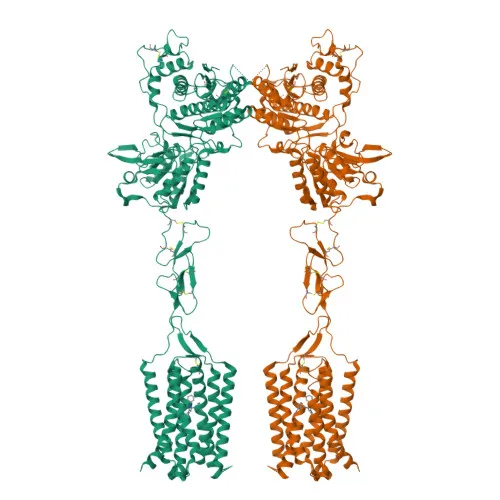
- GRM5 encodes the metabotropic glutamate receptor 5 (mGlu5), a G protein-coupled receptor that specifically binds the excitatory neurotransmitter glutamate.
- Upon ligand binding, GRM5 activates a phosphatidylinositol-calcium second messenger system, leading to calcium mobilization and activation of downstream effectors.
- The receptor plays a pivotal role in regulating synaptic plasticity and modulating neural network activity, influencing learning and memory processes.
- GRM5 is localized to the cell membrane, featuring a seven-transmembrane domain structure typical of GPCRs.
- Post-translational modifications of GRM5 include glycosylation, disulfide bond formation, and phosphorylation, which are critical for proper folding, trafficking, and signal transduction.
- Alternative splicing of the GRM5 gene generates multiple isoforms, potentially contributing to functional diversity across different tissues and developmental stages.
- As a metabotropic glutamate receptor, GRM5 is involved in slow synaptic transmission and long-term changes in neuronal excitability.
- Dysregulation of GRM5 signaling has been implicated in various neurological and psychiatric disorders, making it a key target for neuroscience research.
Experimental Guidance and Technical Tips
- The immunogen corresponds to the C-terminal intracellular region (aa 870-1070); for immunofluorescence (IF-P), permeabilization of cells is required to allow antibody access.
- For Western blotting (WB), the predicted molecular weight is 132 kDa, but the protein may migrate at a higher apparent molecular weight due to glycosylation; consider using optimized gel conditions.
- The antibody shows cross-reactivity with mouse and rat GRM5, making it suitable for studies across these species; validate in the relevant tissue or cell line before large-scale experiments.
- For ELISA, the polyclonal nature provides robust detection; however, titration and optimization are recommended for each assay format.
- Store the antibody under recommended conditions (e.g., -20°C) and avoid repeated freeze-thaw cycles to maintain stability.
CamelBio: Your One-Stop Sourcing Bridge
CamelBio partners with diagnostic manufacturers and research laboratories to supply high-quality IVD raw materials, including validated antibodies like this anti-GRM5 polyclonal antibody. With expertise in neuroscience-related targets, we offer bulk sourcing of monoclonal and polyclonal antibodies, ancillary reagents, and support for rare target procurement—helping you accelerate assay development from concept to clinical application.
REQUEST A QUOTE
Our professional team will reply to you within one business day. Please feel free to contact us!