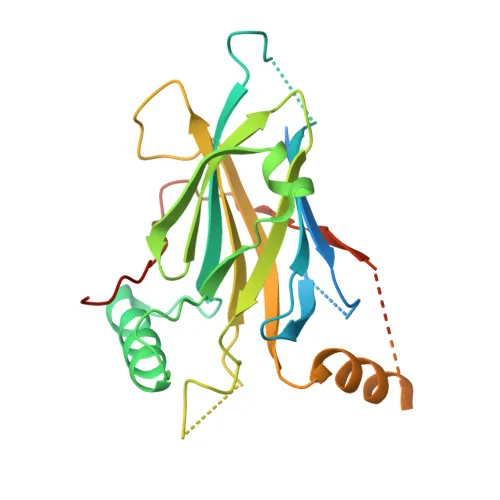
Polyclonal Antibodies
Anti-GRHL2 Polyclonal Antibody for WB and ELISA - Q6ISB3
Item Number : CM0018029
Price varies based on specs and customizations
- Application
- WB, ELISA
- Cross Reactivity
- Human, Rat
- Protein Weight
- 71kDa

Shipping:
Contact us to get shipping details Enjoy On-time Dispatch Guarantee.
Why Choose Us
Easy ordering process, quality products, and dedicated support for your business success.
Core Product Specifications and Parameters
| Parameter | Value |
|---|---|
| Product Name | GRHL2 Rabbit pAb |
| Remarks/Alias | BOM, ECTDS, PPCD4, DFNA28, TFCP2L3, GRHL2 |
| Species | Human |
| GeneID (Human) | 79977 |
| GeneID | 79977 |
| Immunogen | Recombinant protein|Recombinant fusion protein containing a sequence corresponding to amino acids 80-250 of human GRHL2 (NP_079191.2). |
| Source | Rabbit |
| Category | Polyclonal Antibodies |
| Application | WB, ELISA |
| Cross Reactivity | Human, Rat |
| SWISS | Q6ISB3 |
| Protein Weight | 71kDa |
| Shipping | Ice bag |
Biological Background: GRHL2 Function and Localization
- GRHL2 (Grainyhead-like protein 2 homolog), also known as Brother of mammalian grainyhead (BOM) or Transcription factor CP2-like 3, is a transcription factor that binds the consensus DNA sequence 5'-AACCGGTT-3' and acts as both activator and repressor of target genes (By similarity).
- It plays an essential role in primary neurulation and epithelial development; cooperates with GRHL3 in establishing distinct closure zones, and is essential for rostral forebrain closure (PubMed:25152456, PubMed:29309642).
Related references: PMID:25152456 PMID:29309642 - As a master regulator of epithelial morphogenesis, GRHL2 up-regulates tight junction components (CLDN3, CLDN4) and RAB25, enhancing CLDN4 localization; also establishes appropriate CDH1 expression levels in various epithelia (By similarity).
- Exhibits functional redundancy with GRHL3 in epidermal morphogenesis and wound repair; in the lung, it forms a regulatory loop with NKX2-1 to coordinate epithelial cell differentiation (By similarity).
- In keratinocytes, GRHL2 activates telomerase by binding the TERT promoter and inhibiting DNA methylation at its 5'-CpG island, potentially by interfering with DNMT1 activity (PubMed:19015635, PubMed:20938050).
Related references: PMID:19015635 PMID:20938050 - Conversely, it impairs keratinocyte differentiation by epigenetically repressing genes in the epidermal differentiation complex (EDC) as well as GRHL1 and GRHL3 (PubMed:23254293).
Related references: PMID:23254293 - Subcellularly, GRHL2 localizes to the nucleus and membrane, consistent with its roles in transcription and cell-junction regulation.
- Highly expressed in placenta, prostate, brain, kidney, and numerous epithelial tissues; also detected in cochlea and corneal epithelial cells (PubMed:29499165). Mutations in GRHL2 are associated with corneal dystrophy (PPCD4), non-syndromic deafness (DFNA28), and ectodermal dysplasia.
Experimental Guidance and Technical Tips
- The immunogen for this antibody corresponds to amino acids 80–250 of human GRHL2 (NP_079191.2), a region spanning part of the N-terminal domain. This sequence is conserved in rat (cross-reactivity confirmed), but investigators should verify reactivity in other species by sequence alignment.
- For Western blot (WB), the predicted molecular weight of GRHL2 is ~71 kDa; however, post-translational modifications or isoform variances may result in additional bands. Optimize loading controls and blocking conditions.
- In ELISA, consider using a peptide or recombinant protein standard curve for quantification. Due to the polyclonal nature, lot-to-lot consistency should be validated for reproducible results.
- When detecting endogenous GRHL2 in epithelial cells or tissues (e.g., skin, lung, kidney), nuclear extraction protocols may enrich the signal. Validate specificity by siRNA knockdown or parallel testing with known negative cell lines.
CamelBio: Your One-Stop Sourcing Bridge
CamelBio specializes in providing diagnostic manufacturers, laboratories, and research institutes with comprehensive access to IVD raw materials, including validated antibody pairs, optimized polyclonal and monoclonal antibodies, and bulk ancillary reagents. This anti-GRHL2 polyclonal antibody supports research into epithelial biology, transcription factor networks, and developmental disorders, and we can source it alongside complementary reagents such as recombinant GRHL2 protein, control lysates, and detection systems. Whether you require validated antibodies for assay development, rare-target raw materials, or end-to-end technical consulting, CamelBio is your trusted partner from concept to clinic.
REQUEST A QUOTE
Our professional team will reply to you within one business day. Please feel free to contact us!