Polyclonal Antibodies
Anti-GRB7 Rabbit Polyclonal Antibody for WB and ELISA - Q14451
Item Number : CM0029426
Price varies based on specs and customizations
- Application
- WB, ELISA
- Cross Reactivity
- Human
- Protein Weight
- 60kDa

Shipping:
Contact us to get shipping details Enjoy On-time Dispatch Guarantee.
Why Choose Us
Easy ordering process, quality products, and dedicated support for your business success.
Core Product Specifications and Parameters
| Parameter | Value |
|---|---|
| Product Name | GRB7 Rabbit pAb |
| Remarks/Alias | GRB7 |
| Species | Human |
| Gene ID (Human) | 2886 |
| Gene ID | 2886 |
| Immunogen | Recombinant fusion protein containing a sequence corresponding to amino acids 1-140 of human GRB7 (NP_001229372.1). |
| Source | Rabbit |
| Category | Polyclonal Antibodies |
| Application | WB, ELISA |
| Cross Reactivity | Human |
| SWISS | Q14451 |
| Protein Weight | 60kDa |
| Shipping | Ice bag |
Biological Background: GRB7 Function and Localization
- Adapter protein also known as B47, Epidermal growth factor receptor GRB-7, and GRB7 adapter protein; encoded by the GRB7 gene.
- Functions as a signal-transducing adaptor that interacts with the cytoplasmic domains of multiple receptor tyrosine kinases, thereby activating downstream pathways such as STAT3, AKT1, MAPK1/3, and HRAS.
- Plays a key role in mediating cellular responses to epidermal growth factor (EGF), influencing both cell proliferation and migration.
- Involved in the assembly and maintenance of RNA stress granules; binds to the 5′ UTR of target mRNAs and represses their translation in a phosphorylation-dependent manner.
- Phosphorylation disrupts RNA binding and facilitates stress granule disassembly during the recovery phase after cellular stress (By similarity).
- Localizes to the cytoplasm, cell membrane, focal adhesions, cytoplasmic granules, and cell projections, reflecting its dynamic role in signaling and RNA regulation.
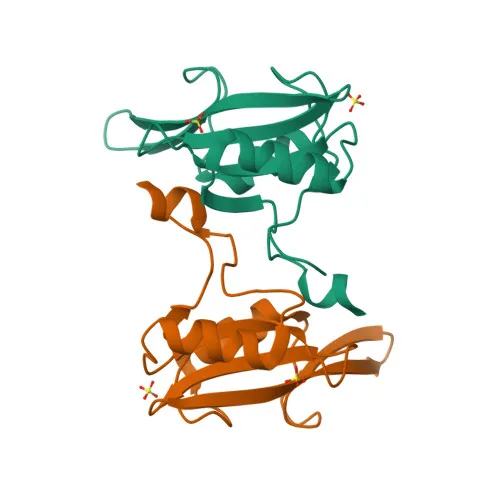
- Contains an SH2 domain and a lipid-binding region; classified as a phosphoprotein with RNA-binding repressor activity and documented alternative splicing.
Experimental Guidance and Technical Tips
- The immunogen spans the N-terminal region (amino acids 1–140), which is expected to generate antibodies recognizing both unmodified and potentially modified forms of GRB7; confirm specificity in your model system.
- As a polyclonal antibody, it may detect multiple isoforms or post-translationally modified variants; consider this when interpreting band patterns in western blot (WB).
- Suitable for WB and ELISA applications; optimize antibody dilution and incubation conditions empirically using relevant human cell lysates or recombinant protein.
- For WB detection of endogenous GRB7, note its predicted molecular weight of ~60 kDa; inclusion of protease and phosphatase inhibitors in lysis buffers may improve detection of phosphorylated forms.
- When studying GRB7’s role in stress granule dynamics, perform appropriate stress induction and recovery time-course experiments to capture phosphorylation-dependent localization changes.
CamelBio: Your One-Stop Sourcing Bridge
CamelBio is your one-stop IVD raw-material sourcing partner, providing diagnostic manufacturers and laboratories with validated antibodies, optimized antigen pairs, and bulk ancillary reagents. This anti-GRB7 polyclonal antibody supports research in growth factor signaling, cancer biology, and stress response pathways, and CamelBio can assist with sourcing additional rare-target raw materials and technical consultation for your assay development needs.
REQUEST A QUOTE
Our professional team will reply to you within one business day. Please feel free to contact us!