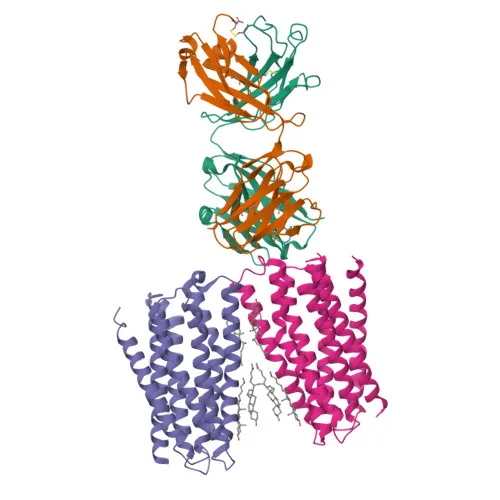
Monoclonal Antibodies
Anti-GPRC5D Monoclonal Antibody for FC - Q9NZD1
Item Number : CM0012789
Price varies based on specs and customizations
- Application
- FC
- Cross Reactivity
- Human
- Protein Weight
- 34kDa/36kDa/38kDa

Shipping:
Contact us to get shipping details Enjoy On-time Dispatch Guarantee.
Why Choose Us
Easy ordering process, quality products, and dedicated support for your business success.
Core Product Specifications and Parameters
| Parameter | Value |
|---|---|
| Product Name | Rabbit anti-Human GPRC5D mAb |
| Remarks/Alias | GPRC5D |
| Species | Human |
| Gene ID (Human) | 55507 |
| Gene ID | 55507 |
| Immunogen | Synthetic peptide corresponding to a sequence within amino acids 1-100 of human GPRC5D (NP_061124.1) |
| Source | Rabbit |
| Category | Monoclonal Antibodies |
| Application | FC |
| Cross Reactivity | Human |
| SWISS | Q9NZD1 |
| Protein Weight | 34kDa/36kDa/38kDa |
| Shipping | Ice bag |
Biological Background: GPRC5D Function and Localization
- GPRC5D (G protein-coupled receptor family C group 5 member D) is a member of the GPCR family and is encoded by the GPRC5D gene.
- This receptor is primarily involved in the regulation of hard keratin expression and is believed to play a critical role in the development and maintenance of hair and nails.
- At the cellular level, GPRC5D is localized to the cell membrane, consistent with its function as a transmembrane signal transducer.
- Tissue expression profiling reveals widespread distribution in peripheral tissues: high expression in pancreas; medium in kidney, small intestine, spleen, and testis; low in lung, colon, leukocyte, prostate, and thymus. It is not detected in brain, heart, liver, placenta, skeletal muscle, or ovary.
- The protein undergoes alternative splicing, producing isoforms that may account for the multiple observed molecular weights (34–38 kDa).
- Key structural features include a seven-transmembrane domain topology, typical of G protein-coupled receptors, and the presence of a large N-terminal extracellular domain.
- UniProt keywords highlight its role as a receptor, transducer, and its association with the cell membrane; it has been identified through proteomics and possesses a reference proteome status.
Experimental Guidance and Technical Tips
- This antibody was generated using a synthetic peptide immunogen corresponding to the N-terminal extracellular domain (amino acids 1–100). It may recognize all known isoforms of GPRC5D, but epitope accessibility could vary with conformation or glycosylation.
- For flow cytometry (FC), perform a titration experiment to determine the optimal antibody concentration for your cell type. Use appropriate isotype controls and live/dead discrimination.
- The fluorophore is bright and photostable; minimize light exposure during handling and use freshly prepared samples where possible.
- Given the tissue expression pattern, cell lines or primary cells derived from pancreas, kidney, or immune organs may serve as positive controls; absence in brain or liver can be used for negative control selection.
- If weak signals are observed, consider testing different fixation/permeabilization protocols, as the epitope is located in the N-terminal region.
CamelBio: Your One-Stop Sourcing Bridge
CamelBio serves as a comprehensive sourcing partner for IVD raw materials, connecting diagnostic manufacturers and research laboratories with validated reagents like this anti-GPRC5D monoclonal antibody. Beyond individual antibodies, we offer matched antibody pairs, bulk ancillary reagents, and support for sourcing rare or custom targets. For researchers focused on G protein-coupled receptor biology or keratin expression pathways, CamelBio can streamline your procurement process from concept to clinic.
REQUEST A QUOTE
Our professional team will reply to you within one business day. Please feel free to contact us!