Polyclonal Antibodies
Anti-GPR68 Polyclonal Antibody for WB, ELISA - Q15743
Item Number : CM0019388
Price varies based on specs and customizations
- Application
- WB, ELISA
- Cross Reactivity
- Human, Mouse
- Protein Weight
- 41kDa

Shipping:
Contact us to get shipping details Enjoy On-time Dispatch Guarantee.
Why Choose Us
Easy ordering process, quality products, and dedicated support for your business success.
Core Product Specifications and Parameters
| Parameter | Value |
|---|---|
| Product Name | GPR68 Rabbit pAb |
| Remarks/Alias | OGR1; AI2A6; GPR12A; GPR68 |
| Species | Human |
| GeneID (Human) | 8111 |
| GeneID | 8111 |
| Immunogen | Recombinant protein: Recombinant fusion protein containing a sequence corresponding to amino acids 276-365 of human GPR68 (NP_003476.3) |
| Source | Rabbit |
| Category | Polyclonal Antibodies |
| Application | WB, ELISA |
| Cross Reactivity | Human, Mouse |
| SWISS | Q15743 |
| Protein Weight | 41kDa |
| Shipping | Ice bag |
Biological Background: GPR68 Function and Localization
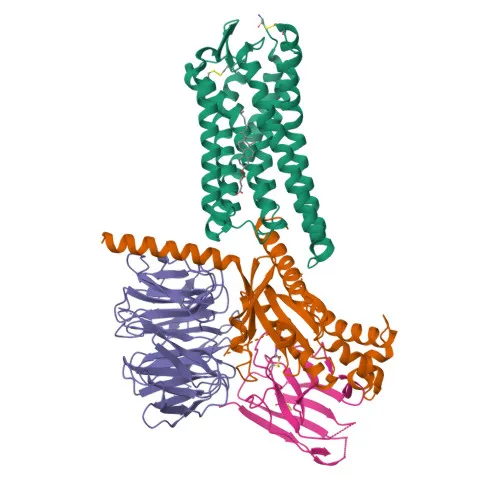
- GPR68 (OGR1, GPR12A) is a proton-sensing G protein-coupled receptor (GPCR) that monitors extracellular pH changes.
Related references: PMID:12955148, PMID:29677517, PMID:32865988 - The receptor is almost silent at pH 7.8 but becomes fully activated at pH 6.8, triggering conformational changes that initiate intracellular signaling.
Related references: PMID:12955148, PMID:39753132 - GPR68 couples predominantly to G(q) proteins, leading to production of second messengers diacylglycerol (DAG) and inositol 1,4,5-trisphosphate (IP3).
Related references: PMID:29677517, PMID:39753132 - It acts as a key mechanosensor of fluid shear stress and membrane stretch. In endothelial cells of small-diameter resistance arteries, GPR68 mediates flow-induced dilation.
Related references: PMID:29677517, PMID:30471999 - In bone, GPR68 may function as an osteoblastic pH sensor regulating cell responses to acidosis.
- GPR68 and the calcium-sensing receptor (CASR) exhibit reciprocal seesaw regulation: protons activate GPR68 while inhibiting CASR, and extracellular calcium promotes the opposite.
- The receptor localizes to the cell membrane and is widely expressed at low levels, with significant expression in lung, kidney, bone, and nervous system.
- Post‑translational modifications include glycosylation and disulfide bond formation, and mutations are linked to amelogenesis imperfecta; the protein also has a recognized tumor suppressor role.
Experimental Guidance and Technical Tips
- The immunogen is a recombinant protein corresponding to the C-terminal intracellular region (amino acids 276–365) of human GPR68. This polyclonal antibody may recognize linear epitopes within this domain.
- For western blotting, consider enriching membrane fractions or using whole‑cell lysates from GPR68‑expressing tissues (e.g., lung, kidney). The predicted molecular weight is ~41 kDa; glycosylation may cause a shift, so deglycosylation enzymes can be used to confirm specificity.
- Validate the antibody in appropriate human and mouse model systems, including positive and negative controls (e.g., GPR68 knockdown or knockout samples), to ensure specificity in WB and ELISA applications.
CamelBio: Your One-Stop Sourcing Bridge
CamelBio is your comprehensive partner for IVD raw material procurement, supporting diagnostic developers from concept to clinic. This GPR68 antibody serves research into pH‑sensing GPCRs, mechanotransduction, and related disease areas. Beyond antibodies, we supply validated coating and detection pairs, bulk monoclonal and polyclonal antibodies, and tailored sourcing for hard‑to‑find bioreagents—all designed to streamline your assay development.
REQUEST A QUOTE
Our professional team will reply to you within one business day. Please feel free to contact us!