Polyclonal Antibodies
Anti-GPR6 Polyclonal Antibody for WB, ELISA - P46095
Item Number : CM0017378
Price varies based on specs and customizations
- Application
- WB, ELISA
- Cross Reactivity
- Human, Mouse
- Protein Weight
- 38kDa

Shipping:
Contact us to get shipping details Enjoy On-time Dispatch Guarantee.
Why Choose Us
Easy ordering process, quality products, and dedicated support for your business success.
Core Product Specifications and Parameters
| Parameter | Value |
|---|---|
| Product Name | GPR6 Rabbit pAb |
| Remarks/Alias | GPR6 |
| Species | Human |
| Gene ID (Human) | 2830 |
| Gene ID | 2830 |
| Immunogen | Recombinant fusion protein containing a sequence corresponding to amino acids 253-362 of human GPR6 (NP_005275.1). |
| Source | Rabbit |
| Category | Polyclonal Antibodies |
| Application | WB, ELISA |
| Cross Reactivity | Human, Mouse |
| SWISS | P46095 |
| Protein Weight | 38kDa |
| Shipping | Ice bag |
Biological Background: GPR6 Function and Localization
- GPR6 (G protein-coupled receptor 6, also known as Sphingosine 1-phosphate receptor GPR6) is a member of the GPCR superfamily and is encoded by the GPR6 gene (GeneID: 2830).
- It functions as a constitutively active receptor that maintains high intracellular cAMP levels by coupling to G(s) proteins, thereby playing a role in neuronal development. Related references: PMID:12220620, PMID:39626010
- GPR6 may be activated by lipid-derived agonists, including oleic acid and sphingosine 1-phosphate, which further stimulate the G(s)/cAMP/PKA signaling cascade. Related references: PMID:12220620, PMID:39626010
- The receptor is localized to the cell membrane, consistent with its seven-transmembrane domain structure.
- It undergoes post-translational modifications: glycosylation, palmitoylation, and phosphorylation, which may regulate its activity and trafficking (UniProt keywords: Glycoprotein, Lipoprotein, Palmitate, Phosphoprotein).
- Alternative splicing generates multiple transcript variants (Keyword: Alternative splicing).
- GPR6 is implicated in proteomics identification studies, indicating its expression in human tissues/cells at the protein level (Keyword: Proteomics identification).
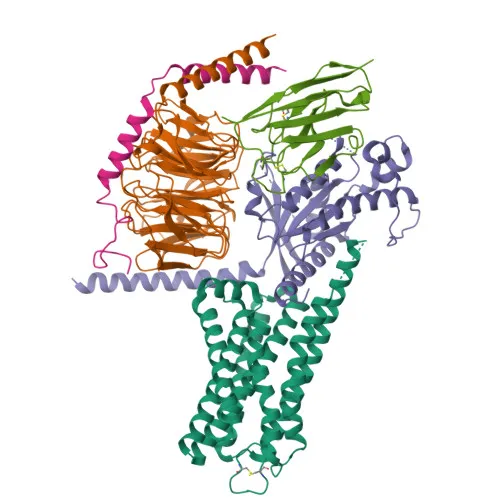
- A 3D structure of GPR6 has been resolved, facilitating understanding of its ligand binding and signaling mechanisms (Keyword: 3D-structure).
Experimental Guidance and Technical Tips
- The immunogen corresponds to the C-terminal cytoplasmic tail (aa 253–362) of human GPR6, a region likely accessible in denaturing Western blot conditions but potentially occluded in native ELISA; consider optimizing antigen retrieval or using denatured samples.
- For Western blotting, use whole-cell lysates from cell lines endogenously or exogenously expressing GPR6; a band at ~38 kDa should be detected. Endogenous expression levels may vary, so validate in your specific sample system.
- Cross-reactivity with human and mouse is indicated; confirm specificity with appropriate positive and negative controls for your target species.
- For ELISA, test both denatured and native antigen formats to determine optimal detection conditions, as the epitope may be denaturation-sensitive.
- As a polyclonal antibody, this preparation may recognize multiple epitopes; consider affinity purification for highly specific applications.
CamelBio: Your One-Stop Sourcing Bridge
CamelBio is your dedicated one-stop partner for IVD raw material sourcing, from early-stage R&D to clinical manufacturing. This anti-GPR6 polyclonal antibody exemplifies our commitment to providing high-quality reagents for neuroscience and GPCR signaling research. Beyond individual antibodies, we supply validated antibody pairs, optimized monoclonal/polyclonal reagents, bulk ancillary materials, and support for rare target development to accelerate your diagnostic assay pipeline.
REQUEST A QUOTE
Our professional team will reply to you within one business day. Please feel free to contact us!