Polyclonal Antibodies
Anti-GPR4 Polyclonal Antibody for WB, ELISA - P46093
Item Number : CM0021041
Price varies based on specs and customizations
- Application
- WB, ELISA
- Cross Reactivity
- Human
- Protein Weight
- 41kDa

Shipping:
Contact us to get shipping details Enjoy On-time Dispatch Guarantee.
Why Choose Us
Easy ordering process, quality products, and dedicated support for your business success.
Core Product Specifications and Parameters
| Parameter | Value |
|---|---|
| Product Name | GPR4 Rabbit pAb |
| Remarks/Alias | GPR6C.l; GPR4 |
| Species | Human |
| GeneID (Human) | 2828 |
| GeneID | 2828 |
| Immunogen | Recombinant fusion protein containing a sequence corresponding to amino acids 283-362 of human GPR4 (NP_005273.1) |
| Source | Rabbit |
| Category | Polyclonal Antibodies |
| Application | WB, ELISA |
| Cross Reactivity | Human |
| SWISS | P46093 |
| Protein Weight | 41kDa |
| Shipping | Ice bag |
Biological Background: GPR4 Function and Localization
-
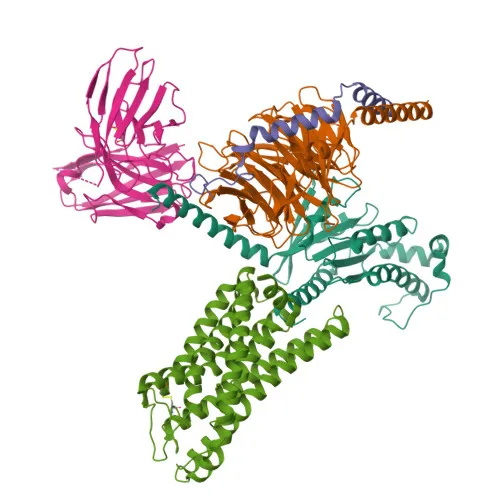
GPR4, also known as GPR6C.l, is a member of the proton-sensing G protein-coupled receptor (GPCR) family that detects extracellular acidification within the physiological pH range of 6.8–7.2. Related references: PMID:12955148 PMID:17462861 PMID:33478938 PMID:39753132
-
Upon activation, GPR4 signals primarily through Gs G proteins to stimulate adenylate cyclase activity and cAMP production; it can additionally couple to Gi, Gq, and G12/13 G proteins. Related references: PMID:12955148 PMID:17462861 PMID:20211729
-
In the brain retrotrapezoid nucleus, GPR4 functions as a critical CO2/H+ sensor that regulates respiratory drive (by similarity).
-
In the kidney, GPR4 maintains acid-base homeostasis by modulating acid secretion in the collecting duct (by similarity).
-
Under acidic conditions, GPR4 activation increases paracellular gap formation and permeability of vascular endothelial cells via the G12/13/Rho GTPase signaling pathway. Related references: PMID:32058960
-
The receptor localizes to the cell membrane and exhibits classical GPCR structural features, including seven transmembrane domains, disulfide bonds, and glycosylation sites.
Experimental Guidance and Technical Tips
- The immunogen corresponds to amino acids 283–362 within the C-terminal intracellular region of human GPR4; this design may enhance specificity for the full-length receptor.
- For western blotting, consider using membrane protein extraction protocols and denaturing but non-reducing conditions to resolve the predicted 41 kDa band.
- For ELISA, direct or capture formats can be evaluated using recombinant GPR4 protein or cell lysates from human tissue or cell lines known to express the receptor.
- As a polyclonal antibody, lot-to-lot consistency should be verified; include appropriate positive (e.g., GPR4-overexpressing cells) and negative (e.g., GPR4-knockout or null cell lines) controls.
CamelBio: Your One-Stop Sourcing Bridge
CamelBio provides diagnostic manufacturers, laboratories, and research institutes with streamlined access to premium IVD raw materials, including validated antibody pairs, optimized monoclonal/polyclonal antibodies, bulk ancillary reagents, and rare target sourcing for GPCRs such as GPR4. Whether you are developing assays for pH-sensing pathways or studying respiratory and renal physiology, our one-stop procurement and technical support bridge the gap from concept to clinic.
REQUEST A QUOTE
Our professional team will reply to you within one business day. Please feel free to contact us!