Polyclonal Antibodies
Anti-GOLGA7 Rabbit Polyclonal Antibody for WB, ELISA - Q7Z5G4
Item Number : CM0023848
Price varies based on specs and customizations
- Application
- WB, ELISA
- Cross Reactivity
- Human, Mouse
- Protein Weight
- 16kDa

Shipping:
Contact us to get shipping details Enjoy On-time Dispatch Guarantee.
Why Choose Us
Easy ordering process, quality products, and dedicated support for your business success.
Core Product Specifications and Parameters
| Parameter | Value |
|---|---|
| Product Name | GOLGA7 Rabbit pAb |
| Remarks/Alias | GCP16; GOLGA7A; HSPC041; GOLGA3AP1; GOLGA7 |
| Species | Human |
| Gene ID | 51125 |
| Immunogen | Recombinant fusion protein containing a sequence corresponding to amino acids 1-134 of human GOLGA7 (NP_001167595.1) |
| Source | Rabbit |
| Category | Polyclonal Antibodies |
| Application | WB, ELISA |
| Cross Reactivity | Human, Mouse |
| SWISS | Q7Z5G4 |
| Protein Weight | 16kDa |
| Shipping | Ice bag |
Biological Background: GOLGA7 Function and Localization
- GOLGA7 (Golgin subfamily A member 7) is also known as GCP16, GOLGA7A, HSPC041, and GOLGA3AP1. Encoded by the GOLGA7 gene, it belongs to the golgin family of coiled-coil proteins.
- GOLGA7 may participate in protein transport from the Golgi apparatus to the cell surface. It forms a complex with ZDHHC9, which functions as a palmitoyltransferase specific for HRAS and NRAS.
- Subcellular localization: GOLGA7 resides on the Golgi apparatus membrane, consistent with its role in Golgi-related trafficking and post-translational modification.
- Tissue distribution: Expressed ubiquitously across human tissues, with notably absent expression in colon and thymus.
- Post-translational modification: Palmitoylation is a key modification, classifying GOLGA7 as a lipoprotein.
- Alternative splicing generates multiple transcript variants, potentially expanding functional diversity.
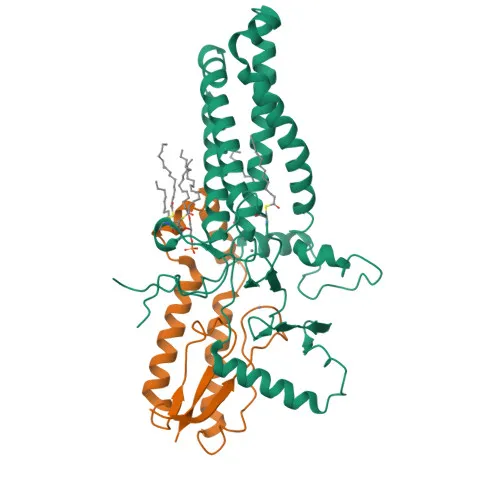
- Structural insights: A 3D structure has been determined, aiding functional studies.
Experimental Guidance and Technical Tips
- For Western blotting (WB), the predicted molecular weight is 16 kDa; ensure adequate protein transfer conditions for low molecular weight proteins. Use human or mouse cell lysates with appropriate controls. Consider optimizing blocking and detection conditions to reduce background from polyclonal serum.
- For ELISA, the immunogen covers the N-terminal 134 amino acids. Validate coating conditions and antibody concentration for indirect ELISA. For sandwich ELISA development, screen potential paired antibodies.
- Given Golgi membrane localization, use appropriate lysis buffers containing detergents for efficient protein extraction.
- As a polyclonal antibody, lot-to-lot variability may occur; validate each new lot for consistent performance in your assay.
- Cross-reactivity with mouse has been confirmed, enabling translational studies.
CamelBio: Your One-Stop Sourcing Bridge
CamelBio is your one-stop source for IVD raw materials, offering validated antibodies, bulk reagents, and custom services for diagnostic assay development. For Golgi biology and oncology research, we provide high-quality polyclonal antibodies like this GOLGA7 antibody, along with complementary reagents to support your projects from concept to clinic.
REQUEST A QUOTE
Our professional team will reply to you within one business day. Please feel free to contact us!