Polyclonal Antibodies
Anti-GNRH1 Polyclonal Antibody for WB, IF/ICC, ELISA - P01148
Item Number : CM0029995
Price varies based on specs and customizations
- Application
- WB, IF/ICC, ELISA
- Cross Reactivity
- Human, Mouse, Rat
- Protein Weight
- 10kDa

Shipping:
Contact us to get shipping details Enjoy On-time Dispatch Guarantee.
Why Choose Us
Easy ordering process, quality products, and dedicated support for your business success.
Core Product Specifications and Parameters
| Parameter | Value |
|---|---|
| Product Name | GNRH1 Rabbit pAb |
| Remarks/Alias | GRH; GNRH; LHRH; LNRH; GNRH1 |
| Species | Human |
| GeneID (Human) | 2796 |
| GeneID | 2796 |
| Immunogen | Recombinant fusion protein containing a sequence corresponding to amino acids 24-92 of human GNRH1 (NP_001076580.1) |
| Source | Rabbit |
| Category | Polyclonal Antibodies |
| Application | WB, IF/ICC, ELISA |
| Cross Reactivity | Human, Mouse, Rat |
| SWISS | P01148 |
| Protein Weight | 10kDa |
| Shipping | Ice bag |
Biological Background: GNRH1 Function and Localization
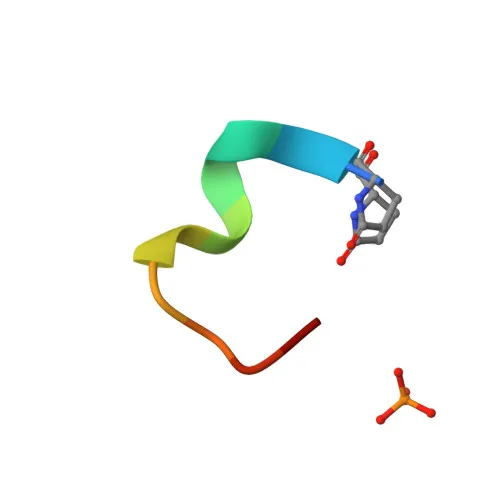
- Progonadoliberin-1 (GNRH1) is a precursor protein that is processed to produce gonadotropin-releasing hormone 1 (GnRH), a key regulator of the reproductive axis.
- GnRH stimulates the anterior pituitary to secrete luteinizing hormone (LH) and follicle-stimulating hormone (FSH), which are essential for gonadal function.
- The protein is encoded by the GNRH1 gene, also known as GNRH, GRH, and LHRH, located on chromosome 8.
- It is synthesized as a preproprotein with a signal peptide (aa 1-23), and the mature decapeptide (aa 24-33) is released after proteolytic cleavage.
- Subcellularly, GNRH1 is targeted to the secretory pathway and is secreted from hypothalamic neurons.
- Post-translational modifications include amidation of the C-terminus, formation of pyroglutamic acid at the N-terminus, and cleavage at paired basic residues.
- Molecular weight of the unprocessed precursor is approximately 10.38 kDa, but processing yields smaller active peptides.
- Mutations in GNRH1 are associated with hypogonadotropic hypogonadism and Kallmann syndrome, highlighting its clinical significance.
Experimental Guidance and Technical Tips
- The immunogen used corresponds to amino acids 24–92, which includes the mature GnRH decapeptide and flanking sequences; thus, the antibody may recognize both precursor and processed forms.
- For Western blot, the predicted molecular weight of the full-length precursor is ~10 kDa; use a high-percentage gel (e.g., 15%) and optimize transfer conditions to retain small peptides.
- Detection of the secreted mature peptide in WB may require concentration of culture supernatant or peptide extraction protocols.
- In IF/ICC, GNRH1 is secreted; consider using Golgi inhibitors (e.g., brefeldin A) to visualize intracellular accumulation in neuroendocrine cells.
- For ELISA, the antibody can be used as capture or detection reagent; validate its performance with recombinant GnRH standards.
- Cross-reactivity with mouse and rat suggests conserved epitopes; however, always verify specificity in the relevant species and tissue type.
CamelBio: Your One-Stop Sourcing Bridge
CamelBio simplifies IVD raw-material procurement by offering validated antibody pairs, optimized polyclonal and monoclonal antibodies, and bulk ancillary reagents. This GNRH1 antibody supports assay development and research in reproductive endocrinology. For rare-target sourcing and custom logistic support, contact CamelBio's team.
REQUEST A QUOTE
Our professional team will reply to you within one business day. Please feel free to contact us!