Polyclonal Antibodies
Anti-GNPNAT1 Rabbit Polyclonal Antibody for WB - Q96EK6
Item Number : CM0018837
Price varies based on specs and customizations
- Application
- WB, IF/ICC, ELISA
- Cross Reactivity
- Human, Mouse, Rat
- Protein Weight
- 21kDa

Shipping:
Contact us to get shipping details Enjoy On-time Dispatch Guarantee.
Why Choose Us
Easy ordering process, quality products, and dedicated support for your business success.
Core Product Specifications and Parameters
| Parameter | Value |
|---|---|
| Product Name | GNPNAT1 Rabbit pAb |
| Remarks/Alias | GNA1; GNPNAT; Gpnat1; RHZDAN; GNPNAT1 |
| Species | Human |
| Gene ID (Human) | 64841 |
| Gene ID | 64841 |
| Immunogen | Recombinant fusion protein containing a sequence corresponding to amino acids 1-91 of human GNPNAT1 (NP_932332.1). |
| Source | Rabbit |
| Category | Polyclonal Antibodies |
| Application | WB, IF/ICC, ELISA |
| Cross Reactivity | Human, Mouse, Rat |
| SWISS | Q96EK6 |
| Protein Weight | 21kDa |
| Shipping | Ice bag |
Biological Background: GNPNAT1 Function and Localization
- GNPNAT1 (Glucosamine 6-phosphate N-acetyltransferase) is also known as phosphoglucosamine acetylase/transacetylase, GNA1, Gpnat1, and RHZDAN.
- It is an acyltransferase that catalyzes the conversion of glucosamine-6-phosphate to N-acetylglucosamine-6-phosphate in the UDP-N-acetylglucosamine biosynthesis pathway.
- Localized primarily to the Golgi apparatus membrane and endosome membrane.
- Human GNPNAT1 gene encodes a protein of approximately 21 kDa (observed), with a calculated molecular weight of ~20.7 kDa.
- The protein is a member of the reference proteome and has been identified via proteomics.
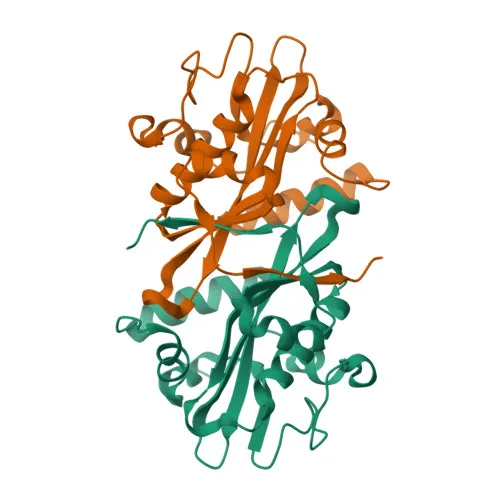
- UniProt keywords highlight its involvement in transferase activity and its 3D structure has been determined.
- Disease variants in GNPNAT1 have been linked to dwarfism (UniProt keyword: Disease variant).
Experimental Guidance and Technical Tips
- Consider using this polyclonal antibody in Western blot under reducing conditions to detect a band at approximately 21 kDa.
- For immunofluorescence, co-stain with Golgi marker (e.g., GM130) to confirm expected localization patterns.
- The Immunogen covers an N-terminal fragment (aa 1–91); ensure appropriate positive controls (e.g., GNPNAT1-overexpressing cells or tissues with high endogenous expression).
- Validate cross-reactivity with mouse and rat samples due to high sequence homology across species.
- Optimize dilution for ELISA applications empirically, as polyclonal antibodies may exhibit lot-to-lot variation.
CamelBio: Your One-Stop Sourcing Bridge
CamelBio supports diagnostic manufacturers and researchers by providing validated antibody pairs, optimized monoclonal/polyclonal antibodies, and bulk ancillary reagents. For targets like GNPNAT1—central to UDP-GlcNAc biosynthesis and glycosylation—we offer reliable sourcing of rare raw materials to accelerate assay development. Contact us to streamline your supply chain from concept to clinic.
REQUEST A QUOTE
Our professional team will reply to you within one business day. Please feel free to contact us!