Monoclonal Antibodies
Anti-Glutaredoxin 1 (GLRX) Rabbit mAb for WB & ELISA - P35754
Item Number : CM0007114
Price varies based on specs and customizations
- Application
- WB, ELISA
- Cross Reactivity
- Human, Mouse, Rat
- Protein Weight
- 12kDa

Shipping:
Contact us to get shipping details Enjoy On-time Dispatch Guarantee.
Why Choose Us
Easy ordering process, quality products, and dedicated support for your business success.
Core Product Specifications and Parameters
| Parameter | Specification |
|---|---|
| Product Name | Glutaredoxin 1 (GLRX) Rabbit mAb |
| Remarks/Alias | GRX; GRX1; Glutaredoxin 1 (GLRX) |
| Species | Human |
| Gene ID (Human) | 2745 |
| Gene ID | 2745 |
| Immunogen | Synthetic peptide corresponding to amino acids 11-106 of human GLRX (NP_002055.1) |
| Source | Rabbit |
| Category | Monoclonal Antibodies |
| Application | WB, ELISA |
| Cross Reactivity | Human, Mouse, Rat |
| SWISS | P35754 |
| Protein Weight | 12kDa |
| Shipping | Ice bag |
Biological Background: Glutaredoxin 1 Function and Localization
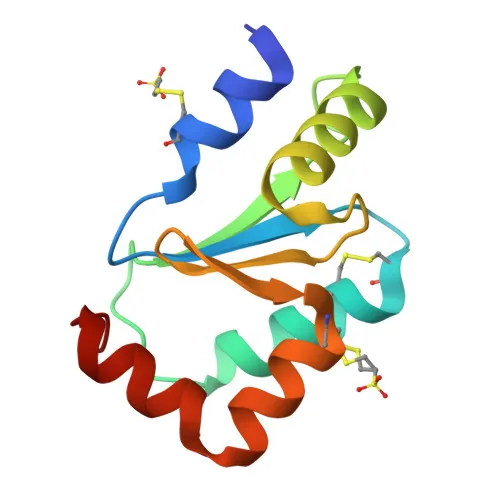
- Glutaredoxin-1 (GLRX), also known as thioltransferase-1 (TTase-1), is a small redox enzyme encoded by the GLRX gene in humans (Gene ID: 2745).
- It exhibits glutathione-disulfide oxidoreductase activity, catalyzing the reduction of low molecular weight disulfides and protein disulfides in the presence of NADPH and glutathione reductase.
- GLRX belongs to the glutaredoxin family, characterized by a redox-active CXXC motif (Cys-Pro-Tyr-Cys) that enables reversible disulfide bond formation and electron transport.
- The protein is primarily localized in the cytoplasm, consistent with its role in maintaining cellular redox homeostasis.
- Post-translational modifications include acetylation, which may influence its activity or stability (as suggested by proteomics identification).
- Functional studies highlight its involvement in redox regulation, protection against oxidative stress, and modulation of signal transduction through reversible protein glutathionylation.
Experimental Guidance and Technical Tips
- The antibody was generated against a synthetic peptide spanning amino acids 11-106 of human GLRX, a region conserved across human, mouse, and rat, which aligns with the reported cross-reactivity.
- For western blotting, expect a band at approximately 12 kDa; validate in the appropriate sample type (e.g., cell lysates from HeLa or HEK293) and use reducing conditions to resolve monomeric GLRX.
- In ELISA applications, consider a direct or sandwich format using purified recombinant GLRX or biological samples; optimize coating conditions and detection antibodies.
- Given GLRX’s role in redox regulation, lysis buffers may require supplementation with alkylating agents (e.g., NEM) if studying glutathionylation or thiol-disulfide status.
CamelBio: Your One-Stop Sourcing Bridge
CamelBio provides diagnostic manufacturers and researchers with a comprehensive portfolio of IVD raw materials, including validated antibody pairs, optimized monoclonal and polyclonal antibodies, and bulk ancillary reagents. This anti-GLRX rabbit monoclonal antibody is suitable for oxidative stress and redox biology applications, and we also support sourcing of rare targets and custom reagents. Contact us to streamline your procurement from concept to clinic.
REQUEST A QUOTE
Our professional team will reply to you within one business day. Please feel free to contact us!