Monoclonal Antibodies
Anti-GLUD1 Rabbit Monoclonal Antibody for WB, IHC-P, IF/ICC, ELISA - P00367
Item Number : CM0011966
Price varies based on specs and customizations
- Application
- WB, IHC-P, IF/ICC, ELISA
- Cross Reactivity
- Human, Mouse, Rat
- Protein Weight
- 61kDa

Shipping:
Contact us to get shipping details Enjoy On-time Dispatch Guarantee.
Why Choose Us
Easy ordering process, quality products, and dedicated support for your business success.
Core Product Specifications and Parameters
| Parameter | Value |
|---|---|
| Product Name | GLUD1 Rabbit mAb |
| Remarks/Alias | GDH; GDH1; GLUD; hGDH1; GLUD1 |
| Species | Human |
| GeneID (human) | 2746 |
| GeneID | 2746 |
| Immunogen | A synthetic peptide corresponding to a sequence within amino acids 459-558 of human GLUD1 (P00367) |
| Source | Rabbit |
| Category | Monoclonal Antibodies |
| Application | WB, IHC-P, IF/ICC, ELISA |
| Cross Reactivity | Human, Mouse, Rat |
| SWISS | P00367 |
| Protein Weight | 61kDa |
| Shipping | Ice bag |
Biological Background: GLUD1 Function and Localization
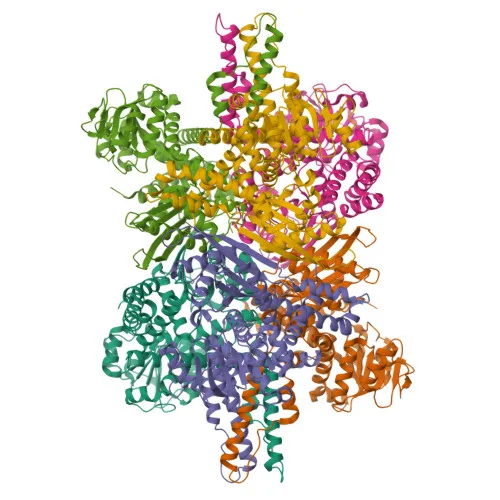
- GLUD1 encodes mitochondrial glutamate dehydrogenase 1, a key enzyme that reversibly converts L-glutamate to alpha-ketoglutarate, bridging amino acid and carbohydrate metabolism.
Related references: PMID:11032875, PMID:11254391, PMID:16023112 - It plays a critical role in glutamine anaplerosis by replenishing TCA cycle intermediates, essential for rapidly proliferating cells.
Related references: PMID:11032875, PMID:11254391, PMID:16023112 - GLUD1 participates in insulin homeostasis, regulating glucose-stimulated insulin secretion from pancreatic β-cells.
Related references: PMID:11297618, PMID:9571255 - The protein localizes primarily to the mitochondrial matrix, with minor detection in the endoplasmic reticulum.
- Multiple post-translational modifications, including acetylation, ADP-ribosylation, phosphorylation, and hydroxylation, fine-tune its enzymatic activity.
- Mutations in GLUD1 are associated with congenital hyperinsulinism-hyperammonemia syndrome, underscoring its clinical significance.
- It is a member of the NADP-dependent oxidoreductase family and is expressed across a broad range of tissues.
Experimental Guidance and Technical Tips
- The immunogen (aa 459–558) lies within a conserved C‑terminal region; verify antibody specificity via peptide competition or siRNA knockdown.
- For WB, the predicted molecular weight is ~61 kDa; use whole-cell lysates from human, mouse, or rat tissues as positive controls.
- In IHC‑P, optimize antigen retrieval and validate staining in GLUD1‑rich tissues such as liver and pancreatic islets.
- For IF/ICC, choose fixation and permeabilization protocols that preserve mitochondrial morphology.
- ELISA applications may require titration of coating antigen and detection conditions for optimal signal.
CamelBio: Your One-Stop Sourcing Bridge
CamelBio provides comprehensive IVD raw‑material solutions, including validated monoclonal antibodies like this anti‑GLUD1 clone for metabolic and neuroscience research. Beyond antibodies, we supply matched antibody pairs, bulk ancillary reagents, and custom sourcing for rare targets — streamlining your assay development pipeline.
Product Datasheet
Anti-GLUD1 Rabbit Monoclonal Antibody for WB, IHC-P, IF/ICC, ELISA - P00367
REQUEST A QUOTE
Our professional team will reply to you within one business day. Please feel free to contact us!