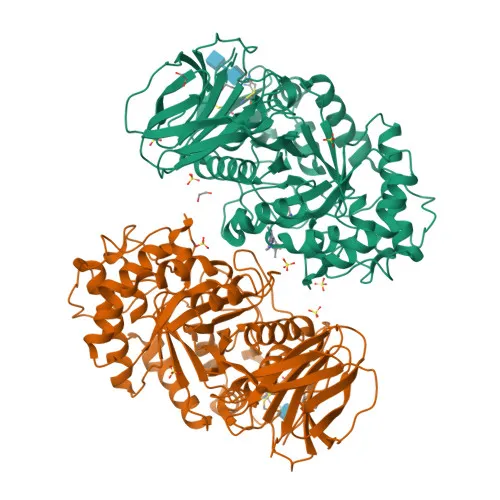
Polyclonal Antibodies
Anti-Glucosylceramidase beta (GBA) Polyclonal Antibody for WB, ELISA - P04062
Item Number : CM0024572
Price varies based on specs and customizations
- Application
- WB, ELISA
- Cross Reactivity
- Human, Rat
- Protein Weight
- 60kDa

Shipping:
Contact us to get shipping details Enjoy On-time Dispatch Guarantee.
Why Choose Us
Easy ordering process, quality products, and dedicated support for your business success.
Core Product Specifications and Parameters
| Parameter | Value |
|---|---|
| Product Name | Glucosylceramidase beta (GBA) Rabbit pAb |
| Remarks/Alias | GBA; GCB; GLUC; Glucosylceramidase beta (GBA) |
| Species | Human |
| GeneID (human) | 2629 |
| GeneID | 2629 |
| Immunogen | Recombinant fusion protein containing a sequence corresponding to amino acids 40-250 of human Glucosylceramidase beta (GBA) (NP_000148.2) |
| Source | Rabbit |
| Category | Polyclonal Antibodies |
| Application | WB, ELISA |
| Cross Reactivity | Human, Rat |
| SWISS | P04062 |
| Protein Weight | 60kDa |
| Shipping | Ice bag |
Biological Background: Glucosylceramidase beta (GBA) Function and Localization
- Glucosylceramidase beta (GBA), also known as lysosomal acid glucosylceramidase or beta-glucocerebrosidase, is a lysosomal enzyme that hydrolyzes glucosylceramides into glucose and ceramide (PubMed:15916907, PubMed:24211208, PubMed:32144204). Related references: PMID:15916907, PMID:24211208, PMID:32144204
- GBA plays a central role in the degradation of complex lipids and turnover of cellular membranes, and through ceramide production, participates in the PKC-activated salvage pathway of ceramide formation (PubMed:27378698, PubMed:19279011). Related references: PMID:27378698, PMID:19279011
- It also exhibits transglucosylation activity, catalyzing the transfer of glucose from glucosylceramide to cholesterol to form cholesteryl glucoside (PubMed:24211208, PubMed:26724485, PubMed:32144204). Related references: PMID:24211208, PMID:26724485, PMID:32144204
- Additionally, GBA can hydrolyze galactosylceramides and cholesteryl glucoside, albeit with lower activity, and can metabolize plant glycosyl phytosterols (PubMed:32144204, PubMed:39395789). Related references: PMID:32144204, PMID:39395789
- It is localized to the lysosome membrane, consistent with its role in lysosomal lipid catabolism.
- Mutations in GBA cause Gaucher disease, the most common lysosomal storage disorder, and are associated with increased risk for Parkinson disease.
- The protein undergoes alternative initiation and splicing, and contains disulfide bonds essential for its structure; it is also glycosylated.
- The mature protein has an approximate molecular weight of 60 kDa.
Experimental Guidance and Technical Tips
- The immunogen spans amino acids 40–250 of human GBA, a region that includes part of the catalytic domain. Consider sequence alignment with target species when interpreting cross-reactivity.
- For Western blotting, a band at ~60 kDa is expected; validate antibody specificity with appropriate positive controls (e.g., human or rat lysosomal fractions) and negative controls.
- In ELISA, using the recombinant immunogen as coating antigen may be helpful; detection of native GBA in lysates should be optimized empirically.
- Because GBA has multiple isoforms from alternative splicing, confirm that the antibody recognizes the relevant isoform in your experimental system if needed.
CamelBio: Your One-Stop Sourcing Bridge
CamelBio supports diagnostic manufacturers and research labs with comprehensive IVD raw material sourcing. This anti-GBA polyclonal antibody can be integrated into assays for lysosomal storage disorders, including Gaucher disease. For bulk orders, customized conjugations, or matched antibody pairs, please contact our team to explore tailored supply solutions.
Product Datasheet
Anti-Glucosylceramidase beta (GBA) Polyclonal Antibody for WB, ELISA - P04062
REQUEST A QUOTE
Our professional team will reply to you within one business day. Please feel free to contact us!