Polyclonal Antibodies
Anti-Glucagon Receptor (GCGR) Polyclonal Antibody for WB, IF-P, ELISA - P47871
Item Number : CM0017362
Price varies based on specs and customizations
- Application
- WB, IF-P, ELISA
- Cross Reactivity
- Human, Mouse, Rat
- Protein Weight
- 54kDa

Shipping:
Contact us to get shipping details Enjoy On-time Dispatch Guarantee.
Why Choose Us
Easy ordering process, quality products, and dedicated support for your business success.
Core Product Specifications and Parameters
| Parameter | Value |
|---|---|
| Product Name | GCGR Rabbit pAb |
| Remarks/Alias | GGR; GL-R; MVAH; GCGR |
| Species | Human |
| GeneID (Human) | 2642 |
| GeneID | 2642 |
| Immunogen | Synthetic peptide corresponding to amino acids 50-150 of human GCGR (NP_000151.1) |
| Source | Rabbit |
| Category | Polyclonal Antibodies |
| Application | WB, IF-P, ELISA |
| Cross Reactivity | Human, Mouse, Rat |
| SWISS | P47871 |
| Protein Weight | 54kDa |
| Shipping | Ice bag |
Biological Background: Glucagon Receptor (GCGR) Function and Localization
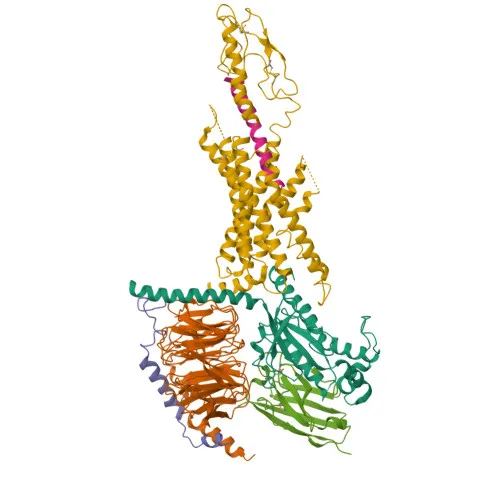
- Glucagon receptor (GCGR), encoded by the GCGR gene, is a member of the class B G protein-coupled receptor family and serves as the receptor for the hormone glucagon.
- GCGR plays a central role in the regulation of blood glucose levels by promoting hepatic glycogenolysis and gluconeogenesis, particularly during fasting.
- Ligand binding to GCGR triggers G protein-mediated signaling, stimulating adenylate cyclase to produce cAMP and also engaging the phosphatidylinositol-calcium second messenger system. Related references: PMID:32193322 PMID:38346960
- It is predominantly localized to the cell membrane, consistent with its function as a transmembrane receptor (UniProt annotation).
- The protein contains structural features including disulfide bonds and glycosylation sites, and is subject to phosphorylation; it is annotated as a glycoprotein and phosphoprotein.
- Genetic variants of GCGR are associated with diabetes mellitus, underscoring its significance in metabolic disease (UniProt keyword: Disease variant).
- The canonical form has a calculated molecular weight of approximately 54 kDa (UniProt: 54009 Da), which matches the observed band in Western blot analysis.
Experimental Guidance and Technical Tips
- The immunogen corresponds to a synthetic peptide spanning amino acids 50–150 of human GCGR; consider this region for epitope mapping or competition experiments.
- For Western blotting, a primary band is expected near 54 kDa; validate specificity using appropriate positive and negative control lysates from human, mouse, or rat tissues.
- As a polyclonal antibody, it may detect multiple splice variants or post-translationally modified forms; treatment with phosphatases can help confirm phosphorylation-dependent shifts.
- In immunofluorescence applications, ensure adequate cell permeabilization and include a plasma membrane marker for co-localization studies.
- For ELISA, optimize coating conditions and check cross-reactivity with related glucagon-like peptide receptors if multiplexing.
CamelBio: Your One-Stop Sourcing Bridge
For research and assay development targeting glucagon signaling and metabolic disorders, CamelBio provides a dependable source of GCGR antibodies and ancillary reagents. We offer validated antibody pairs, optimized polyclonal and monoclonal antibodies, and bulk ancillary reagents to support your diagnostic or research workflows. Contact us to discuss customized raw-material sourcing solutions that span from concept to clinic.
Product Datasheet
Anti-Glucagon Receptor (GCGR) Polyclonal Antibody for WB, IF-P, ELISA - P47871
REQUEST A QUOTE
Our professional team will reply to you within one business day. Please feel free to contact us!