Polyclonal Antibodies
Anti-GJD2 Rabbit pAb - Q9UKL4
Item Number : CM0030873
Price varies based on specs and customizations
- Application
- WB, ELISA
- Cross Reactivity
- Human, Mouse, Rat
- Protein Weight
- 36kDa

Shipping:
Contact us to get shipping details Enjoy On-time Dispatch Guarantee.
Why Choose Us
Easy ordering process, quality products, and dedicated support for your business success.
Core Product Specifications and Parameters
| Parameter | Value |
|---|---|
| Product Name | GJD2 Rabbit pAb |
| Remarks/Alias | CX36; GJA9; GJD2 |
| Species | Human |
| Gene ID (Human) | 57369 |
| Gene ID | 57369 |
| Immunogen | Recombinant fusion protein containing a sequence corresponding to amino acids 99-197 of human GJD2 (NP_065711.1) |
| Source | Rabbit |
| Category | Polyclonal Antibodies |
| Application | WB, ELISA |
| Cross Reactivity | Human, Mouse, Rat |
| SWISS | Q9UKL4 |
| Protein Weight | 36kDa |
| Shipping | Ice bag |
Biological Background: GJD2 Function and Localization
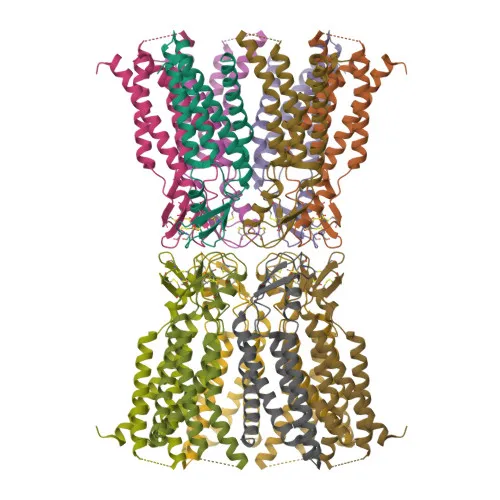
- Gap junction delta-2 protein (GJD2), also known as connexin-36 (Cx36) or gap junction alpha-9 protein (GJA9), is a member of the connexin family that forms intercellular channels.
- GJD2 assembles into hexameric connexons (hemichannels) that dock between adjacent cells, forming gap junction plaques that allow direct diffusion of ions and small molecules (<1 kDa) between cells.
- The human GJD2 gene (ID: 57369; alias GJA9) encodes this multi-pass transmembrane protein, which is central to electrical and metabolic coupling in excitable tissues.
- Subcellularly, GJD2 is localized to the cell membrane and specifically enriched at gap junctions, the specialized cell-cell contact sites.
- The protein is highly and preferentially expressed in neurons, where it contributes to neuronal synchronization, network oscillations, and sensory processing.
- Key structural features include four transmembrane helices, intracellular N- and C-termini, and extracellular loops that mediate connexon docking; it is also annotated with a known 3D structure.
- UniProt keyword annotations include reference proteome, proteomics identification, and confirmed transmembrane helix topology, underscoring its experimental tractability.
Experimental Guidance and Technical Tips
- For Western blotting, a band around 36 kDa is expected under reducing conditions; note that connexin oligomerization may lead to higher molecular weight species.
- Given the immunogen corresponds to a cytoplasmic loop region (amino acids 99–197), the antibody is likely to recognize intracellular epitopes; consider membrane protein enrichment or increased detergent for optimal solubilization.
- Validate cross-reactivity in your specific model system (human, mouse, rat) and with relevant positive controls such as brain or neuronal tissue lysates.
- For ELISA applications, assess the antibody as a capture or detection reagent; pairing with a monoclonal anti-GJD2 antibody may improve sandwich assay specificity.
- As a polyclonal antibody, perform lot-to-lot consistency checks if used in quantitative or regulated assays.
CamelBio: Your One-Stop Sourcing Bridge
CamelBio supports diagnostic developers and researchers with reliable access to IVD raw materials, including validated polyclonal antibodies like this anti-GJD2 product. Whether you are developing assays for gap junction targets in neuroscience or exploring connexin-36 as a biomarker, our platform streamlines procurement of optimized monoclonal/polyclonal antibodies, bulk ancillary reagents, and rare target materials. Partner with us to bridge your project from concept to clinic.
REQUEST A QUOTE
Our professional team will reply to you within one business day. Please feel free to contact us!