Polyclonal Antibodies
Anti-GJB1 Rabbit Polyclonal Antibody for WB and ELISA - P08034
Item Number : CM0017407
Price varies based on specs and customizations
- Application
- WB, ELISA
- Cross Reactivity
- Human, Mouse, Rat
- Protein Weight
- 32kDa

Shipping:
Contact us to get shipping details Enjoy On-time Dispatch Guarantee.
Why Choose Us
Easy ordering process, quality products, and dedicated support for your business success.
Core Product Specifications and Parameters
| Parameter | Value |
|---|---|
| Product Name | GJB1 Rabbit pAb |
| Remarks/Alias | CMTX; CX32; CMTX1; GJB1 |
| Species | Human |
| GeneID (Human) | 2705 |
| GeneID | 2705 |
| Immunogen | Recombinant fusion protein containing a sequence corresponding to amino acids 214-283 of human GJB1 (NP_000157.1) |
| Source | Rabbit |
| Category | Polyclonal Antibodies |
| Application | WB, ELISA |
| Cross Reactivity | Human, Mouse, Rat |
| SWISS | P08034 |
| Protein Weight | 32kDa |
| Shipping | Ice bag |
Biological Background: GJB1 / Connexin-32 Function and Localization
- GJB1 encodes Gap junction beta-1 protein, also known as Connexin-32 (Cx32) or GAP junction 28 kDa liver protein, a member of the connexin family of gap junction proteins.
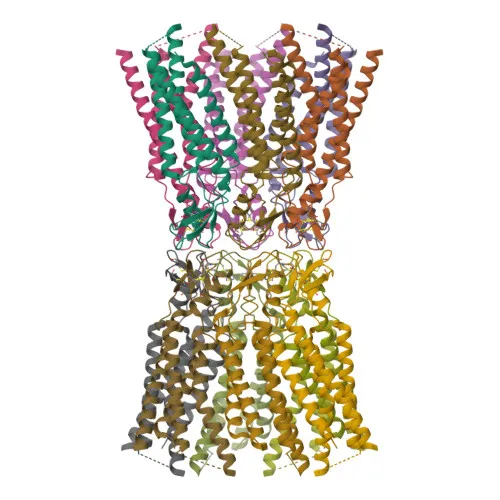
- Connexin-32 forms hexameric hemichannels (connexons) that dock between adjacent cells to create gap junctions, enabling direct intercellular diffusion of ions and small molecules < 1 kDa.
- It is primarily localized to the cell membrane and enriched at gap junction plaques, facilitating electrical and metabolic coupling in tissues such as liver, peripheral nerves, and Schwann cells.
- The protein has four transmembrane domains with both N- and C-termini located intracellularly; the immunogen corresponds to the C-terminal cytoplasmic domain (residues 214–283).
- GJB1 is a phosphoprotein; post-translational phosphorylation regulates channel gating, assembly, and degradation.
- Mutations in GJB1 are associated with X-linked Charcot-Marie-Tooth disease (CMTX1) and Dejerine-Sottas syndrome, inherited peripheral neuropathies characterized by progressive muscle weakness and sensory loss.
- The predicted molecular weight is approximately 32 kDa, consistent with the 32 kDa band often observed in Western blotting under reducing conditions.
Experimental Guidance and Technical Tips
- The immunogen corresponds to the C-terminal region (aa 214–283) of human GJB1, which is predicted to be intracellular; thus the antibody may recognize both total and unmodified protein, but confirmation is recommended.
- For Western blotting, consider using reduced samples and validate the antibody in GJB1-expressing tissues (e.g., liver, sciatic nerve) or cell lines; a band near 32 kDa is expected.
- Since the antibody cross-reacts with mouse and rat, it is suitable for multi-species studies; however, verify cross-reactivity in your specific experimental model.
- For ELISA, use recombinant or purified GJB1 protein as a standard; optimize coating buffer and antibody dilution empirically, as no predefined titer is provided.
- This polyclonal antibody may exhibit batch-to-batch variation typical of polyclonal preparations; we recommend including appropriate controls and considering lot-specific validation.
CamelBio: Your One-Stop Sourcing Bridge
CamelBio supports diagnostic manufacturers and research laboratories with comprehensive, end-to-end IVD raw-material supply solutions. Whether you need validated antibody pairs, monoclonal/polyclonal antibodies, bulk ancillary reagents, or rare target raw materials, our integrated sourcing platform accelerates your project from concept to clinic. With expertise in gap junction biology and neuropathy targets like GJB1/Connexin-32, CamelBio is your reliable partner for customized procurement and technical consultation.
REQUEST A QUOTE
Our professional team will reply to you within one business day. Please feel free to contact us!