Polyclonal Antibodies
Anti-GHRHR Polyclonal Antibody for WB, IF-P, ELISA - Q02643
Item Number : CM0030643
Price varies based on specs and customizations
- Application
- WB, IF-P, ELISA
- Cross Reactivity
- Human, Mouse, Rat
- Protein Weight
- 47kDa

Shipping:
Contact us to get shipping details Enjoy On-time Dispatch Guarantee.
Why Choose Us
Easy ordering process, quality products, and dedicated support for your business success.
Core Product Specifications and Parameters
| Parameter | Value |
|---|---|
| Product Name | GHRHR Rabbit pAb |
| Remarks/Alias | GRFR; GHRFR; IGHD4; IGHD1B; GHRHR |
| Species | Human |
| Gene ID (Human) | 2692 |
| Gene ID | 2692 |
| Immunogen | Recombinant fusion protein containing a sequence corresponding to amino acids 1-130 of human GHRHR (NP_000814.2). |
| Source | Rabbit |
| Category | Polyclonal Antibodies |
| Application | WB, IF-P, ELISA |
| Cross Reactivity | Human, Mouse, Rat |
| SWISS | Q02643 |
| Protein Weight | 47kDa |
| Shipping | Ice bag |
Biological Background: GHRHR Function and Localization
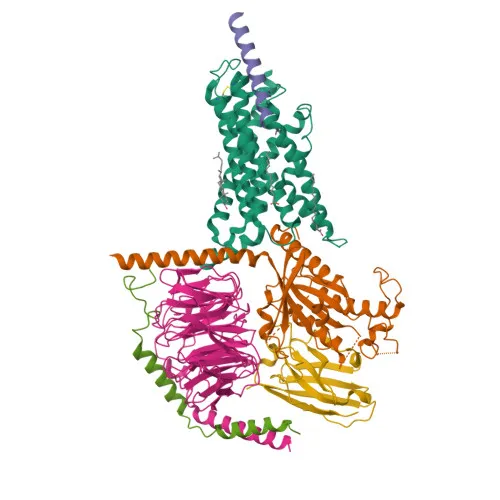
- GHRHR is the growth hormone-releasing hormone receptor, also known as GRF receptor (GRFR). It is encoded by the GHRHR gene (GeneID: 2692) and belongs to the G protein-coupled receptor (GPCR) family.
- Upon binding its ligand, growth hormone-releasing factor (GRF), GHRHR activates Gs proteins that stimulate adenylyl cyclase, increasing intracellular cAMP levels. This signaling cascade promotes somatotroph cell growth and enhances growth hormone (GH) gene transcription and secretion.
- The receptor is primarily expressed in the pituitary gland, consistent with its role in regulating GH release.
- GHRHR is localized to the cell membrane, featuring seven transmembrane domains typical of GPCRs.
- Post-translational modifications include glycosylation and formation of disulfide bonds, which are important for receptor folding and function.
- Mutations in GHRHR are associated with isolated growth hormone deficiency (IGHD), including types IGHD4 and IGHD1B, underscoring its critical role in growth regulation.
- The protein has a predicted molecular weight of approximately 47 kDa, aligning with the reported product weight.
Experimental Guidance and Technical Tips
- The immunogen corresponds to the N-terminal extracellular domain (amino acids 1–130) of human GHRHR, which may contribute to the antibody's ability to recognize native receptor conformations in immunofluorescence (IF-P) and ELISA applications.
- For Western blotting (WB), a band at approximately 47 kDa is anticipated; however, due to glycosylation, the observed molecular weight may vary slightly. Consider using a glycosidase treatment for confirmation.
- Given the receptor's membrane localization, effective membrane protein extraction protocols are essential for optimal detection in WB.
- Cross-reactivity with mouse and rat GHRHR has been noted; nevertheless, it is advisable to verify reactivity in the specific experimental model system before drawing conclusions.
- This polyclonal antibody is suitable for detecting GHRHR in pituitary-derived cell lines or tissues, where expression is highest.
CamelBio: Your One-Stop Sourcing Bridge
As a dedicated IVD raw material sourcing partner, CamelBio offers a wide range of antibodies and ancillary reagents for growth hormone research and diagnostic development. We provide validated antibody pairs, optimized polyclonal antibodies, and bulk reagents to support your assay development from concept to clinic. For GHRHR-related studies, our one-stop service ensures you have access to the necessary raw materials and technical consulting.
REQUEST A QUOTE
Our professional team will reply to you within one business day. Please feel free to contact us!