Polyclonal Antibodies
Anti-GFRA3 Rabbit Polyclonal Antibody for WB and ELISA - O60609
Item Number : CM0030039
Price varies based on specs and customizations
- Application
- WB, ELISA
- Cross Reactivity
- Human, Mouse
- Protein Weight
- 45kDa

Shipping:
Contact us to get shipping details Enjoy On-time Dispatch Guarantee.
Why Choose Us
Easy ordering process, quality products, and dedicated support for your business success.
Core Product Specifications and Parameters
| Parameter | Value |
|---|---|
| Product Name | GFRA3 Rabbit pAb |
| Remarks/Alias | GDNFR3; GFRA3 |
| Species | Human |
| GeneID (Human) | 2676 |
| GeneID | 2676 |
| Immunogen | Recombinant protein; Recombinant fusion protein containing a sequence corresponding to amino acids 32-240 of human GFRA3 (NP_001487.2) |
| Source | Rabbit |
| Category | Polyclonal Antibodies |
| Application | WB, ELISA |
| Cross Reactivity | Human, Mouse |
| SWISS | O60609 |
| Protein Weight | 45kDa |
| Shipping | Ice bag |
Biological Background: GFRA3 Function and Localization
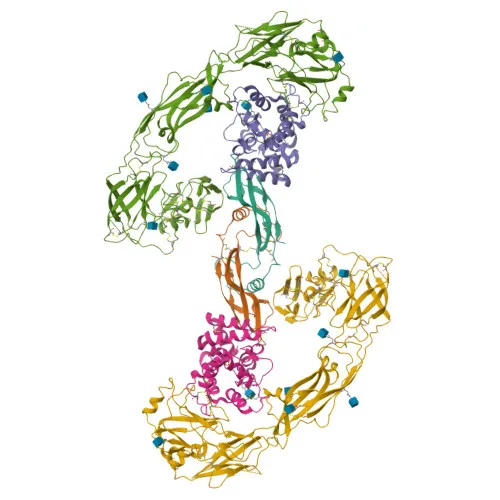
- GFRA3 (GDNF family receptor alpha-3) is a glycosylphosphatidylinositol (GPI)-anchored cell surface receptor that belongs to the GDNF receptor family.
- It functions as a high-affinity receptor for artemin (ARTN), a neurotrophic factor that supports the survival of sensory and sympathetic peripheral neurons. Related references: PMID:31535977 PMID:9883723
- Upon artemin binding, GFRA3 forms a complex with the RET receptor tyrosine kinase, leading to autophosphorylation and activation of RET-mediated downstream signaling pathways.
- The receptor is anchored to the outer leaflet of the cell membrane via a GPI linkage and contains a signal peptide, multiple disulfide bonds, and N-linked glycosylation sites.
- GFRA3 is widely expressed in adult and fetal tissues, with particularly high levels in the peripheral nervous system (sensory and sympathetic ganglia), stomach, and appendix; expression is absent from the central nervous system.
- Alternative splicing of the GFRA3 gene may give rise to multiple isoforms, and the protein is subject to proteolytic shedding from the membrane.
Experimental Guidance and Technical Tips
- The immunogen corresponds to amino acids 32–240 of human GFRA3, which encompasses the extracellular ligand-binding domain; this design favors detection of the membrane-bound or shed forms.
- For Western blotting, use appropriate lysis buffers containing detergents and protease inhibitors; the predicted molecular weight is ~45 kDa, but glycosylation may cause a shift to higher apparent masses.
- In ELISA, consider coating with recombinant GFRA3 extracellular domain or artemin to capture the antibody; confirm reactivity against the native protein in biological matrices.
- Given the polyclonal nature, potential cross-reactivity with other GDNF family receptors (e.g., GFRA1, GFRA2) should be assessed using knockout controls or blocking peptides.
- Reported cross-reactivity with mouse GFRA3 allows for comparative studies across species; validate performance in the relevant sample type before quantitative comparisons.
CamelBio: Your One-Stop Sourcing Bridge
CamelBio supports diagnostic manufacturers and research laboratories by providing reliable access to validated IVD raw materials, including this GFRA3 antibody for neurotrophin receptor studies. Our portfolio also encompasses paired antibodies, optimized monoclonal/polyclonal formats, and bulk ancillary reagents to streamline kit development. For rare or custom targets, we offer sourcing assistance from concept to clinic, helping you secure the critical components needed for immunoassay development and biomarker research.
REQUEST A QUOTE
Our professional team will reply to you within one business day. Please feel free to contact us!