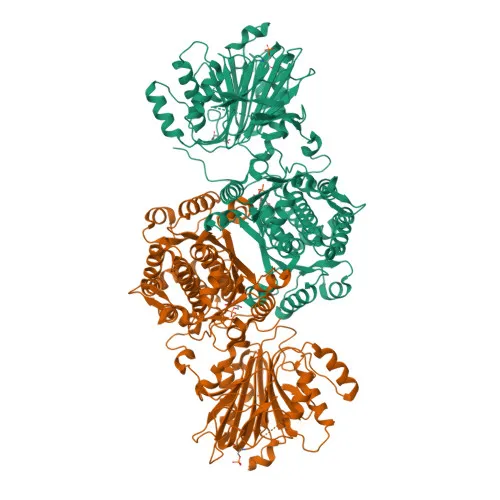
Polyclonal Antibodies
Anti-GFPT1 Rabbit Polyclonal Antibody (WB, ELISA) - Q06210
Item Number : CM0025375
Price varies based on specs and customizations
- Application
- WB, ELISA
- Cross Reactivity
- Human, Mouse, Rat
- Protein Weight
- 79kDa

Shipping:
Contact us to get shipping details Enjoy On-time Dispatch Guarantee.
Why Choose Us
Easy ordering process, quality products, and dedicated support for your business success.
Core Product Specifications and Parameters
| Parameter | Value |
|---|---|
| Product Name | GFPT1 Rabbit pAb |
| Remarks/Alias | GFA; GFAT; GFPT; MSLG; CMS12; GFAT1; CMSTA1; GFAT 1; GFAT1m; GFPT1L; GFPT1 |
| Species | Human |
| Gene ID (Human) | 2673 |
| Gene ID | 2673 |
| Immunogen | Recombinant protein|Recombinant fusion protein containing a sequence corresponding to amino acids 1-150 of human GFPT1 (NP_002047.2). |
| Source | Rabbit |
| Category | Polyclonal Antibodies |
| Application | WB, ELISA |
| Cross Reactivity | Human, Mouse, Rat |
| SWISS | Q06210 |
| Protein Weight | 79kDa |
| Shipping | Ice bag |
Biological Background: GFPT1 Function and Localization
- GFPT1 (glutamine--fructose-6-phosphate aminotransferase 1) is the rate-limiting enzyme of the hexosamine biosynthetic pathway (HBP), catalyzing the conversion of fructose-6-phosphate and glutamine into glucosamine-6-phosphate. Its activity is feedback-inhibited by UDP-N-acetylglucosamine (UDP-GlcNAc), thereby controlling glucose flux into the HBP. Related references: PMID:32019926 PMID:35229715
- Through regulation of HBP intermediates, GFPT1 fine-tunes UDP-GlcNAc levels and impacts hyaluronan synthesis during tissue remodeling. Related references: PMID:26887390
- The enzyme modulates the availability of precursors for N- and O-linked protein glycosylation and influences peripheral clock oscillation (By similarity).
- GFPT1 is predominantly expressed in skeletal muscle and striated muscle; it is not detected in brain, indicating tissue-specific metabolic roles.
- Alternatively spliced isoforms of GFPT1 have been identified, contributing to functional diversity.
- Mutations in GFPT1 are associated with congenital myasthenic syndrome, highlighting its clinical relevance in neuromuscular disorders.
Experimental Guidance and Technical Tips
- The immunogen corresponds to amino acids 1-150 of human GFPT1, targeting the N-terminal region; consider this when designing complementary detection reagents.
- For Western blotting, a band near 79kDa is expected; validate the observed molecular weight in your sample system, as post-translational modifications or isoforms may shift mobility.
- When using ELISA, consider pairing with a capture antibody or using recombinant GFPT1 as a standard; cross-reactivity with mouse and rat orthologs may facilitate multispecies studies.
CamelBio: Your One-Stop Sourcing Bridge
CamelBio streamlines IVD raw-material procurement for diagnostic developers and researchers, offering a comprehensive portfolio that includes this GFPT1 polyclonal antibody along with validated antibody pairs, optimized monoclonals, and bulk ancillary reagents. Whether you require rare target sourcing or reliable components for hexosamine pathway or glycosylation studies, CamelBio serves as a single-window partner—connecting you from concept to clinic with professional sourcing and technical guidance.
REQUEST A QUOTE
Our professional team will reply to you within one business day. Please feel free to contact us!