Polyclonal Antibodies
Anti-GFM1 Rabbit Polyclonal Antibody for WB, IHC-P, ELISA - Q96RP9
Item Number : CM0026985
Price varies based on specs and customizations
- Application
- WB, IHC-P, ELISA
- Cross Reactivity
- Human, Mouse, Rat
- Protein Weight
- 83kDa

Shipping:
Contact us to get shipping details Enjoy On-time Dispatch Guarantee.
Why Choose Us
Easy ordering process, quality products, and dedicated support for your business success.
Core Product Specifications and Parameters
| Parameter | Value |
|---|---|
| Product Name | GFM1 Rabbit pAb |
| Remarks/Alias | EFG; GFM; EFG1; EFGM; EGF1; hEFG1; COXPD1; mtEF-G1; GFM1 |
| Species | Human |
| GeneID (Human) | 85476 |
| GeneID | 85476 |
| Immunogen | Recombinant fusion protein containing a sequence corresponding to amino acids 482-751 of human GFM1 (NP_079272.4) |
| Source | Rabbit |
| Category | Polyclonal Antibodies |
| Application | WB, IHC-P, ELISA |
| Cross Reactivity | Human, Mouse, Rat |
| SWISS | Q96RP9 |
| Protein Weight | 83kDa |
| Shipping | Ice bag |
Biological Background: GFM1 Function and Localization
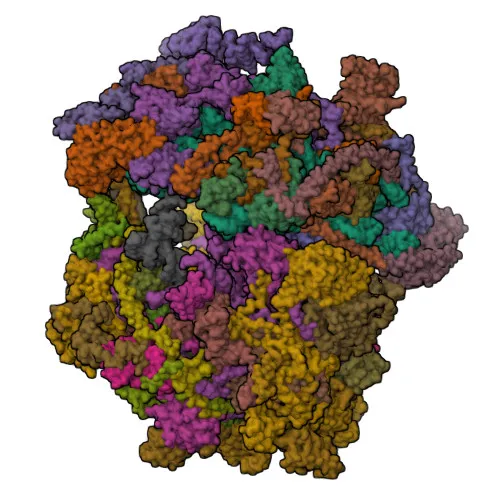
- GFM1 encodes mitochondrial elongation factor G (mEF-G1), a GTPase vital for mitochondrial translation elongation.
- During elongation, mEF-G1 drives the GTP-dependent translocation step, moving tRNAs and mRNA through the ribosome from pre- to post-translocational states.
- It specifically catalyzes coordinated movement of peptidyl-tRNA from A to P site and deacylated tRNA from P to E site.
- The protein does not participate in mitochondrial ribosome disassembly at translation termination.
- GFM1 contains an N-terminal mitochondrial targeting peptide and localizes exclusively to mitochondria.
- Post-translational modifications include acetylation and phosphorylation, potentially modulating its function.
- Mutations in GFM1 cause COXPD1 (combined oxidative phosphorylation deficiency 1), a mitochondrial disorder.
- The protein has a predicted molecular weight of approximately 83 kDa, consistent with Western blot detection.
Experimental Guidance and Technical Tips
- The immunogen spans the C-terminal region (aa 482–751), which may help detect both full-length and potential isoforms.
- For Western blot, expect a band around 83 kDa; optimize gel percentage and loading controls accordingly.
- For IHC-P, validate antibody specificity using appropriate positive and negative tissue controls.
- In ELISA, recombinant GFM1 protein can serve as a standard to assess binding affinity.
- When working with mouse or rat samples, confirm cross-reactivity due to sequence homology.
CamelBio: Your One-Stop Sourcing Bridge
CamelBio supports diagnostic manufacturers and research labs with streamlined access to IVD raw materials. This anti-GFM1 rabbit polyclonal antibody is suitable for mitochondrial protein synthesis studies; we also provide validated antibody pairs, optimized monoclonals, and bulk ancillary reagents to meet your workflow needs. For rare or custom targets, our sourcing network delivers reliable raw materials from discovery through development.
REQUEST A QUOTE
Our professional team will reply to you within one business day. Please feel free to contact us!