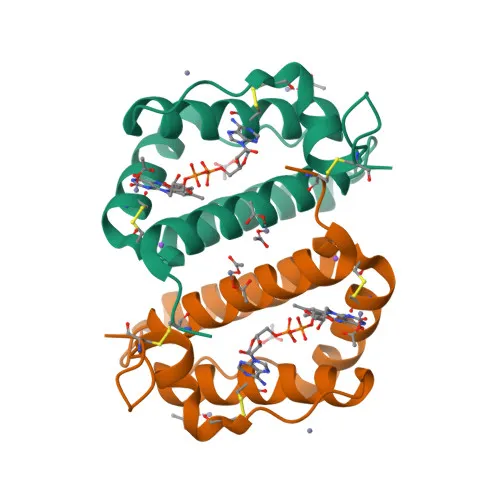
Polyclonal Antibodies
Anti-GFER Rabbit Polyclonal Antibody for WB, IHC-P, ELISA - P55789
Item Number : CM0024752
Price varies based on specs and customizations
- Application
- WB, IHC-P, ELISA
- Cross Reactivity
- Human, Mouse, Rat
- Protein Weight
- 23kDa

Shipping:
Contact us to get shipping details Enjoy On-time Dispatch Guarantee.
Why Choose Us
Easy ordering process, quality products, and dedicated support for your business success.
Core Product Specifications and Parameters
| Parameter | Value |
|---|---|
| Product Name | GFER Rabbit pAb |
| Remarks/Alias | ALR; HPO; HSS; ERV1; HPO1; HPO2; HERV1; MMCHD; MPMCD; GFER |
| Species | Human |
| GeneID (Human) | 2671 |
| GeneID | 2671 |
| Immunogen | Recombinant fusion protein containing a sequence corresponding to amino acids 81-205 of human GFER (NP_005253.3) |
| Source | Rabbit |
| Category | Polyclonal Antibodies |
| Application | WB, IHC-P, ELISA |
| Cross Reactivity | Human, Mouse, Rat |
| SWISS | P55789 |
| Protein Weight | 23kDa |
| Shipping | Ice bag |
Biological Background: GFER Function and Localization
- GFER (Growth Factor, Augmenter of Liver Regeneration), also known as ALR (Augmenter of Liver Regeneration) or ERV1, is a FAD-linked sulfhydryl oxidase encoded by the GFER gene. The protein exists in multiple isoforms due to alternative splicing.
- It functions primarily as a redox-active chaperone in the mitochondrial intermembrane space, where it regenerates disulfide bonds in CHCHD4/MIA40, which is essential for the folding and import of cysteine-rich proteins.
- GFER contains a FAD cofactor and catalyzes the introduction of disulfide bridges into substrate proteins, playing a critical role in mitochondrial protein homeostasis and oxidative stress defense.
- In addition to its mitochondrial role, GFER may be secreted and act as an autocrine hepatotrophic growth factor that promotes liver regeneration after injury.
- Subcellularly, the protein is mainly localized to the mitochondrial intermembrane space but can also be detected in the cytoplasm and secreted forms.
- Expression is ubiquitous, with highest levels observed in the testis and liver, and lower expression in muscle tissue.
- Post-translational modifications include phosphorylation, and mutations in GFER are linked to primary mitochondrial disease, cataract, and deafness.
Experimental Guidance and Technical Tips
- This rabbit polyclonal antibody was raised against a recombinant protein covering amino acids 81–205 of human GFER, targeting the core catalytic domain; it may detect both the precursor and mature forms.
- In Western blot (WB) assays, expect a band around 23 kDa (mature processed form) and possibly larger bands corresponding to precursor or multimeric complexes under non-reducing conditions.
- For immunohistochemistry (IHC-P), antigen retrieval methods may be required; validate staining in testis or liver sections where GFER expression is high.
- Cross-reactivity with mouse and rat has been demonstrated; therefore, this antibody is suitable for rodent model studies, but validate in the relevant species-specific sample system.
- When using ELISA, consider pairing with a capture monoclonal antibody for sandwich assays, and optimize coating conditions.
CamelBio: Your One-Stop Sourcing Bridge
CamelBio provides diagnostic manufacturers, laboratories, and research institutes with streamlined access to IVD raw materials, technical services, and consulting—bridging the gap from concept to clinic. This anti-GFER polyclonal antibody supports mitochondrial disease research and liver regeneration investigations, and CamelBio can supply complementary validated antibody pairs, recombinant proteins, and ancillary reagents. Beyond single-product sourcing, we offer custom antibody development and bulk supply chains for rare or high-demand targets, ensuring your IVD assay development progresses without interruption.
REQUEST A QUOTE
Our professional team will reply to you within one business day. Please feel free to contact us!